
Can AI 'See' Air? Analyzing Airflow in Commercial Buildings
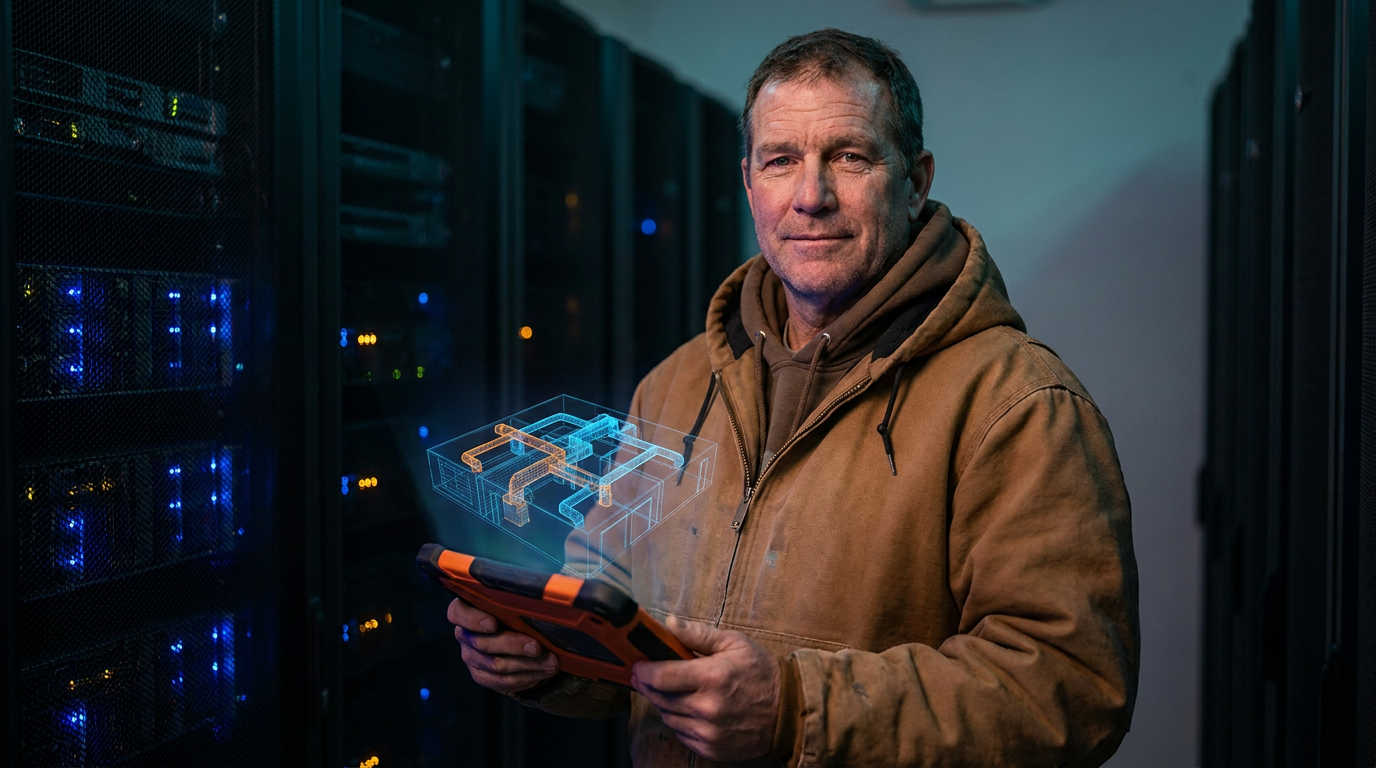
Yes, AI can analyze airflow in a commercial building. It uses data from sensors measuring temperature, CO2, and pressure, combined with digital models of the building. Machine learning algorithms then process this information to spot inefficiencies, predict equipment failures, and suggest ways to improve ventilation and save energy.
Can AI 'See' Air? Analyzing Airflow in Commercial Buildings
Invisible problems are the hardest to fix. In a commercial building, you can't see leaky ducts, poor circulation, or unbalanced systems. But you can feel them in stuffy conference rooms and see them on high energy bills. For years, HVAC pros have relied on experience and manual tests to diagnose these issues. Now, AI gives us a new set of eyes.
Artificial intelligence can process huge amounts of data from a building's systems to 'see' how air is moving. It builds a complete picture of your ventilation, finding hidden problems that cost money and impact the health of people inside. This isn't science fiction. It's a practical tool that helps you work smarter.
How AI Analyzes Airflow
AI doesn't have magic powers. It uses data and math to find patterns. For airflow analysis, it relies on a few key technologies working together.
Digital Twins: First, a 'digital twin' of the building is often created. This is a detailed 3D model that includes the HVAC system, ductwork, room layouts, and even where windows are. It's a virtual copy of the physical space.
IoT Sensors: Internet of Things (IoT) sensors are the eyes and ears of the system. Placed throughout the building, they collect real-time data on temperature, humidity, CO2 levels, air pressure, and occupancy. This data feeds directly into the AI model.
Machine Learning: This is where the 'thinking' happens. Machine learning algorithms take the sensor data and the digital twin and run thousands of simulations. They learn the building's unique airflow patterns, comparing them to ideal conditions. The AI can spot anomalies that a human would never find, like a specific VAV box that is consistently underperforming or a duct that is leaking air into a wall cavity.
This process is like a super-powered version of traditional air balancing, but it runs 24/7 and sees everything at once.
The Real-World Payoff
This technology sounds complex, but the benefits are simple and direct. Using AI for airflow analysis helps you deliver better results for your clients and your business.
Pinpoint Inefficiencies Instead of guessing, you know exactly where the problems are. The AI might flag a specific floor that is over-ventilated, wasting conditioned air. Or it might identify a blockage in a duct that is starving a section of the building from fresh air. This turns a building-wide complaint into a targeted repair job.
Predictive Maintenance Many equipment failures don't happen overnight. An air handler unit's fan motor might start to perform less efficiently weeks before it breaks down. An AI can detect the subtle change in airflow pressure caused by the struggling motor and flag it for maintenance. This prevents unexpected shutdowns and expensive emergency calls. It's a core part of running a modern HVAC business.
Analyze the following HVAC energy usage data for a 10-story commercial building from the last 12 months. Identify any anomalies, seasonal patterns, or outlier data points that suggest potential inefficiencies in the HVAC system. Based on your analysis, provide three specific questions I should ask the building's facility manager to investigate these potential issues further.

[Paste your monthly kWh usage data, average outdoor temperature, and any notes on occupancy here]
Improve Indoor Air Quality (IAQ) The pandemic made everyone aware of how important clean indoor air is. AI helps ensure a building is not just comfortable, but healthy. By monitoring CO2 and volatile organic compound (VOC) levels, the system can adjust ventilation in real-time. If a conference room fills up with people, the AI can direct more fresh air to that zone, flushing out CO2 and reducing the risk of airborne virus transmission.
Save Serious Money HVAC systems are one of the biggest energy users in commercial buildings, often accounting for 40% or more of total electricity consumption according to the U.S. Department of Energy. By finding and fixing leaks, optimizing schedules, and ensuring equipment runs at peak efficiency, AI-driven analysis can lead to significant savings. Reductions of 15-30% on the HVAC portion of a utility bill are common.
Putting AI to Work
You don't need a PhD in data science to start using AI. The technology is becoming more accessible through specialized software platforms and consulting services. Here's a practical way to think about it.
Start with the data you already have. Building Management System (BMS) logs, utility bills, and maintenance records are a goldmine of information. You can use simpler AI tools, even large language models, to start analyzing this data for patterns.
Draft a professional, straightforward email to a potential client who owns a 150,000 sq ft office building. The goal is to introduce the concept of an AI-powered airflow and ventilation audit. Explain the key benefits (cost savings, improved air quality, predictive maintenance) in simple terms. Avoid technical jargon. Keep the tone confident and focused on business outcomes. The email should end with a clear call to action to schedule a 15-minute introductory call.
AI is a Tool, Not a Replacement
It's important to remember that AI is a powerful tool, but it doesn't replace the skills of an experienced HVAC technician. The AI can tell you that a damper is stuck; it can't climb a ladder and fix it. It can identify a pressure drop, but it takes a pro to diagnose whether it's a dirty filter or a failing fan.
The future of the HVAC trade is one where technology and human expertise work together. AI handles the massive task of data analysis, freeing up technicians to do what they do best: solve mechanical problems and keep clients happy. By embracing these tools, you can provide more value, operate more efficiently, and stay ahead of the competition.
Frequently asked questions
37 copy-paste prompts that save tradespeople 5+ hours a week. Plus one short email every Friday — no fluff.
More for hvac

AI for HVAC Contractors: Everything You Need to Know
AI for HVAC Contractors comes down to using AI to do the slow stuff — quoting, paperwork, marketing, and customer follow-up — so you can stay on the tools.

ChatGPT for HVAC Technicians: 20 Real Use Cases
ChatGPT for HVAC Technicians comes down to using AI to do the slow stuff — quoting, paperwork, marketing, and customer follow-up — so you can stay on the t
AI HVAC Load Calculation: Manual J in Minutes
AI HVAC Load Calculation comes down to using AI to do the slow stuff — quoting, paperwork, marketing, and customer follow-up — so you can stay on the tools