
Can AI Analyze Sewer Camera Footage? Yes, It Can.
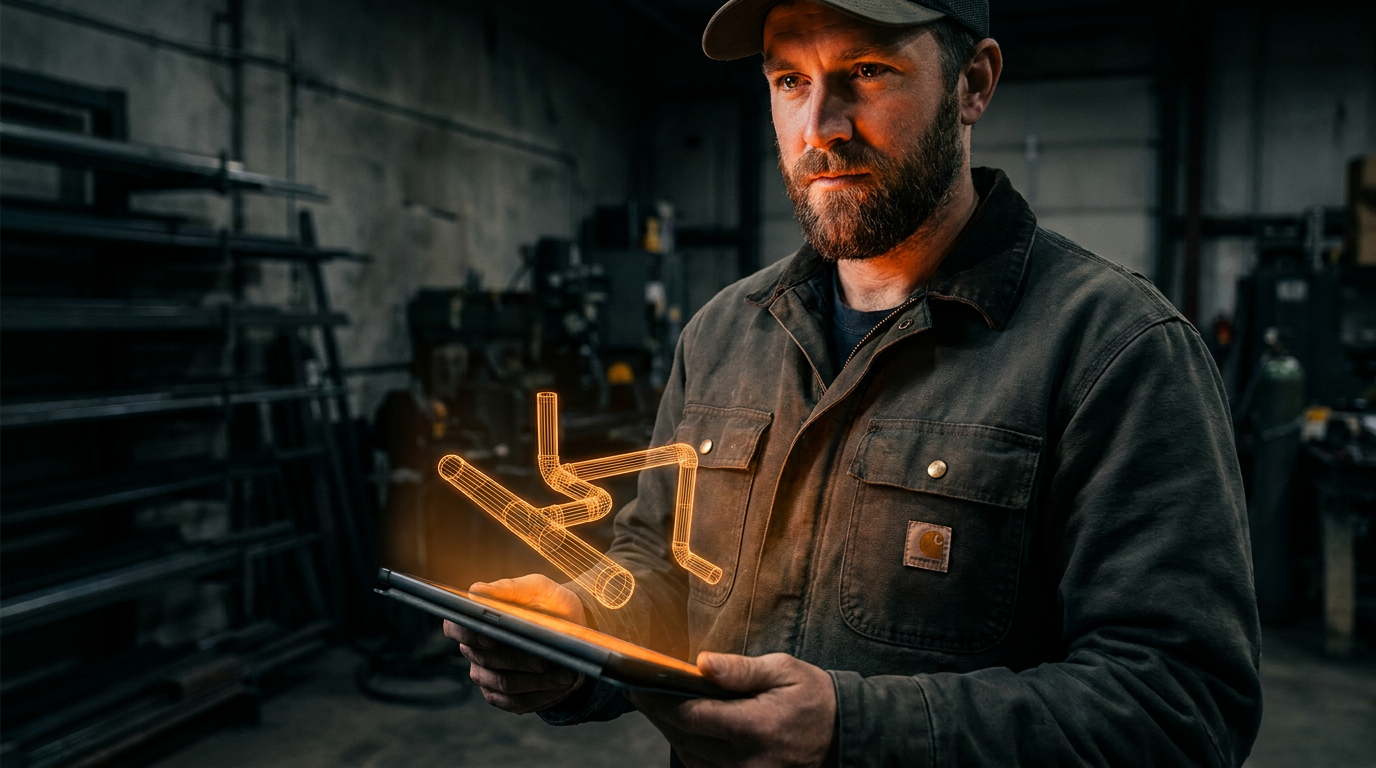
Yes, AI can analyze sewer camera footage. Modern AI software helps plumbers automatically identify issues like cracks, root intrusion, blockages, and pipe collapses. This speeds up diagnostics, reduces human error, and creates more accurate reports for customers, helping you get to the repair faster and with more confidence.
Can AI Analyze Sewer Camera Footage?
Yes. And it's changing the game for plumbers.
You know the drill. You spend an hour running a camera down a customer's line. Then you spend another hour hunched over a screen, re-watching the footage, trying to spot every crack, offset, and root. It's slow, tedious work. Your eyes get tired. You might miss something.
AI takes that tedious work off your plate. Instead of you watching every minute of video, a computer does it for you. It flags potential problems in seconds, not hours. This isn't science fiction. It's a tool that plumbing businesses are using right now to save time, reduce errors, and make more money.
Think of it like a new power tool. It doesn't replace your skill. It just makes your skill more efficient and powerful.
What AI Does with Your Sewer Footage
At its core, AI for sewer inspection is about pattern recognition. The software is trained on thousands of hours of sewer footage. It learns what a clean, healthy pipe looks like. More importantly, it learns what problems look like.
When you upload your video, the AI scans it frame by frame, looking for these known patterns. It's faster and more tireless than the human eye.
Here’s what it can typically spot:
- Structural Defects: Cracks (longitudinal, circumferential), fractures, and collapses.
- Blockages: Grease buildup, debris, and other obstructions.
- Intrusion: Roots growing through joints or cracks.
- Pipe Features: Joints, connections, and changes in pipe material.
- Water Levels: Standing water that could indicate a belly or a downstream blockage.
It then creates a report, often with timestamps, showing you exactly where each issue is located in the pipe. You go from raw footage to an actionable list of problems in a fraction of the time.
The Real-World Benefits for Your Plumbing Business
This isn't just about cool tech. It's about what it does for your bottom line and your reputation.
Save Time, Make More Money
Time is your most valuable resource. If an AI can review two hours of footage in five minutes, you just saved 1 hour and 55 minutes. That's time you can use to run another call, prepare a quote, or manage your business. By fitting more diagnostic work into a day, you increase your earning potential.
Improve Accuracy and Reduce Callbacks
Staring at grainy footage for hours leads to fatigue. Fatigue leads to mistakes. Missing a hairline crack or underestimating a root problem can lead to a failed repair and an unhappy customer. An AI doesn't get tired. It applies the same level of scrutiny to the last foot of pipe as it does to the first. This leads to more accurate diagnoses, better repairs, and fewer costly callbacks.
Create Better Reports for Customers
Homeowners don't understand plumbing jargon. A good AI tool can help you generate clean, professional reports with images and simple descriptions. This helps the customer understand the problem and see the value in your proposed solution. A clear report builds trust and makes it easier for them to approve your quote. You’re not just a plumber; you're a professional problem-solver with the data to prove it.
How to Get Started with AI Sewer Analysis
You have two main paths for using AI to analyze your footage.
Option 1: Specialized Software
Companies like SewerAI and WinCan offer powerful, industry-specific platforms. These tools are built for one purpose: analyzing sewer and drain lines. They are highly accurate and integrate with industry standards like NASSCO's Pipeline Assessment Certification Program (PACP).
These platforms are a serious investment, usually involving a monthly or annual subscription. They are best for larger businesses that do a high volume of inspection work. The benefit is top-tier accuracy and features designed specifically for a plumbing workflow.
Option 2: Using General AI Tools (The DIY Approach)
For smaller shops or those who want to test the waters, you can use general AI models. Tools like ChatGPT-4o and Google's Gemini now have advanced video analysis capabilities. You can upload your sewer camera footage directly and ask the AI to analyze it for you.
This approach is more hands-on and may not be as accurate as specialized software, but it's incredibly flexible and low-cost. You can try it today with a video file you already have.
Here's a basic prompt to get you started.
Act as a master plumber with 25 years of experience in sewer line diagnostics. I am uploading a video from a sewer camera inspection. Analyze this footage frame by frame. Identify and create a list of all potential issues. For each issue, provide a timestamp from the video and a brief description of the problem. Categorize problems as: structural cracks, root intrusion, blockages, or joint offsets. Be precise and thorough.
Writing a Good Prompt for Video Analysis
Getting good results from a general AI tool depends on giving it good instructions. A lazy prompt gets a lazy answer. Be specific.
Your prompt should include four key things:
- Role: Tell the AI who it is. "Act as a master plumber" or "Act as a sewer inspection technician."
- Task: Tell it exactly what to do. "Analyze this video," "Identify all defects," "Create a report."
- Context: Give it important details. "This is a 4-inch clay pipe at a residential property built in 1965."
- Format: Tell it how you want the output. "Provide a bulleted list," "Create a table with columns for Timestamp, Defect, and Severity."
Here’s a more advanced prompt that asks for a customer-friendly report.
Act as a senior plumbing technician creating a report for a homeowner. I have provided a video of their sewer line inspection. First, analyze the video to identify all problems. Then, write a summary report for the homeowner. In the report, describe the issues in simple, non-technical language. Explain the potential risks if the problems are not addressed. Organize the findings by severity: Critical (needs immediate attention), Serious (should be addressed soon), and Recommended (maintenance items).
Beyond Finding Cracks: Using AI for Quoting
The analysis is just the first step. You can use that AI-generated data to speed up the rest of your workflow, especially quoting and estimating.
Once the AI has given you a list of defects, you can feed that list right back into the AI and ask it to help you build a quote. This saves you the time of manually writing up a scope of work. It can help you remember all the necessary materials and steps, reducing the chance of underbidding a job.
Based on the following list of sewer line issues, draft a detailed scope of work for a repair quote. The issues are: 1) Moderate root intrusion in a 4-inch clay pipe from 40 to 45 feet. 2) A longitudinal crack in the pipe at 62 feet. List the recommended repair methods, such as hydro-jetting for the roots and CIPP lining for the crack. Also, list the key materials and equipment needed for the job.
This process turns your AI into a true digital assistant. It helps with the diagnosis, the customer report, and the quote. It handles the paperwork so you can focus on the real work.
AI is not here to take your job. It's here to make your job better. By embracing tools like this, you can build a smarter, more efficient, and more profitable plumbing business.
Frequently asked questions
37 copy-paste prompts that save tradespeople 5+ hours a week. Plus one short email every Friday — no fluff.
More for plumbers
AI for Plumbers: The Practical Field Guide
AI for Plumbers comes down to using AI to do the slow stuff — quoting, paperwork, marketing, and customer follow-up — so you can stay on the tools. Below i

25 ChatGPT Prompts for Your Plumbing Business
25 ChatGPT Prompts for Your Plumbing Business comes down to using AI to do the slow stuff — quoting, paperwork, marketing, and customer follow-up — so you

AI Plumbing Diagnosis Apps: What Actually Works
AI Plumbing Diagnosis Apps comes down to using AI to do the slow stuff — quoting, paperwork, marketing, and customer follow-up — so you can stay on the too