AI Arc Fault Detection for Old Work in Boston & Philly
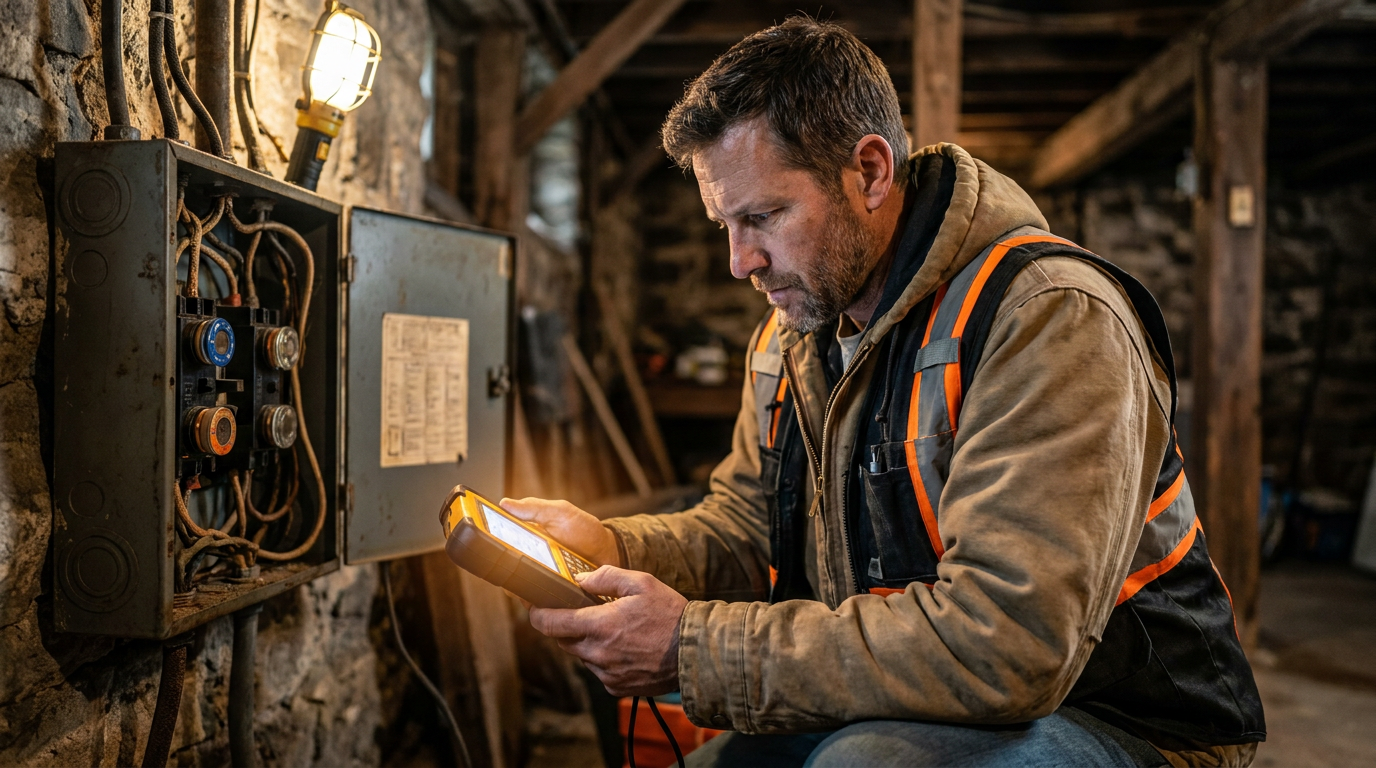
AI arc fault detection helps electricians in old cities by using smart algorithms to analyze circuit data and pinpoint potential fire hazards faster and more accurately than traditional methods. This technology is crucial for dealing with aging infrastructure in places like Boston, Philadelphia, and New York City.
A Sparky's Guide to AI Arc Fault Detection
Working in an old city like Boston or Philadelphia is a different beast. You’re not just an electrician; you’re part historian, part archaeologist. You’re digging into walls filled with a century of surprises: knob and tube, brittle insulation, and questionable DIY jobs from the 70s. The biggest worry? Arc faults. That’s the stuff that starts fires.
Traditionally, finding a dangerous arc fault before it's too late has been a mix of experience, guesswork, and listening for the tell-tale sizzle. AFCI breakers helped, but they’re famous for nuisance tripping. Now, there’s a new tool in the bag: artificial intelligence. It’s not about robots taking your job. It’s about giving you a smarter way to see what’s happening behind the plaster.
What's an Arc Fault, Really?
Let’s get back to basics. An arc fault is an unintentional electrical discharge. Think of it as electricity jumping a gap it's not supposed to. A lightning strike is a massive arc. The spark in your gas grill is a small, controlled one.
In a house, they happen when a wire gets damaged, loose, or old. They come in two main flavors:
- Series Arcs: Happen along a single wire, like a loose connection at a receptacle or a frayed wire in a cord. They generate a lot of heat in one spot.
- Parallel Arcs: Occur when electricity jumps between two conductors, like a hot and a neutral wire. These are the really dangerous ones, often caused by a nail puncturing a cable. They can hit temperatures over 10,000°F and easily ignite nearby wood or insulation.
In the old buildings of Philly's Society Hill or Boston's Beacon Hill, you’re dealing with wiring that’s been baking in walls for decades. The risk is real.
The Old Way vs. The New Way
For years, finding a hidden arc fault source was tough. You'd get a call about an AFCI breaker that keeps tripping. You’d start by checking every connection on the circuit. You'd tighten screws on every outlet and switch. If that didn't work, you might pull out a megohmmeter to test for insulation breakdown. It was time-consuming, and sometimes you still couldn't find the source, leading to frustrated customers.
AFCI breakers are good, but they're not perfect. They listen for a specific electrical noise pattern that looks like an arc. The problem is, the motor in a vacuum cleaner or a drill can create a similar noise, causing a nuisance trip. The breaker can’t tell the difference between a harmless spark and a dangerous one.
This is where AI comes in. It’s the difference between a simple smoke detector and a system that can smell the specific chemical of an electrical fire before you see smoke.
How AI Changes the Game for Arc Faults
AI-powered arc fault detection isn't just looking for a simple noise pattern. It uses complex algorithms that have been trained on massive datasets of electrical signatures. The AI has “seen” millions of hours of circuit behavior.
It knows the signature of:
- A vacuum cleaner starting up.
- A dimmer switch operating normally.
- A loose wire nut slowly arcing behind a wall.
- A dangerous parallel arc from a damaged cable.
Instead of just a simple “yes/no” trip like a standard AFCI, an AI-powered analyzer gives you data. It can tell you the type of arc, its likely location, and its severity. It can distinguish between the harmless noise of an old appliance and the signature of a genuine fire hazard. This means fewer callbacks and more accurate diagnoses on the first visit.
Act as a senior electrician explaining AI arc fault detection to a new apprentice. Describe the difference between a standard AFCI breaker and a new AI-powered diagnostic tool. Use an analogy to explain how the AI can tell the difference between a harmless electrical event (like a vacuum motor) and a dangerous arc fault. Keep the explanation simple, under 150 words, and focus on the practical benefit of reducing nuisance tripping and finding problems faster.
Tools You Can Use Today
This isn't sci-fi. These tools are on the market now. They generally fall into a few categories:
- Handheld Circuit Analyzers: These are devices you plug into an outlet. They run a series of tests and use an app on your phone or tablet to display the results. They give you a health report for the circuit, flagging potential arc fault conditions, voltage drops, and other issues.
- Panel-Mounted Monitors: Some systems are installed directly in the electrical panel. They monitor the entire home's electrical system 24/7, providing real-time data and alerts about developing issues. This is great for high-value properties or for customers who want total peace of mind.
These tools help you move from being reactive to being proactive. You’re not just fixing problems; you’re predicting them. For an electrician, this is a powerful upgrade to your diagnostic tools.
Selling the Service in Boston and Philly
Homeowners in historic districts care about their property. They understand that old homes need special care. But they don't want to hear about algorithms. You need to translate the tech into a benefit they understand: safety and preservation.
Don't sell “AI arc fault detection.” Sell an “Advanced Electrical Safety Audit” or a “Predictive Diagnostic Service.”
Here's how you frame it:
“Your home has classic wiring. Instead of waiting for a problem, we can use a new tool to perform a health check on your entire electrical system. It's like an EKG for your house. It lets us spot potential fire hazards hidden in the walls before they become dangerous, without tearing things apart.”
This approach positions you as a high-value expert, not just a wire puller. You can charge a premium for this service because it provides a premium level of safety and insight that your competitors, who are still just swapping breakers, can't offer.
My company is an electrical contractor specializing in historic homes in Boston. Write a 100-word service description for my website a new offering called the "Advanced Electrical Safety Audit." Explain that this service uses modern diagnostic tools to find hidden fire hazards like arc faults in old wiring, including knob and tube. Emphasize peace of mind for the homeowner and the benefit of preventing problems before they start. The tone should be professional, confident, and reassuring.
It’s Your Tool, You’re Still the Expert
At the end of the day, AI is just another tool, like your best pair of linesman pliers or your multimeter. It gives you better information, but you are the one who has to interpret it and make the repair.
For sparkies working on the old, proud buildings of America's historic cities, AI arc fault detection is a game-changer. It lets you work smarter, provide a higher level of safety for your customers, and build your reputation as the go-to expert for old work. It’s about combining your hard-won experience with the best technology available. And that’s a powerful combination.
Frequently asked questions
37 copy-paste prompts that save tradespeople 5+ hours a week. Plus one short email every Friday — no fluff.
More for electricians
AI for Electricians: A Field-Tested Guide
AI for Electricians comes down to using AI to do the slow stuff — quoting, paperwork, marketing, and customer follow-up — so you can stay on the tools. Bel
27 ChatGPT Prompts for Electricians (Copy & Paste)
27 ChatGPT Prompts for Electricians (Copy & Paste) comes down to using AI to do the slow stuff — quoting, paperwork, marketing, and customer follow-up — so

AI Electrical Load Calculator: How It Works & Free Prompt
AI Electrical Load Calculator comes down to using AI to do the slow stuff — quoting, paperwork, marketing, and customer follow-up — so you can stay on the