
AI for Arc Flash Hazard Analysis: A Contractor's Guide
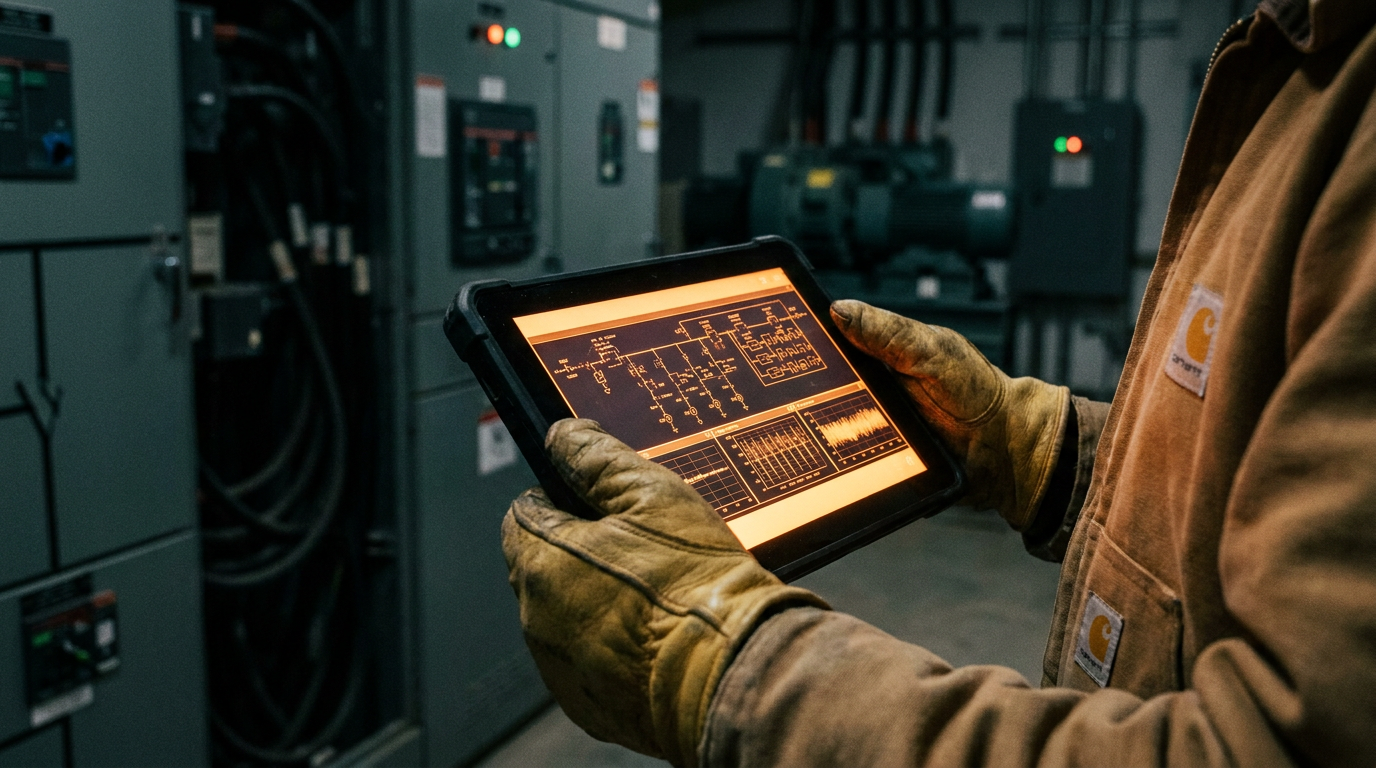
Using AI for arc flash hazard analysis involves feeding it electrical system data to predict incident energy and define protection boundaries. AI models can analyze complex variables faster than manual methods, improving the accuracy of safety labels and personal protective equipment (PPE) requirements based on standards like NFPA 70E.
An arc flash is one of the most serious dangers on any job site. The intense heat and pressure can cause severe injury or death. For years, arc flash hazard analysis has been a complex, time-consuming process. It involves manual calculations and deep knowledge of standards like NFPA 70E. Now, artificial intelligence is changing the game.
AI isn't here to take your job. It's a tool, like a high-end multimeter, that can make your work safer and more efficient. By processing huge amounts of data in seconds, AI helps you identify risks and create safer work plans faster than ever before.
What is Arc Flash Hazard Analysis?
Before we talk about AI, let's get back to basics. An arc flash hazard analysis is a study to figure out the risk of an arc flash in a piece of electrical equipment. The goal is simple: keep people safe.
The analysis determines:
- Incident Energy: The amount of thermal energy a worker could be exposed to, measured in calories/cm².
- Arc Flash Boundary: The distance from the equipment where a worker could get a second-degree burn.
- Required PPE: The specific personal protective equipment needed to work safely.
Traditionally, this meant a Professional Engineer (PE) would spend hours, or even days, using specialized software. They would input data about the electrical system, like voltage, available fault current, and the clearing times of circuit breakers and fuses. It's a critical but slow process.
Where AI Fits In
AI speeds everything up and can even spot things a human might miss. It acts like an incredibly fast and thorough assistant. Instead of manually inputting data and running single calculations, AI can run thousands of scenarios at once.
Here’s how it helps:
- Data Digestion: AI tools can pull data from different sources. Think digital blueprints, maintenance logs, and equipment spec sheets. It organizes this information so it's ready for analysis.
- Pattern Recognition: AI can analyze past incidents or maintenance records to predict which pieces of equipment are at higher risk of failure. This helps you focus your safety efforts where they matter most.
- Faster Calculations: The core of an arc flash study is the math. AI can perform these complex calculations instantly. It can model the entire electrical system and determine incident energy at multiple points in a fraction of the time.
- Dynamic Labeling: An electrical system isn't static. Changes happen. AI can help update arc flash labels in real-time when a change is made, ensuring the information workers see is always accurate.
This isn't science fiction. It's about using powerful software to make a dangerous job safer. It's a key part of improving jobsite safety for every electrician.
Prompts to Get You Started
You don't need to be a data scientist to use AI. Modern AI tools work with plain English. You can use large language models like ChatGPT or Google's Gemini to help with planning and documentation. Here are a few prompts you can try.
Generate a pre-task safety checklist for performing maintenance on a 480V switchgear. Base the checklist on NFPA 70E standards. Include specific steps for verifying a de-energized state, selecting correct PPE based on the arc flash label, and establishing a safe work boundary.
This prompt helps you create a solid plan before work even begins. It ensures you don't miss a critical safety step.
I am preparing for an arc flash risk assessment. Summarize the key requirements from NFPA 70E, Article 130, for establishing an electrically safe work condition. Present the information as a simple, step-by-step guide I can use for a toolbox talk with my crew.
Use this to quickly get clear, simple language to share with your team. It translates dense code requirements into actionable steps.
The Limits of AI: Keep Your Boots on the Ground
AI is a powerful tool, but it's just that—a tool. It will not replace your experience, judgment, or the need for a qualified Professional Engineer.
Here's what AI can't do:
- Verify Field Conditions: AI works with the data you give it. If your data is wrong, the results will be wrong. You still need to walk the site and verify that the equipment in the field matches the drawings and data.
- Make Final Judgments: An AI can't sign and stamp an official arc flash study. That still requires a licensed PE who takes legal responsibility for the analysis.
- Replace Common Sense: If an AI model gives you a result that seems off, trust your gut. Your years of experience are more valuable than any algorithm. Question the results and double-check the data.
Think of AI as your co-pilot. It handles the navigation and complex calculations, but you are still the pilot flying the plane. You make the final decisions.
The Future Looks Safer
The goal of any safety program is to send every worker home in the same condition they arrived. AI is one of the most promising advancements in electrical safety we've seen in decades.
As the technology gets better, it will become more integrated into the software electricians already use. Imagine a future where your tablet can scan a QR code on a panel, instantly pull the latest data, and show you a visual overlay of the arc flash boundary.
By embracing these tools, we can move from a reactive to a predictive approach to safety. We can identify hazards before they cause harm and build a safer work environment for the next generation of electricians. It's about working smarter, not just harder, to manage the risks we face every day.
Frequently asked questions
37 copy-paste prompts that save tradespeople 5+ hours a week. Plus one short email every Friday — no fluff.
More for electricians
AI for Electricians: A Field-Tested Guide
AI for Electricians comes down to using AI to do the slow stuff — quoting, paperwork, marketing, and customer follow-up — so you can stay on the tools. Bel

27 ChatGPT Prompts for Electricians (Copy & Paste)
27 ChatGPT Prompts for Electricians (Copy & Paste) comes down to using AI to do the slow stuff — quoting, paperwork, marketing, and customer follow-up — so

AI Electrical Load Calculator: How It Works & Free Prompt
AI Electrical Load Calculator comes down to using AI to do the slow stuff — quoting, paperwork, marketing, and customer follow-up — so you can stay on the