Can AI Balance a Commercial HVAC System?
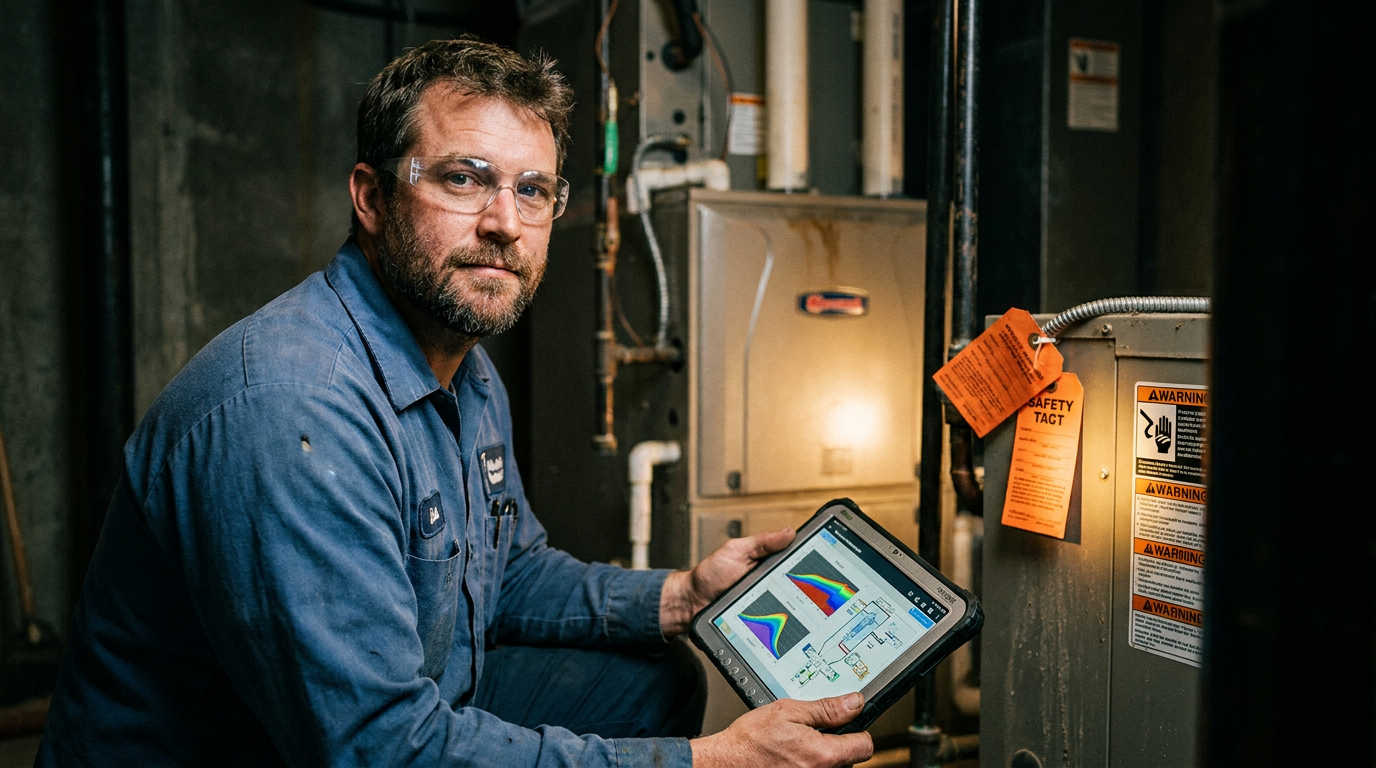
No, AI cannot physically perform a test and balance on a commercial HVAC system by itself. It can't turn dampers or adjust fan speeds. However, AI software is a powerful partner for TAB technicians, helping analyze data, predict issues, and optimize system performance much faster than manual methods.
Can AI Actually Balance an HVAC System?
Let's cut to it. Can you send a robot up a ladder to perform a full test and balance on a commercial rooftop unit? No. AI can't turn a wrench, spin a damper, or use a flow hood. Not yet, anyway.
But that's the wrong question. The right question is: can AI make the test, adjust, and balance (TAB) process faster, smarter, and more profitable? Absolutely.
AI isn't here to take your job. It's a tool, like a digital manometer on steroids. It processes information at a speed no human can match. For the modern HVAC pro, ignoring AI is like sticking with a slide rule when calculators exist. It's about working smarter, not harder.
What AI Can Do for HVAC Balancing
Think of AI as your new co-pilot. While you're in the field doing the hands-on work, the AI is crunching numbers in the background. It excels at tasks that are tedious and time-consuming for humans.
Massive Data Analysis: A modern commercial building has thousands of sensors. They track airflow, temperature, humidity, static pressure, and damper positions every minute. An AI platform can analyze this flood of data in real-time. It can spot tiny inefficiencies across an entire building that a human might take weeks to find.
Fault Detection and Diagnostics (FDD): This is where AI really shines. FDD algorithms are designed to be digital watchdogs. They learn what 'normal' looks like for your system. When a VAV box starts 'hunting' (opening and closing constantly) or a chiller's efficiency drops by 2%, the AI flags it instantly and can even suggest the likely cause. This moves you from reactive repairs to proactive maintenance.
Energy Optimization: A TAB report creates a baseline. But a building's needs change with the seasons, occupancy, and even the time of day. AI can constantly look for the sweet spot. It might find that you can lower static pressure at night or pre-cool a building before peak hours, saving the client big money on energy bills. According to the U.S. Department of Energy, FDD tools can save a typical commercial building 15% on its energy consumption.
Predictive Balancing: Instead of just balancing to a design spec, AI can help you balance to real-world conditions. By analyzing historical data, it can recommend adjustments that anticipate future loads, leading to better comfort and performance.
Where the Human Technician Is Still King
AI is smart, but it doesn't have hands or intuition. The most critical parts of the job still require a skilled technician on site.
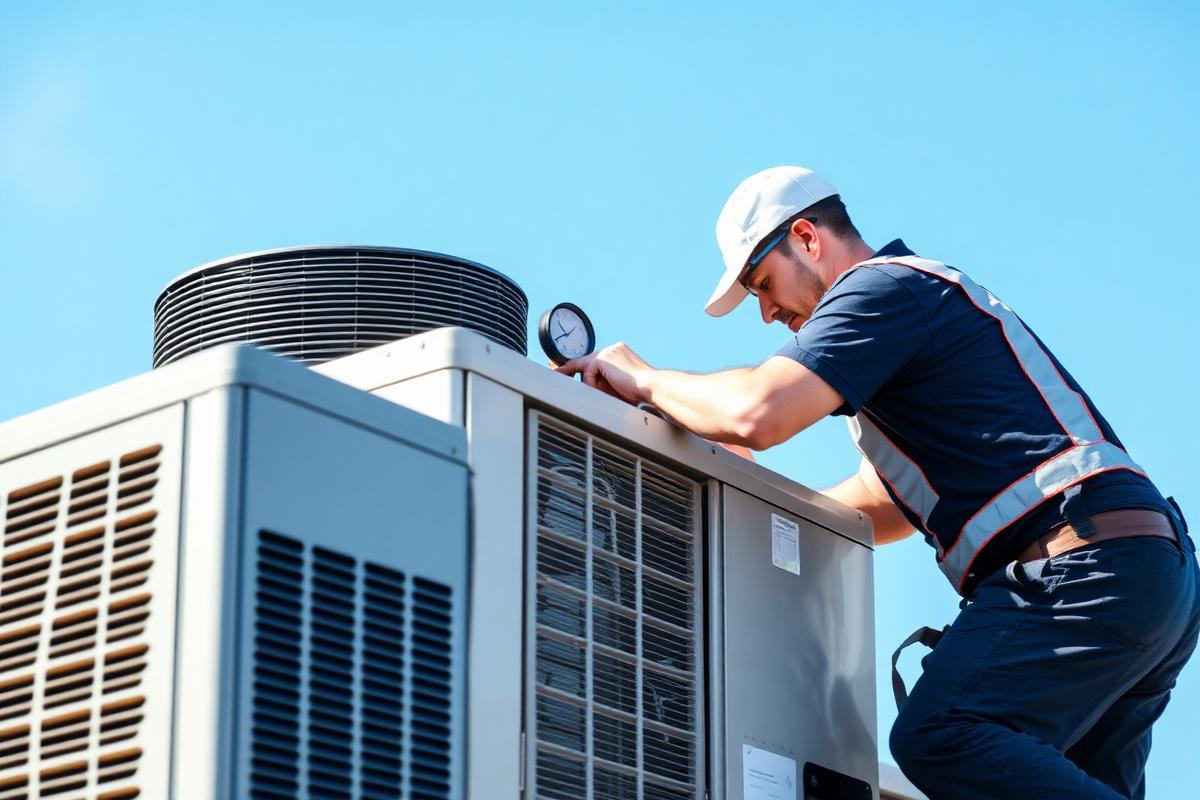
Physical Work: AI cannot climb into a ceiling, attach a manometer to a duct, or physically adjust a damper. This is the core of the TAB process. The hands-on skill of a technician is, and will remain, essential.
Experience and Intuition: A seasoned tech can hear a bearing that's about to fail or feel an unusual vibration. They understand the quirks of a 20-year-old system that a data sheet can't capture. This 'gut feel' comes from years in the field and is something AI can't replicate.
Complex Problem Solving: What if the AI flags low airflow in a zone, but the VAV box and fan are working perfectly? A technician needs to investigate. Maybe an employee put a filing cabinet over a diffuser, or a fire damper was accidentally tripped. AI sees the data; you see the real world.
Installation and Verification: You need a human to install the sensors, calibrate the equipment, and perform the final verification to sign off on a job. Organizations like the National Environmental Balancing Bureau (NEBB) and the AABC Commissioning Group (ACG) set standards that require certified human oversight.
Prompts to Get You Started
Use these prompts to see how AI can help with your daily HVAC business operations.
Act as a certified TAB engineer. I have a dataset from a commercial building's VAV system. The columns are: 'VAV_ID', 'Timestamp', 'Airflow_CFM_Setpoint', 'Actual_Airflow_CFM', 'Damper_Position_%', 'Discharge_Air_Temp'. Analyze this data to identify the top 3 VAV boxes that are hunting, overshooting their setpoint, or have stuck dampers. Provide a summary of probable causes for each.
Draft a short, professional email to a building manager. The goal is to explain the value of using our new AI-assisted Test and Balance service. Focus on the benefits: improved tenant comfort, lower energy bills, and faster problem resolution compared to traditional TAB methods. Keep it simple and avoid overly technical jargon.
The Future: Your New Workflow
The most effective approach combines human skill with AI's analytical power. The workflow looks something like this:
- Tech on Site: The TAB technician performs the initial tests with traditional tools—flow hood, manometers, and sensors—to gather baseline data.
- Feed the Machine: This data is uploaded to an AI analytics platform, often integrated with the Building Automation System (BAS).
- AI Analysis: The AI crunches the numbers in minutes. It compares the real-world data to design specs and historical performance, then generates a list of recommended adjustments.
- Human Validation: The technician reviews the recommendations. Does it make sense to close a damper by 15% in the CEO's office? The tech makes the final call.
- Adjust and Verify: The tech makes the physical adjustments. The system runs, and the AI confirms that the changes achieved the desired outcome.
This partnership makes the entire process more efficient. It helps you pinpoint problems faster and provides data-backed evidence for your work, which is great when quoting new tech jobs and showing value to clients.
The industry is moving toward self-correcting systems with smart actuators that can make small adjustments automatically based on AI commands. But even then, a certified professional will be needed to oversee, verify, and handle the problems the machine can't solve. The job isn't disappearing; it's evolving. The tech who embraces these tools will be the one who thrives.
Frequently asked questions
37 copy-paste prompts that save tradespeople 5+ hours a week. Plus one short email every Friday — no fluff.
More for hvac

AI for HVAC Contractors: Everything You Need to Know
AI for HVAC Contractors comes down to using AI to do the slow stuff — quoting, paperwork, marketing, and customer follow-up — so you can stay on the tools.

ChatGPT for HVAC Technicians: 20 Real Use Cases
ChatGPT for HVAC Technicians comes down to using AI to do the slow stuff — quoting, paperwork, marketing, and customer follow-up — so you can stay on the t
AI HVAC Load Calculation: Manual J in Minutes
AI HVAC Load Calculation comes down to using AI to do the slow stuff — quoting, paperwork, marketing, and customer follow-up — so you can stay on the tools