Beyond Ductwork: AI in Kitchen Ventilation Design
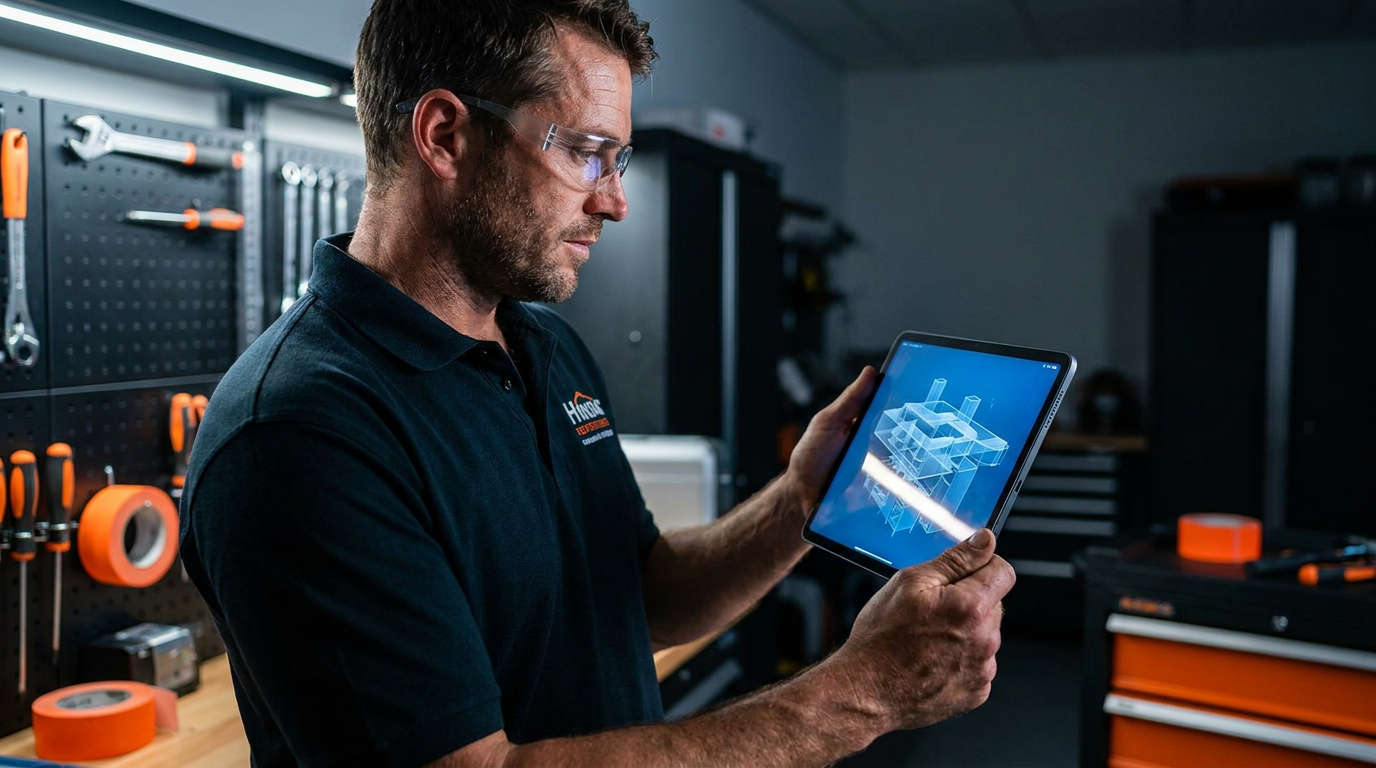
AI for commercial kitchen ventilation design uses software to analyze kitchen layouts, appliance heat loads, and building codes. This helps you create efficient ductwork plans, select the right equipment, and generate precise bids faster. It turns hours of manual calculation into minutes of automated work for more profitable jobs.
Beyond Ductwork: Using AI to Design and Bid Commercial Kitchen Hood Systems
Designing a commercial kitchen ventilation system is a tough job. You're balancing fire codes, health regulations, and client budgets. One wrong calculation for CFM or makeup air, and you're looking at a failed inspection, costly rework, and a hit to your reputation. For years, this meant hours spent with spreadsheets, codebooks, and calculators. But that's changing.
AI is moving from the office to the job site, and it's a game-changer for HVAC pros who specialize in kitchen ventilation. This isn't about robots welding ducts. It's about using smart software to do the heavy lifting on design and bidding, so you can focus on building a quality system.
From Guesswork to Data-Driven Design
At its core, AI for kitchen ventilation is about processing massive amounts of data, fast. Instead of you manually looking up the specs for every grill, fryer, and oven, an AI-powered tool can do it instantly. You feed it the kitchen layout and the equipment list, and it gets to work.
The software cross-references this information with a library of codes and standards, including:
- International Mechanical Code (IMC): Governs the design and installation of mechanical systems.
- NFPA 96: The standard for ventilation control and fire protection of commercial cooking operations.
- Local Health and Fire Department Rules: Often includes specific requirements that go beyond national codes.
By analyzing these variables together, the AI can generate an optimized design that accounts for heat loads, grease vapor capture, and required air changes. It takes the guesswork out of sizing ducts, selecting fans, and calculating makeup air (MUA) requirements, which is often one of the trickiest parts of the job.
The Big Wins: Speed, Accuracy, and Profit
Adopting any new tool has to make business sense. For kitchen ventilation design, AI delivers clear benefits that go straight to your bottom line.
1. Drastically Faster Bidding What used to take a full day or more can now be done in a couple of hours. By automating the tedious calculations, you can generate detailed, accurate bids much faster. This means you can bid on more jobs without hiring more estimators. More bids mean more chances to win.
2. Unmatched Accuracy Human error is a part of life, but it's expensive in this business. A miscalculation in static pressure can lead to the wrong fan selection. Forgetting a nuance in the local code can mean a failed inspection. AI minimizes these risks by running every design through a consistent, data-backed process. This leads to fewer change orders and a smoother project from start to finish.
3. Increased Profit Margins Faster, more accurate bids mean you can price your work with confidence. You're not adding extra buffer to cover potential mistakes. When the project goes according to plan, with no costly rework or delays, your planned profit becomes your actual profit. Better accuracy also helps you build a reputation for reliability, which is the best way to get more work.
Putting AI to Work on Your Next Bid
You don't need to be a computer scientist to use these tools. Many are built with the trades in mind. You can start by using AI to help with specific tasks. Here are a few prompts you can adapt for your favorite AI assistant or specialized software.
This first prompt helps you get a baseline for a new project. It takes a standard equipment list and asks the AI to outline the core design requirements.
Act as an HVAC design assistant specializing in commercial kitchen ventilation. I have a new project with the following appliance list: one 6-burner range, two 50-lb deep fryers, and one convection oven. The kitchen is 800 square feet with a 10-foot ceiling. Based on standard IMC and NFPA 96 guidelines, provide a preliminary analysis that includes: estimated total CFM for a Type I hood, recommended duct velocity, and a preliminary makeup air strategy. List three key code considerations for this setup.
Once you have a design, you need a bill of materials to build your bid. This prompt helps you turn a design plan into an actionable parts list.
Based on a commercial kitchen ventilation design for a 20-foot Type I hood requiring 4000 CFM, generate a bill of materials. The system includes a 20-foot duct run with two 90-degree elbows to an upblast exhaust fan on the roof. The makeup air unit is located 15 feet from the kitchen. The list should include: the exhaust fan (with horsepower and voltage), the MUA unit, linear feet of stainless steel ductwork (specify gauge), number and type of elbows, fire-rated access panels, and a basic fire suppression system component list.
It's Not Just About Ducts
The benefits of AI go beyond initial design. You can use it to model energy efficiency, which is a huge selling point for clients. For example, you can compare the long-term operating costs of a standard system versus one with a Demand Control Kitchen Ventilation (DCKV) system. The AI can model potential energy savings, helping you justify the higher upfront cost to your client.
These tools also help you create more accurate bids. When you have a precise bill of materials and a clear understanding of the labor involved, you can build a bid that protects your margins without overpricing the job. For more tips on building winning bids, you can sharpen your numbers.
Finally, AI can help with compliance. Before submitting any plan, you can use it as a final check.
Review the following commercial kitchen ventilation plan against NFPA 96 standards. The plan specifies a 16-gauge steel duct for a Type I hood system. The duct run is 30 feet horizontally before penetrating a fire-rated wall. The plan shows zero clearance to combustibles at the wall penetration. Please identify any potential NFPA 96 compliance issues and suggest the correct solutions.
This kind of query can catch a critical, and expensive, mistake before it ever gets to an inspector.
Finding the Right Tool
Specialized HVAC design software with built-in AI features is becoming more common. Look for tools that offer integrated code libraries that are updated regularly, CAD or BIM compatibility, and a user interface that makes sense to you. Some general AI assistants can also be very helpful for research, drafting client communications, and generating lists like in the prompts above.
The goal isn't to let the computer do your job. It's to use a powerful tool to do your job better, faster, and more profitably. By handling the repetitive calculations and code-checking, AI frees you up to solve the real-world problems that no software can handle.
Frequently asked questions
37 copy-paste prompts that save tradespeople 5+ hours a week. Plus one short email every Friday — no fluff.
More for hvac

AI for HVAC Contractors: Everything You Need to Know
AI for HVAC Contractors comes down to using AI to do the slow stuff — quoting, paperwork, marketing, and customer follow-up — so you can stay on the tools.

ChatGPT for HVAC Technicians: 20 Real Use Cases
ChatGPT for HVAC Technicians comes down to using AI to do the slow stuff — quoting, paperwork, marketing, and customer follow-up — so you can stay on the t
AI HVAC Load Calculation: Manual J in Minutes
AI HVAC Load Calculation comes down to using AI to do the slow stuff — quoting, paperwork, marketing, and customer follow-up — so you can stay on the tools