Using AI for Construction Equipment Maintenance
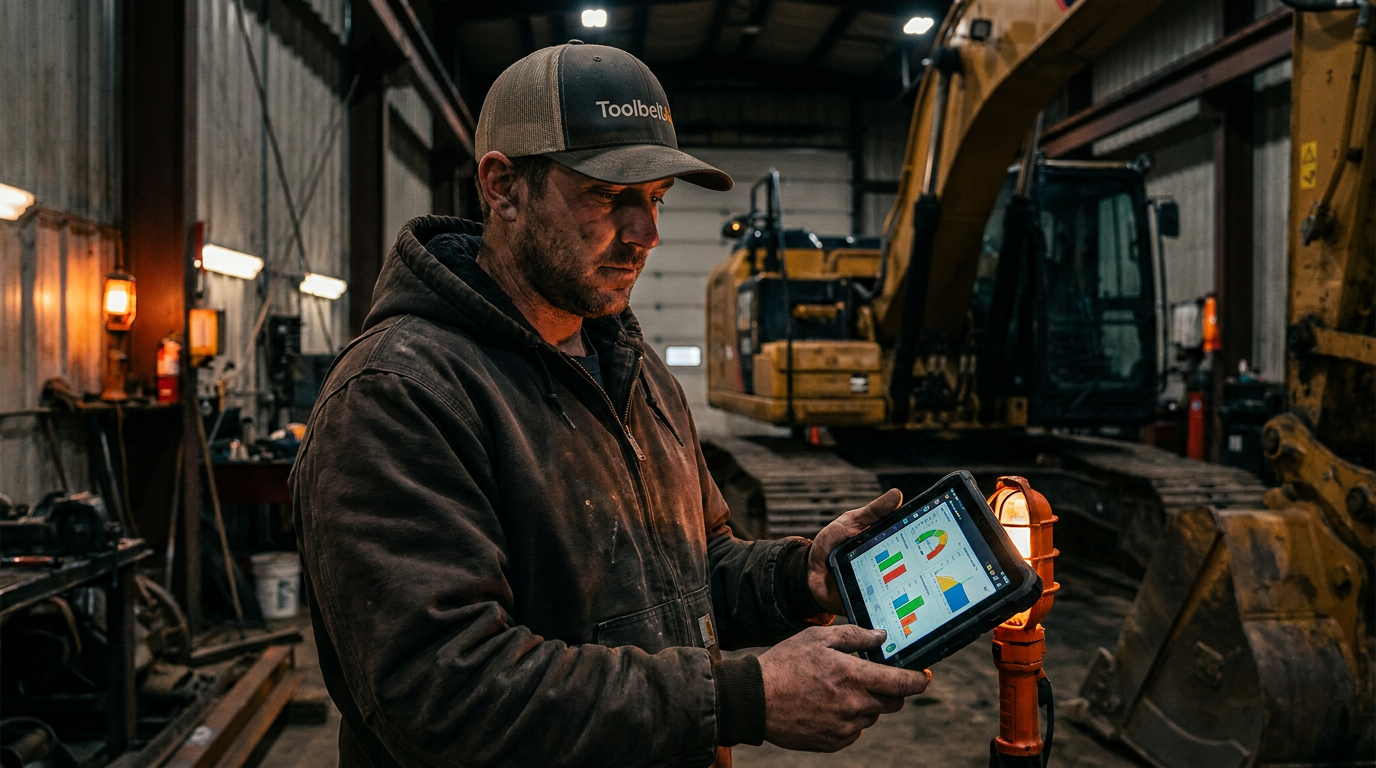
AI for construction equipment maintenance uses data from sensors on your machines to predict when a part will fail. This allows you to schedule repairs before a catastrophic breakdown occurs, saving time and money. It analyzes engine hours, fuel use, and component health to turn your maintenance from a guessing game into a science.
Your Biggest Asset is Your Biggest Liability
That new excavator is a beast. It moves dirt, makes money, and looks great with your logo on the side. But when it's down, it's a six-figure paperweight bleeding you dry. The cost of equipment downtime is no joke. It's not just the repair bill. It's the crew standing around, the project timeline getting torched, and your reputation taking a hit.
For decades, we’ve had two options: fix it when it breaks (reactive) or fix it on a schedule (preventive). Reactive is a crisis. Preventive is a guess. What if there was a third way? A way to know a breakdown is coming before it happens.
That's not science fiction anymore. It's AI for construction equipment maintenance, and it's changing the game for contractors who are tired of surprises.
What is Predictive Maintenance, Really?
Let's cut through the buzzwords. You already know about the old ways:
- Reactive Maintenance: The dozer's engine blows. You call the mechanic, lose three days of work, and pay for a rush job. It's the most expensive way to run a fleet.
- Preventive Maintenance: You change the oil every 500 hours, just like the manual says. This is way better, but it's still not perfect. You might be changing parts that are still good, wasting money. Or a part might fail at 450 hours, and you're back in crisis mode.
Predictive Maintenance is different. It uses real data from the machine itself to predict failure. Think of it like a doctor giving you a check-up. They don't just guess when you might have a problem. They run tests, look at your vitals, and use that data to spot trouble early.
AI takes this to the next level. It's the specialist who can look at thousands of data points and see a pattern that no human could. It tells you, "Hydraulic pump #2 on Excavator #7 is showing a 90% chance of failure in the next 75 operating hours." Now you can schedule the repair for a rainy day next week, not in the middle of a concrete pour.
How AI Gets the Job Done
This isn't magic. It's a logical process built on technology that's probably already in your equipment.
Sensors & Telematics: Most modern heavy equipment is packed with sensors. They track everything: engine temperature, hydraulic pressure, RPMs, fuel consumption, vibration, GPS location, and dozens of other things. This data is collected and transmitted wirelessly. This is called telematics.
The AI 'Brain': All that raw data gets fed into a powerful software program. The AI looks for tiny changes and combines them to find patterns. It learns what "normal" looks like for each specific machine. When it sees a deviation from normal—a slight increase in vibration plus a small drop in pressure—it flags a potential problem.
Actionable Alerts: The system doesn't just send you a mountain of data. It sends a simple, clear alert. For example:
ALERT: Loader #4 - Excessive idle time detected. Potential operator training issue.orWARNING: Dozer #1 - Engine coolant temperature pattern suggests thermostat failure is imminent. Schedule inspection.
This whole process is a core part of building smarter, more efficient jobsite operations.
Real-World Wins: Less Wrench Time, More Dirt Time
Adopting AI for maintenance isn't about having cool tech. It's about real, measurable results that put money back in your pocket.
- Slash Unplanned Downtime: This is the big one. The U.S. construction industry loses billions to equipment downtime every year. Predictive maintenance can cut that number drastically by turning emergencies into scheduled tasks.
- Smarter Parts Inventory: Stop stocking a warehouse full of expensive "just in case" parts. When you know a specific part will be needed in two weeks, you can order it then. This frees up cash and reduces waste.
- Boost Fuel Efficiency: AI can spot problems that hurt your miles per gallon, like a clogged filter or an engine not running at optimal temperature. It can also identify operators who might need a little coaching on how to run equipment more efficiently.
- Increased Equipment Lifespan: A well-maintained machine lasts longer and has a higher resale value. AI helps you take better care of your biggest assets, ensuring they work harder for longer.
Prompts to Get You Started
Feeling overwhelmed? You don't have to become a data scientist overnight. You can use simple AI tools, like ChatGPT, to help you figure out your first steps. Try copying and pasting these prompts.
Act as a construction company owner. I own a small fleet of mixed heavy equipment (excavators, dozers, loaders) from manufacturers like CAT and John Deere, purchased in the last 5 years. Draft a professional but direct email to my primary equipment dealer. The goal is to understand what telematics data my existing machines are already generating and if I can get access to it. Ask about their predictive maintenance platforms, associated costs, and if they offer any trial programs. Keep it under 150 words and make the tone sound like a busy contractor who values their time.
I'm a fleet manager for a mid-sized construction company. I need to evaluate different 'AI for construction equipment maintenance' software platforms. Create a simple checklist of the top 5-7 most important features I should compare. Focus on practical, real-world benefits, not just tech jargon. Include things like ease of use for my mechanics, compatibility with my mixed fleet (CAT, Komatsu, Volvo), quality of alerts, mobile app functionality, and reporting on cost savings. Present this as a simple bulleted list I can use to score each vendor.
It's Not All Magic and Pixie Dust
Let's be real. There are hurdles to clear.
First, there's a cost. These software platforms aren't free. But you have to weigh that monthly fee against the cost of one big breakdown on a critical job. Often, the ROI is a no-brainer.
Second, you need to get your crew on board. Some old-school mechanics might be skeptical. The key is to frame this as a new, powerful tool for their toolbox, not a replacement for their skills and experience. AI can tell you a pump is failing, but it can't pick up a wrench and replace it.
AI for equipment maintenance isn't about replacing your people. It's about empowering them. It gives your mechanics x-ray vision to see problems before they start. It turns your maintenance budget from a reactive expense into a strategic investment. Stop guessing and start knowing.
Frequently asked questions
37 copy-paste prompts that save tradespeople 5+ hours a week. Plus one short email every Friday — no fluff.
More for business ops

AI Voicemail for Electricians: Catch Every Lead
AI Voicemail for Electricians comes down to using AI to do the slow stuff — quoting, paperwork, marketing, and customer follow-up — so you can stay on the
AI Answering Service for Plumbers: Real Costs & Picks
AI Answering Service for Plumbers comes down to using AI to do the slow stuff — quoting, paperwork, marketing, and customer follow-up — so you can stay on
HVAC Maintenance Plan Template (AI-Built)
HVAC Maintenance Plan Template (AI-Built) comes down to using AI to do the slow stuff — quoting, paperwork, marketing, and customer follow-up — so you can