Keep Trucks on the Road: AI Fleet Maintenance
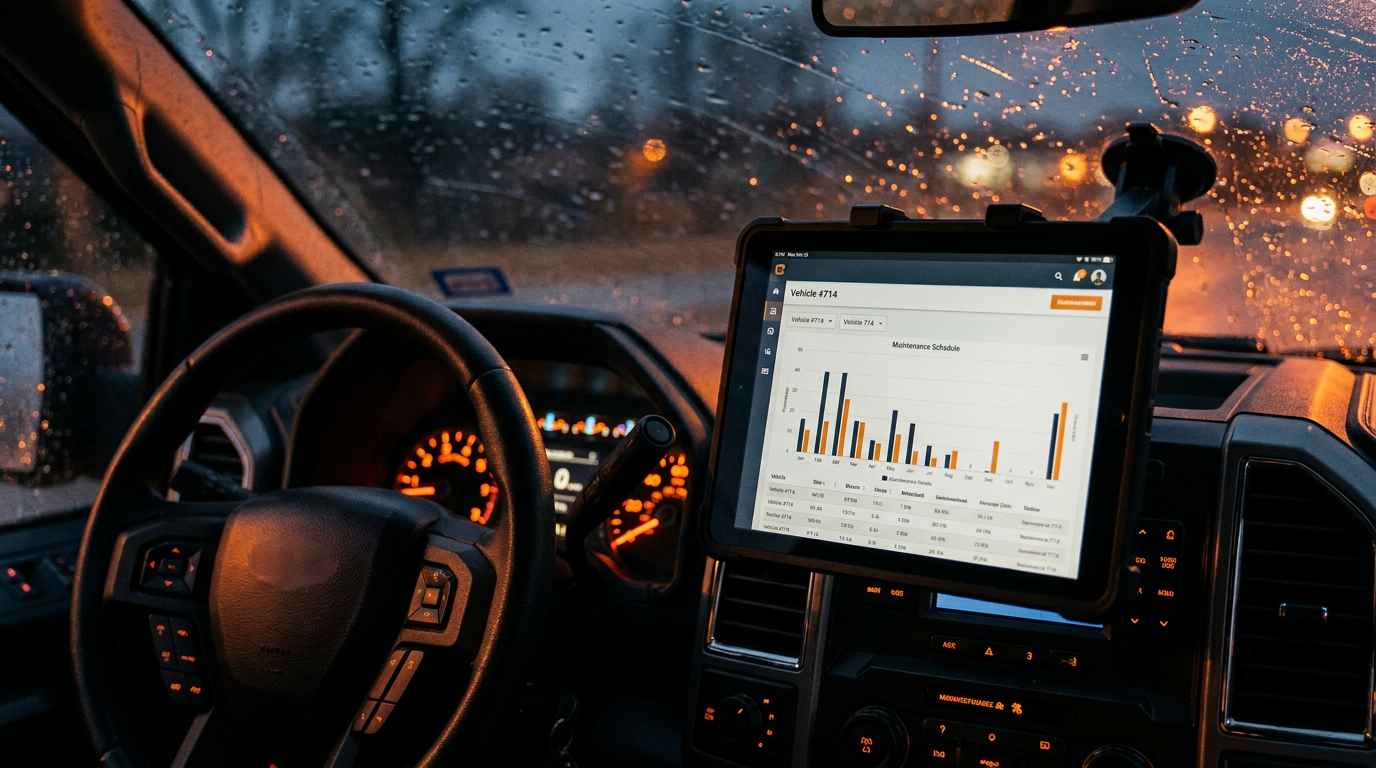
AI for contractor fleet maintenance scheduling uses data to predict when a truck needs service, preventing breakdowns. It analyzes mileage, engine hours, and driver reports to create smart schedules that minimize downtime and cut costs. This keeps your fleet on the road and earning money instead of sitting in the shop.
Your Trucks Are Your Business
Every contractor knows this truth in their bones: if your wheels aren't turning, you aren't earning. A truck sitting in the shop is more than an inconvenience. It's a black hole for your profits. You're paying a tech who can't get to the job, rescheduling angry customers, and watching a project timeline go up in smoke. For decades, we've relied on stickers on the windshield and notebooks in the glove box. That's reactive. AI for contractor fleet maintenance scheduling is proactive. It's about stopping problems before they start.
This isn't about sci-fi robots fixing your F-150. It's about using smart software to analyze data your trucks are already creating. This data tells a story about the health of your fleet. AI reads that story and tells you what's going to happen next, so you can schedule maintenance on your terms, not a tow truck's.
The Real Cost of a Downed Truck
Let's get real about what a breakdown costs. It's not just the repair bill. The real damage is much bigger.
- Lost Revenue: The job you couldn't get to is money you didn't make. If it's a multi-day delay, that number gets ugly fast.
- Crew Downtime: Your crew is on the clock, whether they're working or waiting for a ride. You're paying wages for zero productivity.
- Reputation Damage: Calling a client to say you can't make it kills trust. Do it more than once, and you'll lose them. Bad news travels fast.
- Overtime and Rush Fees: When the truck is finally fixed, you're paying overtime to catch up. You might also pay rush fees for parts to get it back on the road sooner.
When you add it all up, a single unexpected breakdown can cost you thousands of dollars. An AI system that prevents just one of those a year often pays for itself.
How AI Predicts Problems Before They Happen
Predictive maintenance sounds complex, but the idea is simple. It’s like a doctor giving you a check-up to prevent a heart attack instead of waiting for you to show up in an ambulance. AI acts as that doctor for your fleet.
It works by collecting data from several sources:
- Telematics: This is the data from GPS trackers. It includes mileage, speed, idle time, and harsh braking events. A truck that idles for hours in the summer heat puts different stress on its engine than one driving on the highway.
- Engine Diagnostics: Most modern trucks have an OBD-II port. Telematics devices plug into this port and read fault codes and sensor data directly from the engine's computer. AI can spot a pattern in sensor readings that points to a future failure, even before a check engine light comes on.
- Driver Reports: Your drivers know their trucks. A simple app can let them report small issues—a weird noise, a soft brake pedal—before they become big ones. AI can analyze these reports across your whole fleet to spot trends.
- Maintenance History: AI analyzes your past repair orders. It learns that, for your specific trucks and routes, a certain part tends to fail around 70,000 miles. It will then flag any truck approaching that milestone for inspection.
Act as a fleet maintenance analyst. I have three work trucks. Based on the following data, create a prioritized one-month maintenance schedule that minimizes jobsite disruption.

Truck 1 (Ford F-150):
- Mileage: 85,200
- Last Oil Change: 80,100 miles
- Notes: Driver reported 'spongy brakes' yesterday. Tires have 4/32" tread depth.

Truck 2 (Chevy Silverado):
- Mileage: 48,500
- Last Oil Change: 45,500 miles
- Notes: Engine fault code P0420 (Catalyst System Efficiency Below Threshold) appeared last week. Due for standard 50k-mile service.

Truck 3 (Ram 2500):
- Mileage: 121,000
- Last Oil Change: 118,000 miles
- Notes: No issues reported. Running well.

Prioritize safety issues first, then preventative maintenance, then standard service. Suggest which day of the week is best for service, assuming Fridays are our slowest day.
Smart Scheduling That Works For You
Knowing a problem is coming is half the battle. The other half is fixing it without wrecking your work schedule. This is where AI scheduling shines. Instead of just telling you a truck needs an oil change, it looks at the big picture.
An AI system can see that Truck 4 and Truck 7 are both due for a tire rotation and a fuel filter change. It can also see that you have no jobs scheduled next Tuesday afternoon. The system will then recommend you schedule both trucks for service at the same time, with the same shop, during that open window. This is called batching, and it saves a ton of time.
Good AI software integrates with your dispatch calendar. It finds the dead spots—a rainy day for a landscaping crew, a Friday afternoon for an HVAC team—and suggests those times for maintenance. You get the work done without canceling a single job.
I need to choose an AI fleet maintenance software for my plumbing business. We have 8 service vans. Draft a professional email to a potential software vendor. In the email, ask these five key questions:

1. Does your software integrate with our existing GPS provider (Samsara)?
2. Can it automatically schedule maintenance based on predictive fault codes from the OBD-II port?
3. Does it include a mobile app for drivers to complete daily vehicle inspection reports?
4. Can the system track cost-per-mile for each vehicle, including fuel and repairs?
5. What is the pricing structure for a fleet of our size?

Keep the tone professional but direct. My name is [Your Name] from [Your Company].
Choosing the Right AI Tool
Not all fleet software is the same. When you're shopping around, cut through the marketing fluff and look for features that solve real-world problems for a contractor.
Here's what to look for:
- Integration: The tool must work with what you already have. Does it connect to your GPS provider? Your accounting software? Your dispatch board? If not, you're just creating more work.
- Predictive Alerts: The system should tell you what will happen, not just what did happen. Ask for specific examples of how it predicts failures.
- Automated Scheduling: Look for a tool that can read your work calendar and intelligently suggest maintenance appointments during downtime.
- Driver-Friendly App: If it's hard for your crew to use, they won't use it. A simple app for daily inspections and reporting issues is critical. This is your first line of defense.
- Cost Tracking: A good system shows you the total cost of ownership for each vehicle. You'll quickly see which trucks are assets and which are liabilities, helping you make better decisions when it's time to buy new ones.
Running a trade business is complex enough. Your equipment should make your life easier, not harder. Using AI for contractor fleet maintenance scheduling is a powerful way to protect your most valuable assets, keep jobs on track, and put more money in your pocket. It's time to stop reacting to problems and start preventing them.
Generate a simple, 10-point daily vehicle inspection checklist for my construction crew drivers. It should be a list they can run through in less than 5 minutes before leaving the yard. The goal is to catch small safety or maintenance issues before they become big problems on the road or at a jobsite. The list should be easy to understand and require a simple 'Pass' or 'Fail' for each item.
Frequently asked questions
37 copy-paste prompts that save tradespeople 5+ hours a week. Plus one short email every Friday — no fluff.
More for other trades

AI for Painting Contractors: Quoting to Marketing
AI for Painting Contractors comes down to using AI to do the slow stuff — quoting, paperwork, marketing, and customer follow-up — so you can stay on the to

AI for Fence Companies: 9 Practical Plays
AI for Fence Companies comes down to using AI to do the slow stuff — quoting, paperwork, marketing, and customer follow-up — so you can stay on the tools.

AI for Handyman Business: The Solo Operator Stack
AI for Handyman Business comes down to using AI to do the slow stuff — quoting, paperwork, marketing, and customer follow-up — so you can stay on the tools