Can AI Create a Journeyman Plumber Skills Test?
Yes, AI can create a skills test for a journeyman plumber. It's a powerful tool for generating technical questions, situational judgment scenarios, and code-specific problems. However, you must review and edit the output to ensure it matches your local codes and job requirements before using it in your hiring process.
Hiring a good journeyman plumber is tough. A bad hire costs more than just a paycheck. It costs callbacks, materials, and your reputation. You need to know if an applicant can really do the work. A solid skills test is how you find out, but building one from scratch takes time you don't have.
That's where AI comes in. It can't replace your gut feeling or a hands-on test, but it can be a powerful assistant. Think of it as a smart apprentice that can help you draft the written part of your skills assessment, saving you hours of work.
Why a Good Skills Test Matters
A journeyman plumber isn't just a pipe-fitter. They are a problem-solver who protects public health and safety. The person you hire will be in customers' homes, often working alone. You need to trust their judgment, their knowledge of code, and their technical skills.
A bad hire can lead to:
- Code Violations: This can mean failed inspections, costly tear-outs, and legal trouble.
- Safety Hazards: Improperly installed gas lines or water heaters are serious risks.
- Customer Complaints: Leaks, low pressure, or sloppy work destroy your company's name.
- Wasted Time and Materials: A plumber who has to do a job twice is losing you money.
A well-designed skills test weeds out the talkers from the doers. It gives you real data on what an applicant knows before you put them in a company truck.
How AI Can Help Build Your Test
AI is a tool for generating text. It's good at taking your instructions and creating content. For a plumber skills test, you can use it to draft different types of questions that cover the core competencies of a journeyman.
Here’s what it can do:
- Technical Questions: AI can quickly generate multiple-choice or short-answer questions about tools, materials, and methods. Think about topics like identifying pipe types, proper jointing techniques, or the sequence for installing a fixture.
- Scenario-Based Problems: This is where AI shines. You can ask it to create a story problem. For example, 'A customer calls about a gurgling sound in their kitchen sink and a slow drain in the upstairs shower. What are the first three things you would check and why?' This tests an applicant's diagnostic process.
- Code Knowledge: You can prompt the AI to generate questions based on the International Plumbing Code (IPC) or Uniform Plumbing Code (UPC). You can even ask it to focus on specific chapters, like sanitary drainage or vents. This is a huge time-saver compared to flipping through the codebook yourself.
Here are a few prompts you can use to get started. Just copy and paste them into your AI tool of choice.
Act as a master plumber creating a written skills test for a journeyman applicant. Generate 10 multiple-choice questions to test their fundamental knowledge. Include questions about:

- Pipe material identification (PEX-A vs PEX-B)
- Proper venting techniques for a bathroom group
- Sizing a residential water heater
- The minimum required fall for a 3-inch drain line per the IPC
- Common causes of water hammer and their solutions

Provide an answer key after the questions.
Create a short, scenario-based problem for a journeyman plumber skills test. The scenario should involve a homeowner complaining about fluctuating water temperature in the shower. The problem should require the applicant to list:

1.  Potential causes for the issue.
2.  The diagnostic steps they would take to identify the root cause.
3.  The possible solutions based on their findings.

Make the scenario detailed enough to test their critical thinking skills.
Human Oversight is Non-Negotiable
This is the most important part. You cannot simply copy and paste an AI-generated test and use it to hire someone. AI makes mistakes. It can be out of date, and it doesn't know the specific codes for your city or county.
Your job is to act as the expert editor. After the AI gives you a draft, you or your lead plumber must:
- Fact-Check Everything: Is the information accurate? Are the 'correct' answers actually correct?
- Localize for Code: AI might pull from the base IPC, but does your state have amendments? For example, some jurisdictions have specific rules about air admittance valves or saddle valves that a generic AI might not know.
- Ensure Relevance: Does the test reflect the actual work you do? If you specialize in commercial boiler systems, a test focused on residential faucets isn't very useful. Edit the test to match the job description.
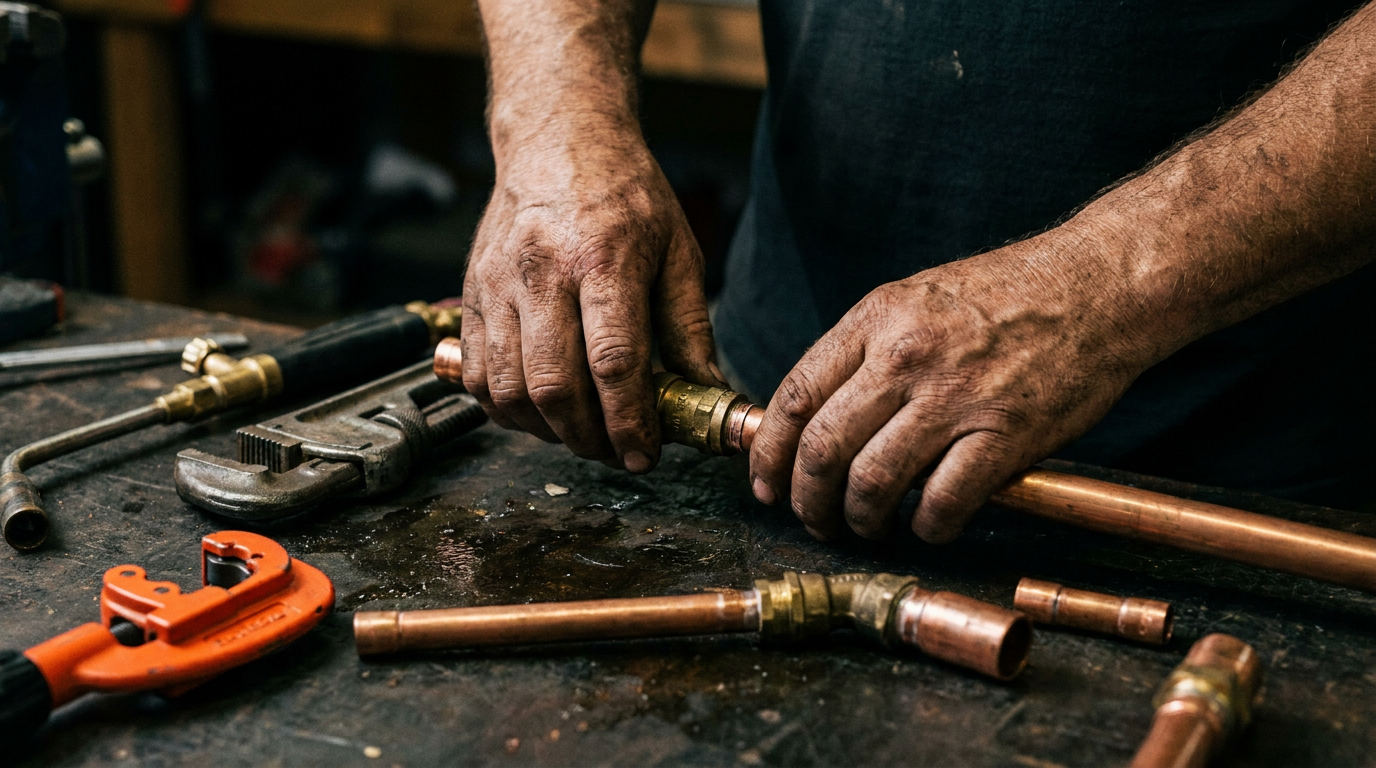
Most importantly, a written test is only half the battle. AI can help you draft the questions, but it can't tell you if a plumber can wipe a lead joint or sweat a copper fitting without a leak. You still need a hands-on portion of your skills assessment. Use the AI-generated test to screen applicants, then bring the best ones into the shop for a practical exam. Finding and hiring the right people is a multi-step process.
Putting It All Together: From AI Draft to Final Test
Ready to build your test? Here’s a simple workflow:
- Generate the Draft: Use the prompts in this article to get a solid first draft from an AI tool. Ask for a mix of multiple-choice, short-answer, and scenario questions.
- Review and Refine: Sit down with your most experienced plumber. Read through every question. Correct any errors and tailor the questions to your local codes and the specific job role.
- Design a Hands-On Component: Based on the job, create a small, practical task. This could be assembling a DWV fitting, setting a toilet, or sweating a few joints on a copper assembly. The goal is to see their hands-on skill and attention to detail.
- Combine and Standardize: Put the written and practical tests together into a single assessment. Create a simple scoring sheet so you can evaluate every candidate the same way.
Using AI this way doesn't make you lazy. It makes you efficient. It lets you focus your expertise on refining the test and evaluating the candidates, which is where your time is most valuable. You're using a modern tool to solve an age-old problem: how to find a plumber who knows their stuff.
Frequently asked questions
37 copy-paste prompts that save tradespeople 5+ hours a week. Plus one short email every Friday — no fluff.
More for hiring & hr

AI Job Description for Electrician Apprentice (Template)
AI Job Description for Electrician Apprentice (Template) comes down to using AI to do the slow stuff — quoting, paperwork, marketing, and customer follow-u

How to Screen Trades Resumes With AI (Fairly)
How to Screen Trades Resumes With AI (Fairly) comes down to using AI to do the slow stuff — quoting, paperwork, marketing, and customer follow-up — so you

30 AI-Generated Interview Questions for Plumbers
30 AI-Generated Interview Questions for Plumbers comes down to using AI to do the slow stuff — quoting, paperwork, marketing, and customer follow-up — so y