Can AI Design a Plumbing System for a Tiny Home?
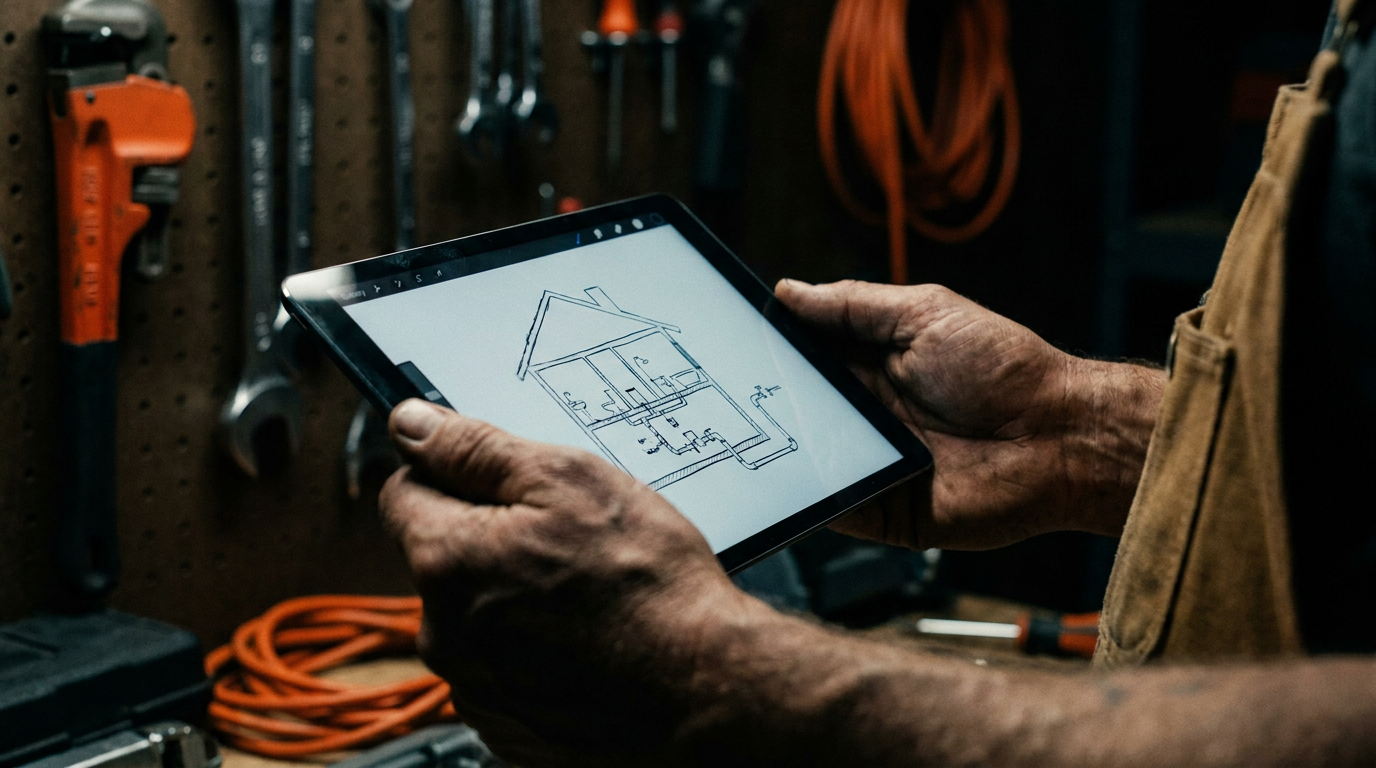
Yes, AI can help design a plumbing system for a tiny home, but it can't do the whole job alone. AI tools are great for generating initial layouts, creating material lists, and summarizing local plumbing codes. However, a licensed plumber must always review and finalize the plans for safety and compliance.
Can AI Figure Out the Plumbing for a Tiny Home?
Let's cut to the chase. You see the headlines about AI doing everything from writing songs to driving cars. So, can a robot brain map out the pipes for a 300-square-foot house on wheels? The short answer is yes, but it's not a one-click solution. AI is a powerful new tool for your digital toolbelt, not a replacement for your license and experience.
Think of AI as a smart apprentice. It can do the tedious grunt work fast. It can sketch out ideas, pull together parts lists, and even look up code. But it's never been on a muddy job site. It doesn't know the quirks of your local inspector. And it can't be held liable if a fitting fails.
This guide is for working plumbers. We'll show you what AI can actually do for a tiny home plumbing job, where it falls short, and how you can use it to work smarter, not harder.
What AI Can Actually Do for Tiny Home Plumbing
AI isn't magic. It's a pattern-matching machine. When you ask it to design a plumbing system, it's pulling from millions of examples of text and diagrams from the internet. For a defined project like a tiny home, this can be surprisingly useful.
Here’s where it shines:
Initial Layouts and Schematics: You can give an AI the dimensions of a tiny home, the fixture locations, and the type of system (on-grid, off-grid). It can then generate a basic schematic for your supply lines and DWV (Drain, Waste, and Vent) system. This is a great starting point for you to refine.
Material Takeoffs: Once you have a basic layout you like, you can ask the AI to create a bill of materials. It can list out the estimated lengths of PEX or copper, the number and type of fittings, shut-off valves, and even the necessary tools. This can save you a ton of time compared to manual counts, especially when you're busy estimating jobs.
Code Research: This is one of AI's strongest skills. Instead of digging through hundreds of pages of the UPC or IPC, you can ask the AI specific questions. For example: "What are the requirements for an Air Admittance Valve (AAV) in a tiny home in Maricopa County, Arizona?" The AI can summarize the relevant sections, giving you a head start on compliance. Always double-check its answers with the official source, but it points you in the right direction fast.
Prompts to Get You Started
Talking to an AI is a skill. The more specific your request, the better the result. Here are a few prompts you can copy and paste into a tool like ChatGPT or Claude to see what it can do.
Act as a master plumber. Create a basic PEX-A plumbing supply layout for a 24-foot tiny home on wheels. The layout includes a single bathroom with a 36-inch shower, a standard toilet, and a small vanity sink. The kitchen has a single-basin sink. The water heater is an on-demand propane unit mounted on an exterior wall. Provide a simple schematic description and a list of key considerations for a mobile application, such as drain slope and winterization.
This first prompt gives the AI a role, a specific context (tiny home on wheels), and clear constraints. The output will be a solid first draft for a layout.
Based on the previous PEX-A layout, generate a detailed bill of materials for the supply lines. Include pipe lengths, fitting types and counts (e.g., 90-degree elbows, tees, shut-off valves), and necessary tools like an expansion tool and pipe cutter. Assume standard US sizes. Do not include DWV components.
Building on the first prompt, this one asks for a specific deliverable: a material list. It saves you the tedious work of counting fittings from a drawing.
Where AI Falls Short (And Why You're Still the Boss)
AI is smart, but it's not wise. Your experience is what separates a functional system from a safe, reliable, and serviceable one. Here’s what AI doesn't understand:
The Real World: AI has no idea about the actual site conditions. Is the tiny home on a slab or a trailer with a chassis in the way? Is there proper access for future repairs? It can't account for the unexpected things you find on every job that require on-the-spot problem-solving.
The Human Element: AI doesn't know that Inspector Dave in your town is a stickler for cleanouts every 10 feet, even if code says otherwise. It doesn't understand the homeowner's specific habits or future plans. This trade is as much about people as it is about pipes.
Liability and Responsibility: When a joint fails and floods a home, the AI isn't going to answer the phone. You are. The final design, installation, and testing are your responsibility. Your license and your reputation are on the line. An AI-generated plan is just a suggestion until you put your stamp of approval on it.
A Practical Workflow for Using AI
So, how do you fit this into your daily work without getting burned? Follow a simple process.
Gather Specs: Start the same way you always do. Get the tiny home's floor plan, fixture locations, and the client's needs. Note any specific constraints, like trailer frame members or insulation types.
Use AI for Brainstorming: Plug your specs into a detailed prompt. Generate two or three different layout options. Ask for a DWV layout and then a separate supply line layout. This gives you ideas you might not have considered.
Apply Your Expertise: This is the most important step. Print out the AI's suggestions and mark them up with a red pen. Correct pipe sizes, adjust routes for better serviceability, and ensure everything meets the local codes you know by heart. The AI's plan is the starting point, not the finish line.
Finalize and Build: Create your final plan based on the AI's draft and your expert revisions. Use the AI-generated material list as a baseline, but walk the plan and do your own final takeoff before heading to the supply house. From there, it's all you. Grab your tools, cut the pipe, and build a system that works.
AI is not a threat to your job. It's a tool that can handle the boring parts, freeing you up to focus on the skilled work that clients pay for. By learning how to use it, you can become more efficient and profitable, especially in a growing market like tiny homes.
Frequently asked questions
37 copy-paste prompts that save tradespeople 5+ hours a week. Plus one short email every Friday — no fluff.
More for plumbers
AI for Plumbers: The Practical Field Guide
AI for Plumbers comes down to using AI to do the slow stuff — quoting, paperwork, marketing, and customer follow-up — so you can stay on the tools. Below i

25 ChatGPT Prompts for Your Plumbing Business
25 ChatGPT Prompts for Your Plumbing Business comes down to using AI to do the slow stuff — quoting, paperwork, marketing, and customer follow-up — so you

AI Plumbing Diagnosis Apps: What Actually Works
AI Plumbing Diagnosis Apps comes down to using AI to do the slow stuff — quoting, paperwork, marketing, and customer follow-up — so you can stay on the too