
Can AI Detect Asbestos From a Photo? The Real Answer
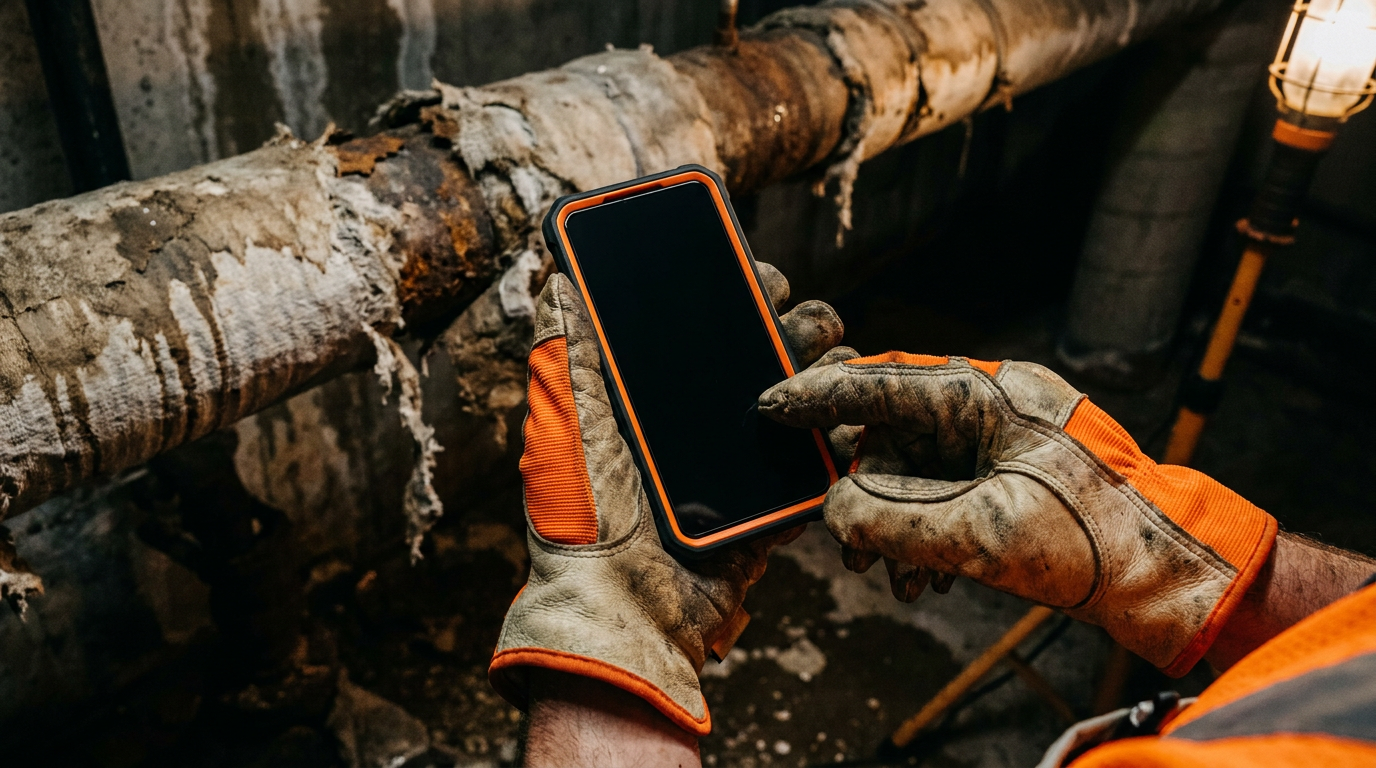
No, AI cannot reliably detect asbestos from a photo alone. Identifying asbestos requires microscopic analysis of fibers by a trained lab technician. While AI might guess based on textures of common asbestos-containing materials, it cannot confirm the presence of the dangerous fibers themselves. Always rely on professional testing.
Can Your Phone's AI Spot Asbestos? Here's the Truth
You see it all the time on a demo or remodel job. Old insulation, brittle-looking ceiling tiles, or ancient-looking siding. The first question that pops into your head is, "Is that asbestos?" With AI built into everything from your phone to your power tools, it's fair to wonder if you can just snap a picture and get an answer.
Let's cut right to it: The answer is a hard no. While AI is a powerful tool for scheduling, quoting, and even marketing, it is not a microscope. Relying on an app to identify a hazardous material like asbestos is a gamble you, your crew, and your clients can't afford to take.
Why You Can't "See" Asbestos
The fundamental problem is that you don't actually see asbestos. You see the material it's mixed into. Asbestos itself is a mineral made of microscopic fibers. These fibers are so small—about 1,200 times thinner than a human hair—that you need a special microscope to see and identify them.
When a material is called an Asbestos-Containing Material (ACM), it means these invisible fibers are part of its makeup. Common ACMs found on jobsites include:
- Insulation: Found in attics and around pipes and ducts (especially pre-1980s construction).
- "Popcorn" Ceilings: The textured acoustic ceilings popular for decades.
- Vinyl Flooring: Old vinyl sheet flooring and floor tiles, along with the mastic used to glue them down.
- Siding and Roofing: Cement asbestos board (CAB) was a common, durable material for exterior work.
- Pipe and Boiler Insulation: A chalky, white or grayish material wrapped around old plumbing and HVAC systems.
An AI can't look at a photo of a ceiling tile and see those fibers. It's physically impossible.
What AI Image Recognition Actually Does
So what happens when you point an AI app at a wall? An AI image model is trained on millions of photos. It learns to recognize patterns, textures, and objects. For example, it can learn what a "popcorn ceiling" generally looks like.
If an app claims to detect asbestos, here's what it's really doing: It's comparing your photo to a database of images labeled as potential ACMs. It might see the bumpy texture of your ceiling and say, "This pattern is 85% similar to other popcorn ceilings, which often contain asbestos."
It's a guess. A slightly educated guess, but a guess nonetheless. It's not performing a chemical or mineral analysis. It's just playing a matching game. This is a critical part of understanding your jobsite risks; you can't afford to guess.
The Dangers of Getting It Wrong
On the job, a guess isn't good enough. The stakes are too high. There are two ways an AI can get this wrong, and both are bad for business.
A False Negative: The AI says a material is safe, but it's actually an ACM. Your crew goes in, starts ripping it out without proper Personal Protective Equipment (PPE) or containment. Microscopic fibers fill the air. Now you've exposed your team and potentially the entire property to a known carcinogen. The long-term health risks are severe, and the legal liability for you as the contractor is massive. OSHA doesn't accept "my phone said it was okay" as a defense.
A False Positive: The AI says a material contains asbestos, but it's a modern, safe alternative. You stop the job, bring in an expensive abatement crew, and delay the project for weeks, only to find out later it was a false alarm. You've wasted your client's money and damaged your own reputation for no reason.
There is no substitute for certainty. The only way to get that is through proper lab testing.
How to Use AI as a Tool, Not a Diagnosis
Just because AI can't spot asbestos doesn't mean it's useless. You just have to use it for the right tasks. Think of AI as a smart assistant in your office, not a safety inspector on your site. It can help you manage the process around suspected materials.
Here are some practical ways to use AI to handle a potential asbestos situation correctly.
Prompt for Client Communication
When you tell a client they need to pay for testing, they might push back. AI can help you draft a clear, professional message that explains why it's non-negotiable.
I'm a general contractor. A client is asking if we can just 'tell' if their old ceiling tiles contain asbestos to save money. Draft a professional but firm email explaining why visual inspection isn't possible and why professional lab testing is required for safety and legal compliance. Mention the risks of fiber release and our duty to follow EPA and OSHA guidelines. Keep it clear and easy for a homeowner to understand.
Prompt for On-Site Safety
While you wait for lab results, you need to ensure your crew doesn't accidentally disturb the material. Use AI to build a quick safety plan.
Act as a jobsite safety manager. Generate a pre-abatement safety checklist for a crew that needs to work in an area with suspected, but not yet confirmed, asbestos-containing materials (ACMs). The goal is to minimize disturbance before the lab results are back. Include steps for sealing the area, required PPE, tool restrictions, and communication protocols.
The Right Way: Professional Asbestos Testing
The correct and only professional way to identify asbestos is simple.
- Hire a Pro: Find a state-certified asbestos inspector or consultant. They are trained to take samples without releasing fibers into the air.
- Take a Sample: The inspector will carefully cut a small, coin-sized piece of the suspect material, wet it down to prevent dust, and place it in a sealed bag.
- Send to a Lab: The sample is sent to an accredited laboratory. Look for labs accredited by the National Voluntary Laboratory Accreditation Program (NVLAP). This ensures they meet federal standards for accuracy.
- Get the Report: The lab uses a technique called Polarized Light Microscopy (PLM) to look for and identify asbestos fibers. They will send back a report that tells you exactly what type of asbestos is present and what percentage of the material it makes up.
This process is the industry standard for a reason. It's based on science, not guesswork. It protects your crew, your client, and your business.
So next time you're on a job and see something suspicious, don't reach for your phone to take a picture for an AI. Reach for your phone to call a certified testing professional.
Frequently asked questions
37 copy-paste prompts that save tradespeople 5+ hours a week. Plus one short email every Friday — no fluff.
More for jobsite ai
How Plumbers Use ChatGPT on the Jobsite (5 Ways)
How Plumbers Use ChatGPT on the Jobsite (5 Ways) comes down to using AI to do the slow stuff — quoting, paperwork, marketing, and customer follow-up — so y

How to Use ChatGPT on the Jobsite (Practical Guide)
How to Use ChatGPT on the Jobsite (Practical Guide) comes down to using AI to do the slow stuff — quoting, paperwork, marketing, and customer follow-up — s

AI Voice Notes to Job Report in 60 Seconds
AI Voice Notes to Job Report in 60 Seconds comes down to using AI to do the slow stuff — quoting, paperwork, marketing, and customer follow-up — so you can