Can AI Really Find a Plumbing Cross-Connection?
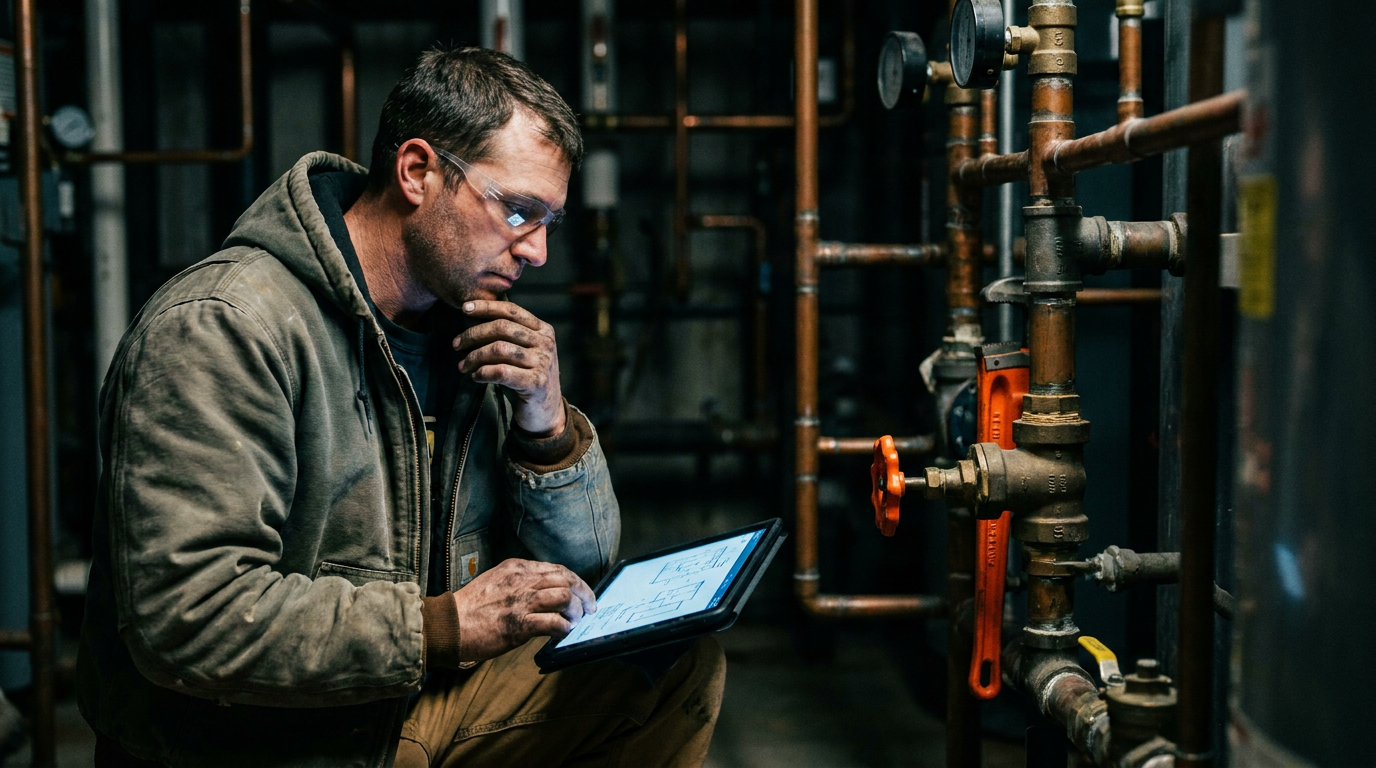
Yes, AI can help detect plumbing cross-connections, but not by itself. AI systems analyze building plans, sensor data, and jobsite photos to flag potential risks for a licensed plumber to verify. It acts as a smart assistant, not a replacement for professional inspection and hands-on testing.
Can AI Really Find a Plumbing Cross-Connection?
Let's cut to the chase. A cross-connection isn't just a code violation. It's a public health time bomb. One wrong pipe, one failed valve, and you can poison a water supply. You already know the stakes. For years, the tools for finding these risks have been your eyes, your experience, and your testing gear.
Now, everyone is talking about Artificial Intelligence. They say it can do anything. But can it really crawl into a mechanical room and spot a direct link between a potable line and a boiler feed? The answer is yes and no. AI is a new tool for your digital toolbelt, but it's not replacing the master plumber. It's more like a super-powered apprentice that can sift through data faster than any human.
This isn't about letting a robot do your job. It's about using smart tech to make you better at your job, flagging risks you might miss on a Friday afternoon after a long week. Let's look at what's real, what's hype, and how you can actually use it.
The Job: What a Cross-Connection Is
A cross-connection is any point in a plumbing system where the drinking water supply is or could be connected to a source of contamination. Think chemicals, wastewater, or industrial fluids. When a pressure change happens—called backflow—that contamination can be pulled or pushed back into the clean water lines.
- Direct Connection: A permanent, hard-piped link. For example, a makeup water line for a hydronic heating system without a proper backflow preventer.
- Indirect Connection: A temporary or potential link. The classic example is a hose submerged in a bucket of cleaning solution or a swimming pool.
Protecting against this is why backflow preventers exist. Devices like Reduced Pressure Zone (RPZ) assemblies, Double Check Valve Assemblies (DCVAs), and Pressure Vacuum Breakers (PVBs) are the physical barriers we rely on. The job of a cross-connection survey is to find every one of these potential links and ensure the right protection is in place and working. According to the EPA, backflow incidents are a common cause of waterborne disease outbreaks in the United States.
How AI Enters the Picture
AI isn't one single thing. It's a set of different technologies that can look at information and find patterns. For plumbing, this breaks down into a few key areas where it can actually help.
Schematic and Blueprint Analysis
On new construction projects, you're often working with digital blueprints or Building Information Models (BIM). An AI can be trained to read these plans.
- It can scan thousands of pages of drawings in minutes.
- It identifies symbols for potable and non-potable systems.
- It flags every intersection between these systems.
- It checks if the plan specifies the correct type of backflow preventer according to pre-loaded code standards (like the UPC or IPC).
Think of it as a second set of eyes that never gets tired. It gives you a punch list of potential problem spots to investigate before the first pipe is even installed.
Jobsite Image Recognition
This is where things get interesting for service and remodel work. You can use a phone or tablet to take pictures of existing, undocumented, or just plain messy mechanical rooms. An AI model with vision capabilities can analyze that photo.
You are an AI assistant trained to spot potential plumbing code violations from images. I've uploaded a photo of a commercial mechanical room. Analyze the piping. Identify any visible connections between what appears to be a potable water supply (copper lines) and non-potable systems (like boiler feeds, chillers, or floor drains). Flag any areas that look like a potential cross-connection and explain why it's a risk. I understand you are not a licensed plumber and this is not a formal inspection.
The AI can identify different types of pipes (copper, PVC, iron), valves, and fixtures. It can then flag a connection that looks risky, like a potable copper line running directly to a piece of equipment without a visible, approved backflow device. It's not a final diagnosis, but it tells you exactly where to put your hands and your test kit.
Sensor Data Monitoring
In modern smart buildings, AI can monitor the building's 'nervous system.' This includes:
- Pressure Sensors: An unexpected pressure drop in a potable line could indicate back-siphonage.
- Flow Meters: AI can detect unusual flow patterns, like water moving from a non-potable system toward a potable one.
- Water Quality Sensors: In critical applications like hospitals or food processing plants, sensors can detect changes in pH or chemical composition, triggering an immediate alert.
When AI sees a pressure drop in the city water line at the same time a pump for the irrigation system kicks on, it can flag a potential system failure for you to inspect. This is about moving from reactive repair to proactive maintenance, which can be a game-changer for improving your field operations.
Get AI to Work for You Today
You don't need a million-dollar system to start using AI. The large language models available today are powerful tools for planning and documentation. You can use them to build checklists and analyze situations you describe in plain text.
Here are some prompts you can copy and paste.
Act as a master plumber specializing in cross-connection control. I will describe a plumbing system. Your task is to identify potential cross-connection risks based on my description and suggest inspection points. Here is the setup: A single building has a main potable water line. This line feeds the drinking fountains and sinks. It also feeds a boiler for the heating system and an irrigation system for the lawn. There is also a connection to a fire sprinkler system. List all potential cross-connection points and the type of backflow prevention device I should look for at each connection.
Create a comprehensive cross-connection survey checklist for a 3-story commercial office building. The checklist should be organized by area (e.g., Mechanical Room, Janitor's Closets, Kitchenettes, Exterior). For each area, list specific fixtures and equipment to inspect for proper backflow prevention. Include columns for 'Location', 'Fixture/Equipment', 'Potential Risk', 'Backflow Preventer Type (Observed)', 'Pass/Fail', and 'Notes'. The output should be a simple, easy-to-use list for a plumber in the field.
The Limits: Why You're Still the Boss
This technology is impressive, but let's be clear about what it can't do. AI is not a licensed plumber, and it never will be.
- It Can't Turn a Wrench: An AI can't physically install, repair, or test a backflow preventer. That requires your hands-on skill.
- It Can't See Everything: An AI can't see what's behind a wall or buried underground. It only knows what it's shown, whether that's a drawing or a photo.
- It Can't Handle Reality's Mess: Old buildings have decades of undocumented changes. The AI might misinterpret a weird, custom-fabbed pipe job from 1975.
- It Has No Liability: When a cross-connection causes a contamination event, the authorities aren't going to sue a piece of software. The licensed plumber who signed off on the system is responsible. Your license and your reputation are always on the line.
Think of AI as a powerful flashlight that can help you see in the dark, but you're the one who has to walk the path and decide what to do. The final judgment call, backed by your experience and knowledge of local codes, is yours alone.
So, can AI detect a cross-connection? It can detect the risk of one. It's a tool for augmenting your expertise, not replacing it. It helps you focus your attention where it's needed most, so you can do what you do best: protect the water.
Frequently asked questions
37 copy-paste prompts that save tradespeople 5+ hours a week. Plus one short email every Friday — no fluff.
More for plumbers
AI for Plumbers: The Practical Field Guide
AI for Plumbers comes down to using AI to do the slow stuff — quoting, paperwork, marketing, and customer follow-up — so you can stay on the tools. Below i

25 ChatGPT Prompts for Your Plumbing Business
25 ChatGPT Prompts for Your Plumbing Business comes down to using AI to do the slow stuff — quoting, paperwork, marketing, and customer follow-up — so you

AI Plumbing Diagnosis Apps: What Actually Works
AI Plumbing Diagnosis Apps comes down to using AI to do the slow stuff — quoting, paperwork, marketing, and customer follow-up — so you can stay on the too