
Can AI Spot Electrical Problems Using Smart Meter Data?
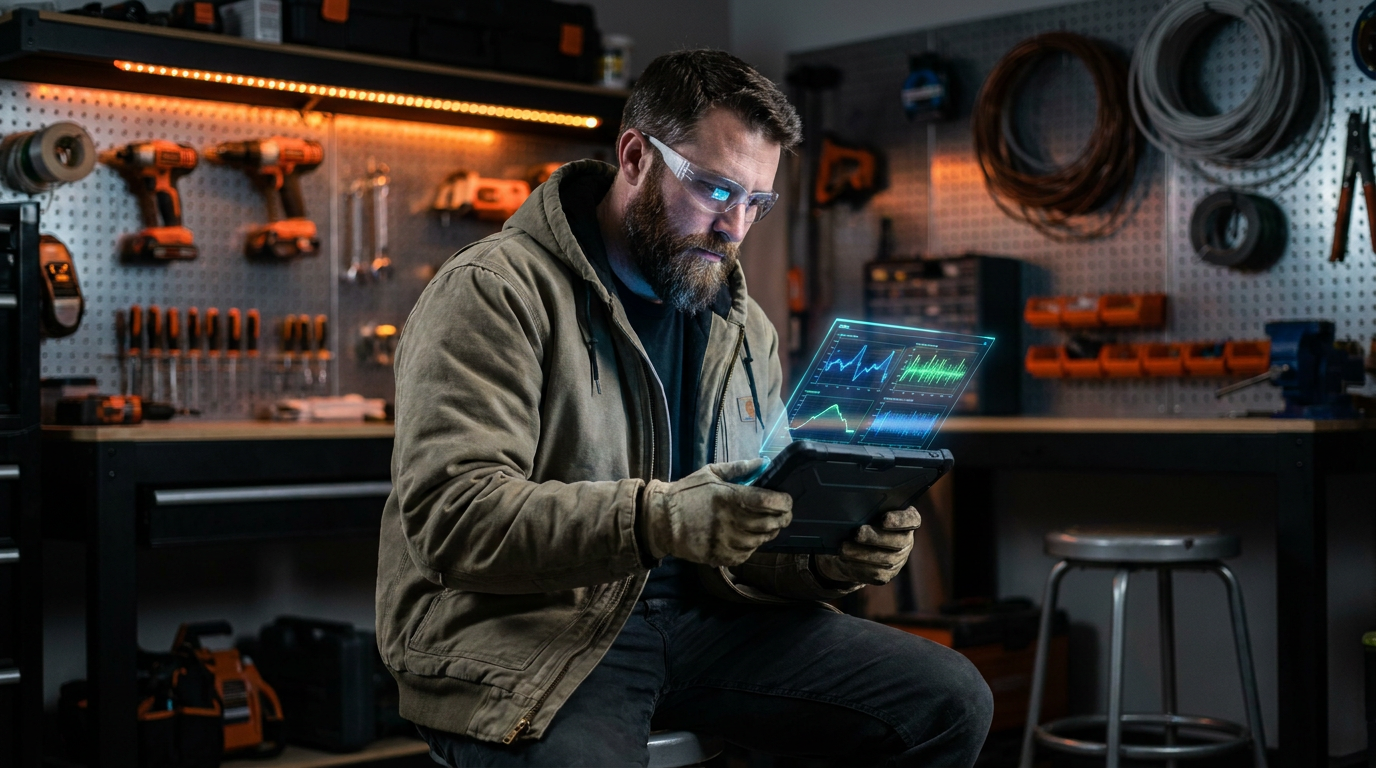
Yes, AI can detect voltage irregularities from smart meter data. By analyzing high-frequency energy consumption patterns, machine learning models can identify signatures of failing appliances, faulty wiring, or grid-level issues. This gives electricians a powerful new tool for proactive diagnostics and preventive maintenance before a major failure occurs.
Can AI Spot Electrical Problems Using Smart Meter Data?
Smart meters are on millions of homes and businesses across the country. Most people think they just send a monthly reading to the power company. But these devices are sitting on a gold mine of data. And with the right tools, like artificial intelligence, that data can tell you a lot more than how much to pay.
For electricians, this isn't science fiction. It's the next frontier in diagnostics. Using AI to analyze smart meter data can help you spot problems before they become disasters. It’s about moving from reactive repairs to proactive electrical management. Let's break down how it works and what it means for your business.
What Smart Meters Actually Measure
Your old analog meter just spun a wheel. It measured total energy consumption over a long period. Smart meters, or Advanced Metering Infrastructure (AMI), are different. They are digital devices that record energy usage at very short intervals, sometimes multiple times per second.
This high-resolution data is the key. It doesn't just show the total load; it captures the unique electrical 'signature' of every device in a building as it turns on, runs, and shuts off. This concept is called Non-Intrusive Load Monitoring (NILM).
Think about it:
- A refrigerator compressor has a specific startup power draw and cycle time.
- An LED light bulb has a completely different, much smaller signature.
- A failing motor might draw more current or have an erratic pattern.
AI can learn to tell these signatures apart from the main feed alone. It’s like being able to identify every instrument in an orchestra just by listening to the whole performance.
How AI Enters the Picture
AI, specifically machine learning algorithms, are trained on massive datasets of these electrical signatures. Researchers at places like the Pecan Street project in Austin, Texas, collect super high-resolution energy data from hundreds of homes to build these models.
Once trained, an AI can perform 'energy disaggregation.' It takes the total energy stream from a smart meter and breaks it down, appliance by appliance. It can tell you that the HVAC ran for 3 hours, the fridge cycled 40 times, and someone used the toaster at 7:05 AM.
But it goes deeper than just identifying devices. The AI looks for anomalies—the things that don't fit the normal pattern. That's where we find voltage irregularities and other signs of trouble.
Act as a master electrician explaining a new service to a homeowner. Write a simple, one-paragraph explanation of how you can use their smart meter data and AI to monitor their home's electrical health, predict failures, and improve safety. Avoid technical jargon. Focus on benefits like preventing fires, avoiding surprise repair bills, and ensuring their system is running efficiently.
Spotting the Red Flags
An electrical system in perfect health has a clean, predictable waveform. When things start to go wrong, the signs show up in the data. An AI is built to spot these deviations far better than a human ever could by looking at raw numbers.
Here are some irregularities AI can detect:
- Voltage Sags and Swells: A sag is a brief drop in voltage, often caused by a large motor starting up. A swell is a brief increase. While occasional sags are normal, frequent or deep sags can stress electronics. An unusual pattern could point to an overloaded circuit or a problem with a large appliance.
- Flicker: Rapid, repeated voltage variations can be a sign of a loose neutral connection, a major fire hazard. It could also indicate a failing motor or a problem on the utility's end. AI can distinguish between harmless and dangerous flicker patterns.
- Harmonic Distortion: Modern electronics with switch-mode power supplies (like computers and TVs) can introduce 'noise' back into the electrical system. Too much of this distortion can cause transformers and wiring to overheat. AI can quantify this distortion and flag it if it exceeds safe levels.
- Arc Faults: An electrical arc has a very specific, high-frequency signature. While still an area of active research, AI models are being developed that can detect these signatures from meter data, potentially preventing an electrical fire before it starts. This is a huge leap in jobsite safety.
Real-World Tools for Electricians
This technology creates new service opportunities. Instead of just fixing what's broken, you can offer clients ongoing system health monitoring.
Predictive Maintenance: Imagine telling a commercial client, "Our system analysis shows the compressor on your rooftop HVAC unit is showing signs of electrical stress. We recommend inspecting it before it fails during the next heatwave." This saves them downtime and money, making you an invaluable partner, not just a repair person. Offering this kind of service can really improve your quoting process.
Faster Troubleshooting: You arrive at a job with a head start. The AI has already analyzed the data and suggested the likely source of the problem. "The smart meter data shows an intermittent fault on the circuit powering the back office. Let's start our inspection there." This saves you time and makes your operation more efficient.
New Revenue Streams: You can package this as a subscription service for homeowners or businesses. For a monthly fee, you provide peace of mind through continuous electrical monitoring. This is a great way to build a modern marketing strategy for your business.
I'm an electrical contractor offering a new service that uses AI to analyze smart meter data for predictive maintenance. Generate 5 rugged, confident taglines for my website and truck wrap. The taglines should be short, memorable, and appeal to homeowners and small business owners. Focus on concepts like 'predicting problems,' 'electrical intelligence,' and 'proactive protection.' Avoid corporate buzzwords.
The Hurdles and What's Next
This technology is powerful, but it's not a magic wand. There are challenges to overcome.
- Data Access: This is the biggest hurdle. Not all utility companies provide easy access to the high-frequency data needed for this analysis. Policies vary widely. Some offer APIs for third parties (with customer consent), while others only provide basic daily totals.
- Privacy: Smart meter data reveals a lot about a person's life—when they're home, what they're doing. Gaining and maintaining customer trust and consent is critical. All data handling must be secure and transparent.
- Cost and Tools: The software and platforms that perform this analysis are still emerging. Companies like Sense, Bidgely, and C3 AI are major players, but solutions tailored for independent electrical contractors are just starting to hit the market. These are new tools to add to your digital toolbelt.
The future is more integration. As AI models improve and data becomes more accessible, we'll see this capability built into more professional tools. It will combine smart meter data with information from smart circuit breakers and other connected devices for an even clearer picture of a building's electrical health.
It’s not about replacing an electrician's knowledge. It's about augmenting it. AI provides the clues, but you, the professional, are still the one who solves the case.
Draft a professional email to a local utility company's business relations department. I am an electrical contractor interested in accessing high-frequency customer smart meter data (with their explicit consent) for diagnostic purposes. Inquire about their data sharing policies, any available APIs, partnership programs for contractors, and the technical requirements for accessing this data. Maintain a professional and collaborative tone.
Frequently asked questions
37 copy-paste prompts that save tradespeople 5+ hours a week. Plus one short email every Friday — no fluff.
More for electricians
AI for Electricians: A Field-Tested Guide
AI for Electricians comes down to using AI to do the slow stuff — quoting, paperwork, marketing, and customer follow-up — so you can stay on the tools. Bel
27 ChatGPT Prompts for Electricians (Copy & Paste)
27 ChatGPT Prompts for Electricians (Copy & Paste) comes down to using AI to do the slow stuff — quoting, paperwork, marketing, and customer follow-up — so

AI Electrical Load Calculator: How It Works & Free Prompt
AI Electrical Load Calculator comes down to using AI to do the slow stuff — quoting, paperwork, marketing, and customer follow-up — so you can stay on the