Can AI Help Diagnose Water Hammer Problems?
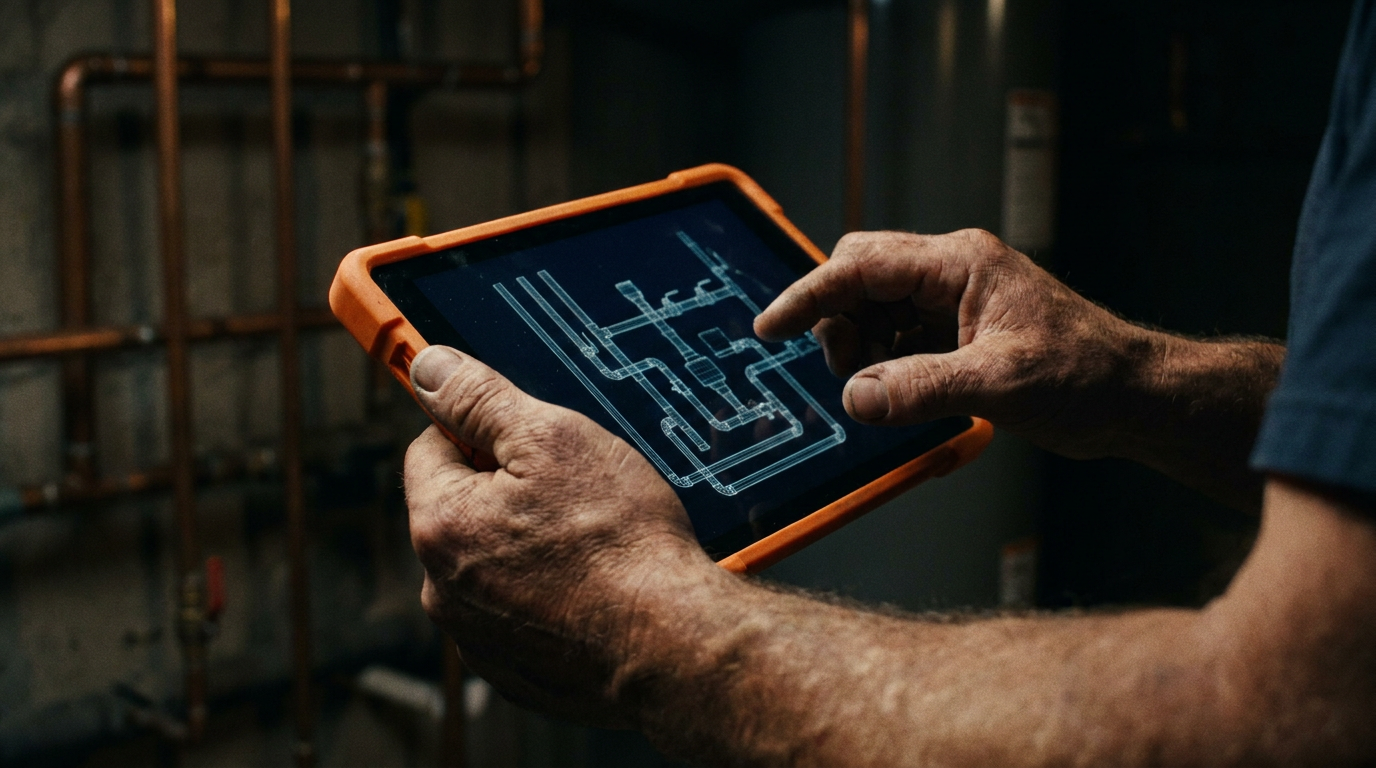
Yes, AI can help diagnose water hammer by analyzing symptoms you provide. It can suggest potential causes like high water pressure, failed arrestors, or quick-closing valves. AI acts as a smart assistant, helping you organize your thoughts and explore solutions before you even open your toolbox.
That loud bang in the walls after a faucet shuts off. We all know it. It’s water hammer, and it can be a real pain to track down. You’ve got a dozen potential causes, from high pressure to a failed arrestor buried in a wall. It’s a game of cat and mouse that costs time and money.
But what if you had a new tool to help you think through the problem? Not a wrench or a torch, but something that could sort through the symptoms before you even start cutting drywall. That's where Artificial Intelligence comes in. AI isn't here to take your job. It's here to make you faster and smarter on the job.
Think of it as the most knowledgeable apprentice you've ever had. It has read every plumbing manual and forum post ever written. It can help you connect the dots faster, so you can get to the real work of fixing the problem.
What's Really Causing That Racket?
Before we talk AI, let's get back to basics. Water hammer, or hydraulic shock, is a pressure surge that happens when moving water suddenly stops or changes direction. That energy has to go somewhere, and it goes into the pipe walls, making that signature banging noise.
Your experience tells you to look for a few common culprits:
- High Water Pressure: Anything over 80 PSI is a problem waiting to happen. It puts stress on the whole system and makes water hammer more likely and more violent. A simple gauge test at the hose bib is your first step.
- Quick-Closing Valves: Modern appliances are a big source of this. Dishwashers, washing machines, and ice makers use solenoid valves that snap shut instantly. That abrupt stop is a primary cause of water hammer.
- Failed Water Hammer Arrestors: Those little air-filled chambers are designed to absorb the shock. But over time, the air can get absorbed into the water, leaving them useless. The old-school air chambers you used to build into the pipes are even more prone to this.
- Loose Pipes: If pipes aren't strapped down properly, the shock wave can cause them to rattle or bang against studs and joists. Sometimes the fix is as simple as adding a few more pipe straps.
Diagnosing it is a process of elimination. You know this. But bouncing ideas off an AI can speed up that process.
How AI Fits Into Your Diagnostic Process
AI, specifically a large language model (LLM), is a pattern-matching machine. You feed it a set of symptoms, and it searches its massive database for similar patterns and known solutions. It’s not magic; it’s just data. Here’s how you can use it on the job.
Symptom Analysis: Instead of just keeping notes in your head, lay them out for an AI. Describe the location of the noise, what fixtures trigger it, the age of the house, and the type of pipes. The AI can then give you a ranked list of possible causes.
Troubleshooting Checklists: Once you have a likely cause, you can ask the AI to generate a step-by-step troubleshooting guide. This makes sure you don't miss a step, like checking pressure before and after a specific fixture runs.
Client Communication: Explaining technical issues to a homeowner can be tough. You can use AI to write a simple, clear explanation of water hammer and why your proposed fix is the right one. This builds trust and helps them understand the value of your work.
Here's a prompt you could use to get started:
I'm a plumber diagnosing a potential water hammer issue in a 15-year-old, two-story house. The client reports a loud banging sound when the washing machine in the basement stops filling and when the upstairs toilet is flushed. The noise seems to come from the main floor wall. The house has copper pipes. Based on these symptoms, provide a list of the top 3 most likely causes, ranked from most to least probable. For each cause, list the specific troubleshooting steps I should take to confirm the diagnosis.
Putting AI to the Test on the Jobsite
Let's walk through a real-world scenario. You're at a house, and the homeowner says they hear a bang whenever the dishwasher finishes filling. It’s a new, high-efficiency model.
Your gut tells you it’s the dishwasher's quick-closing solenoid valve. You could just install an arrestor on the hot water line and call it a day. But a true pro checks everything.
You pull out your phone and feed the symptoms to an AI. It confirms your suspicion about the solenoid valve as the most likely cause. But it also suggests two other possibilities:
- Could the overall house pressure be borderline high, and the new dishwasher is just the thing that pushed it over the edge?
- Could the original plumbing have an old, waterlogged air chamber somewhere near the kitchen that has finally failed?
Because the AI brought it up, you take two extra minutes to check the house pressure. It’s 85 PSI. A little high. Now the job isn’t just about installing one arrestor. The right solution is to install a pressure-reducing valve (PRV) for the whole house. That not only solves the water hammer but also protects every other fixture and appliance from premature wear. It’s a better, more complete fix. The client is happier, and you've done a more professional job.
After you diagnose the problem, you need to sell the solution. You can use AI to help with that, too. Once you've figured out the parts and labor, you need to build a solid estimate. For more tips on that, check out our guide to better plumbing quotes.
Write a simple, 100-word explanation of 'water hammer' for a homeowner. Use an analogy they can easily understand, like a train stopping suddenly. Explain what causes it in simple terms (fast-closing valves, water pressure) and why it's important to fix it (to prevent pipe damage). Avoid technical jargon. The tone should be reassuring but clear about the need for a professional repair.
The Limits of AI in Plumbing
Let's be clear. AI is a tool for your brain, not a replacement for your hands or your license. It has limitations.
- It Can't See or Hear: The AI can't be there with you. It relies entirely on the quality of the information you provide. If you misidentify a pipe or misread a pressure gauge, the AI's advice will be wrong. Your senses and experience on site are still king.
- Codes and Conditions Vary: An AI might have knowledge of the Uniform Plumbing Code, but it doesn't know the specific amendments in your town. It also doesn't know if the house has weird, non-standard plumbing from a past DIY job. Always trust your eyes and your knowledge of local codes first.
- It's Not a Substitute for Experience: AI can give you the textbook answer. It can't give you the answer that comes from 20 years of seeing weird problems in the field. Your professional judgment is the final word, always.
Use AI to broaden your thinking and confirm your hunches, not to make the final call.
I've diagnosed a water hammer problem caused by high water pressure (95 PSI) and a lack of arrestors on the washing machine supply lines. Create a table comparing two solutions: 1) Installing a pressure reducing valve (PRV) for the whole house, and 2) Installing two water hammer arrestors at the washing machine hookup. The table should compare them on estimated material cost, labor time, long-term effectiveness, and what other problems each solution might prevent. My labor rate is $125/hour.
Ultimately, diagnosing water hammer is still your job. You're the one in the truck, you're the one with the tools, and you're the one whose name is on the line. AI is just another tool in that truck. It can help you think faster, consider more angles, and communicate better. Use it right, and it will help you fix that bang in the pipes on the first visit, every time.
Frequently asked questions
37 copy-paste prompts that save tradespeople 5+ hours a week. Plus one short email every Friday — no fluff.
More for plumbers
AI for Plumbers: The Practical Field Guide
AI for Plumbers comes down to using AI to do the slow stuff — quoting, paperwork, marketing, and customer follow-up — so you can stay on the tools. Below i

25 ChatGPT Prompts for Your Plumbing Business
25 ChatGPT Prompts for Your Plumbing Business comes down to using AI to do the slow stuff — quoting, paperwork, marketing, and customer follow-up — so you

AI Plumbing Diagnosis Apps: What Actually Works
AI Plumbing Diagnosis Apps comes down to using AI to do the slow stuff — quoting, paperwork, marketing, and customer follow-up — so you can stay on the too