AI Drone Roof Inspections: A Roofer's Guide
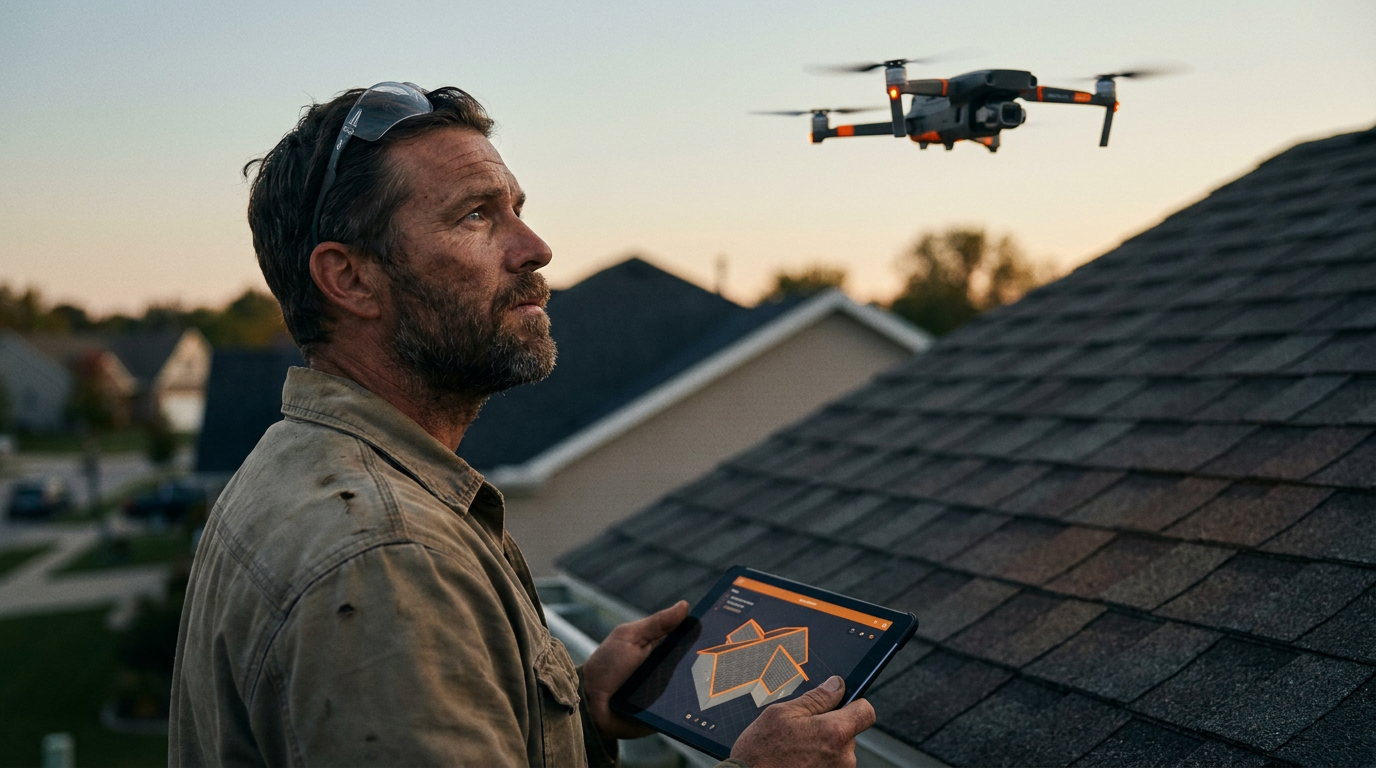
Using AI for drone roof inspections involves flying a drone to capture high-resolution images of a roof. This data is then uploaded to specialized software, which uses artificial intelligence to automatically analyze the photos, identify damage like hail hits or missing shingles, and generate a detailed report with measurements for quoting.
Your Boots-on-the-Ground Guide to AI Drone Inspections
Climbing a steep 12/12 pitch in the summer heat isn't just tough work; it's a risk. Every time you step on a ladder, you're betting against gravity. For years, that was just the cost of doing business. Not anymore. Drones paired with artificial intelligence are changing the roofing game. This isn't science fiction. It's a tool that makes your job safer, faster, and more accurate.
Think of it this way: instead of spending 45 minutes on a roof, you can spend 15 minutes on the ground. You get better data, a detailed report for the homeowner or insurance adjuster, and you can fit more inspections into your day. This guide will show you how to put this tech to work for your business.
Why Drones and AI are a Game-Changer for Roofers
This isn't just about a cool new gadget. It's about fundamentally improving your workflow. The benefits are real and they impact your bottom line.
- Safety First: This is the big one. Keeping your crew on the ground dramatically reduces the risk of falls, which are a leading cause of injury in construction. You can inspect unstable or steep roofs without ever setting a boot on them.
- Speed and Efficiency: A drone can fly a pre-planned route and capture hundreds of photos in about 15 minutes. You can inspect three or four roofs in the time it used to take to do one by hand. That means more bids out the door.
- Unbeatable Accuracy: An AI platform can spot hail damage the size of a dime from 40 feet up. It analyzes every square inch, so you don't miss a thing. The software automatically tags damage, measures roof facets, and gives you a complete picture you can trust.
- Professional Reports: Handing a client a detailed, photo-rich report generated by AI looks a lot better than a few blurry phone pictures and a handwritten estimate. It builds trust and helps you close more deals. It also gives insurance adjusters the clear evidence they need, speeding up claims.
The Gear You Need to Get Started
You don't need a Hollywood movie budget to get into drone inspections. Here is the essential gear that will pay for itself quickly.
- A Solid Drone: You need a reliable drone with a good camera. The DJI Mavic 3 or Autel EVO series are popular choices for a reason. They have great flight stability, obstacle avoidance, and cameras that capture the detail you need. Expect to spend between $1,500 and $3,000 for a pro-level drone.
- AI Inspection Software: The drone is just the vehicle. The software is the brain. Companies like DroneDeploy, IMGING, and Kespry offer platforms specifically for roof inspections. These are typically subscription-based services. They let you plan automated flights and then process the images to create the report.
- FAA Part 107 License: If you fly a drone for commercial purposes—and inspecting a roof for your business is commercial—you need a Remote Pilot Certificate from the FAA. This involves passing a written test. It's not hard, but it's not optional. It shows you know the rules of the sky.
- Tablet or Smartphone: You'll need a device to run the flight planning app in the field. A tablet with a bright screen is ideal for seeing what the drone sees, even in direct sunlight.
The Step-by-Step Process for an AI Inspection
Once you have the gear, here’s how a typical inspection works from start to finish.
- Site Check: Arrive on-site and do a quick walk-around. Look for potential hazards like power lines, large trees, or anything else that could interfere with the flight.
- Plan the Flight: Open your flight app (like DroneDeploy). You'll trace the outline of the roof on a satellite map. The software then automatically creates a flight path—often a 'lawnmower' pattern—to ensure complete coverage of every roof surface.
- Launch and Capture: Place the drone in a safe launch spot. Hit 'Go' in the app. The drone will take off, fly the mission, and capture hundreds of overlapping, high-resolution photos. It will then automatically return and land.
- Upload the Data: Back at the office (or with a good cell connection), upload the photos from the drone's SD card to your AI software platform. This can take some time depending on the number of images and your internet speed.
- Let the AI Work: The AI gets to work. It stitches the photos together into a 3D model and a high-res map of the roof. Then it scans every pixel, identifying and tagging potential damage like hail hits, wind-lifted shingles, rust, and cracks.
- Review and Quote: Within a few hours, you'll get a notification that your report is ready. You can review the AI's findings, add your own notes, and use the precise measurements provided to generate an accurate material list and quote.
Prompts to Make AI Work For You
Beyond just analyzing photos, you can use other AI tools, like ChatGPT, to streamline your business operations. Here are a couple of prompts you can use to turn your inspection data into customer-facing documents and marketing materials.
Generate a Client Report Summary
Act as a professional roofing contractor. I have just completed an AI-powered drone inspection of a client's roof. The AI report identified the following issues:
- 112 confirmed hail impacts on the south-facing slope (asphalt shingles).
- 7 missing shingles on the west ridge cap.
- Moderate granule loss across all surfaces.
- Rusted flashing around the primary vent pipe.

The total roof area is 2,450 square feet.

Write a clear, simple, one-paragraph summary for the homeowner. Explain the findings in plain language and state that these issues require attention to prevent future leaks. Do not use technical jargon. Maintain a confident and helpful tone.
Create a Marketing Email for Your Drone Service
Act as a marketing specialist for a roofing company. Our company, [Your Company Name], now offers advanced drone roof inspections with AI damage detection.

Write a short marketing email to a list of past clients. The goal is to inform them about this new, safer, and more accurate inspection service. Highlight the key benefits: no one needs to walk on their roof, faster inspection times, and a detailed, easy-to-understand report. Include a call to action to schedule a free drone inspection before the next storm season. Keep it straightforward and professional. You can find more tips in our [marketing](/category/marketing) section.
Don't Trust, Verify
The AI is incredibly powerful, but it's a tool, not a replacement for your expertise. Always review the AI-generated report. Click on the items it flags as damage. Does that look like a hail hit to you, or is it just a bit of debris? Your years of experience are the final quality check. The AI does 95% of the heavy lifting, but your professional judgment provides the last 5%. Combining your know-how with the tech's power is what makes this system work.
Getting started with AI and drones is an investment, but it's one that pays off in safety, efficiency, and professionalism. It sets you apart from the competition and positions your business for the future. Don't get left on the ground.
Frequently asked questions
37 copy-paste prompts that save tradespeople 5+ hours a week. Plus one short email every Friday — no fluff.
More for roofing
AI for Roofing Contractors: The Complete Guide
AI for Roofing Contractors comes down to using AI to do the slow stuff — quoting, paperwork, marketing, and customer follow-up — so you can stay on the too

AI Roof Measurement From a Photo: Apps That Work
AI Roof Measurement From a Photo comes down to using AI to do the slow stuff — quoting, paperwork, marketing, and customer follow-up — so you can stay on t