
AI for Drought-Tolerant Landscape Design in California
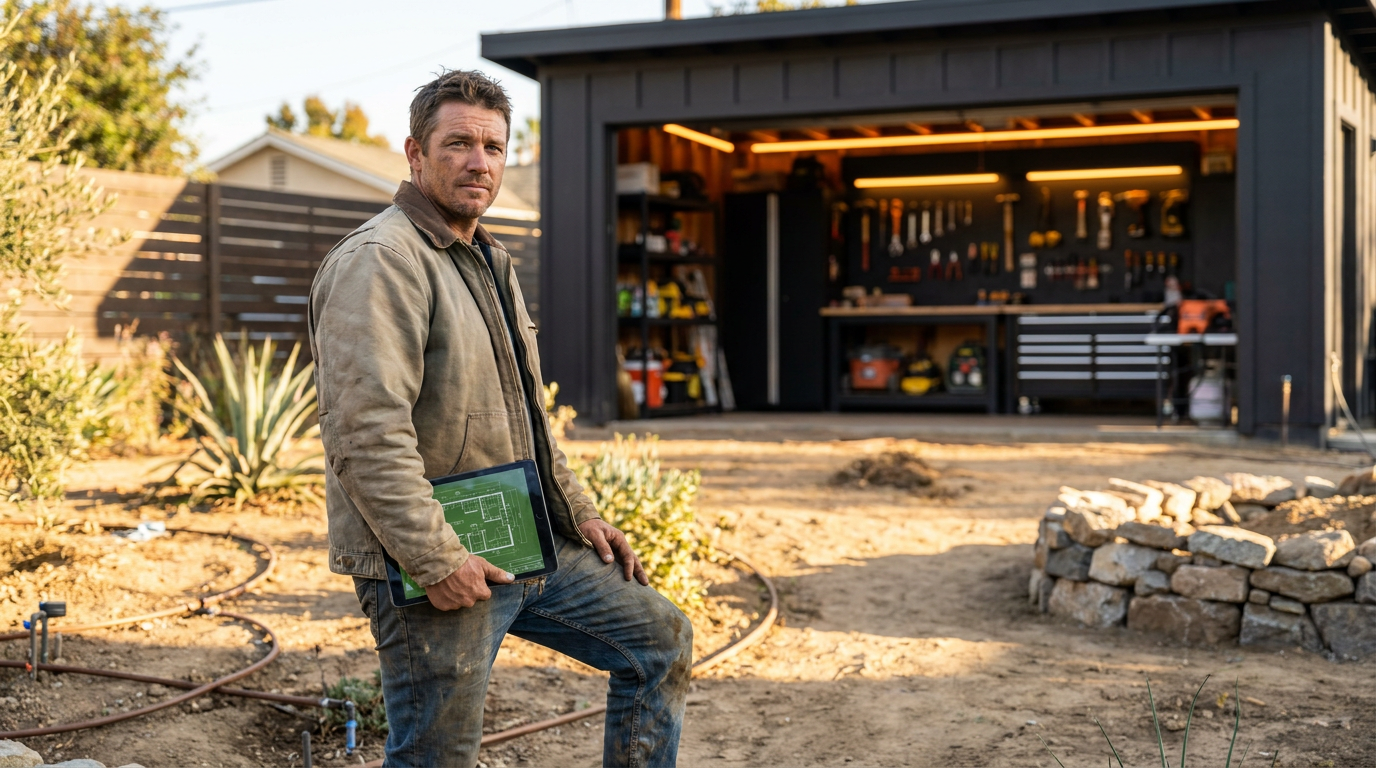
Yes, AI can create drought-tolerant landscape designs for California homes. AI tools analyze local climate, soil, and water restrictions to suggest native plants, efficient irrigation layouts, and hardscaping options. This helps landscapers design beautiful, low-water yards faster and more accurately, saving clients money on their water bills.
California's water situation isn't a secret. For landscapers, it's a daily challenge. Clients want beautiful yards, but water districts have tight rules. Lawns that guzzle water are out. Designs that sip water are in. This is where Artificial Intelligence, or AI, comes in. It's not here to replace your expertise. It's a new tool for your belt, one that helps you design smarter and faster.
Think of AI as a super-powered apprentice. It can sort through thousands of plants, calculate water needs, and even sketch out ideas in seconds. This lets you focus on the hands-on work that a computer can't do: reading the land, talking to the client, and building something that lasts. Using AI for drought-tolerant landscape design in California is no longer a futuristic idea. It's a practical way to get ahead.
Why AI is a Game-Changer for California Landscapers
Water restrictions in cities from San Diego to Sacramento are getting stricter. Homeowners are looking for landscapers who understand how to create stunning, low-water yards. AI helps you deliver exactly that, and it makes your business more efficient.
- Speed Up Your Design Process: Instead of spending hours flipping through books or searching online for the right plants, you can ask an AI. It can give you a list of native, drought-tolerant plants perfect for a client's specific zip code, soil type, and sun exposure in less than a minute.
- Visualize for Your Clients: Homeowners often have trouble picturing a finished landscape. AI image generators can turn your ideas into realistic pictures. Show a client exactly what their yard will look like with decomposed granite paths, boulders, and mature succulents. A picture closes a deal faster than a blueprint.
- Stay Compliant: Many California water districts offer rebates for turf removal. AI can help you generate plant lists and designs that meet the specific requirements for these programs, making it easier for your clients to get money back.
- Improve Your Bids: When you can design faster, you can bid on more jobs. AI helps you quickly create detailed plans and material lists, so you can build better quotes and win more work.
Getting Started: What AI Can Do Today
You don't need a computer science degree to use AI. If you can type a question into Google, you can use these tools. They are powerful for specific landscaping tasks.
Plant Selection
This is the easiest place to start. A good AI can act as a master botanist. It knows which plants thrive in the clay soil of the Bay Area versus the sandy soil of Los Angeles. It can find plants that bloom in different seasons to provide year-round color.
Act as a master horticulturalist specializing in California native plants. I am designing a front yard for a client in zip code 92109 (San Diego). The area gets 8+ hours of direct sun per day and has sandy, well-draining soil. The client wants a low-maintenance garden with year-round interest and a mix of textures and heights. Provide a list of 15 drought-tolerant, native California plants suitable for these conditions. For each plant, include its common name, scientific name, mature size, water needs (once established), and a brief note on its appearance or best use in a design.
Layout and Design Concepts
Sometimes you or the client are stuck for ideas. Use an AI image generator to break through the block. You can describe a scene and get multiple visual starting points. These aren't final blueprints, but they are great for brainstorming and getting client buy-in on a general direction.
Irrigation Planning
Efficient watering is key. While AI can't dig the trenches for you, it can help plan the most efficient layout. You can describe the areas that need water, the types of plants, and the water source. The AI can suggest where to place drip emitters, how to group plants with similar water needs (hydrozoning), and what a potential watering schedule might look like.
A Real-World AI Workflow
Let's walk through how you might use AI on a typical project.
Client Meeting: You do the initial site visit. You talk to the client, take measurements, test the soil, and note the sun exposure. You bring your real-world experience to the table.
Initial AI Brainstorm: Back in the truck or office, you use your notes to talk to an AI. You use a prompt to get a plant list and another to generate a few visual concepts. This takes maybe 15 minutes.
Expert Refinement: The AI gives you a great starting point. Now, you apply your knowledge. You know that the suggested 'Blue-Eyed Grass' might struggle with the foot traffic near the walkway, so you swap it for a tougher groundcover. You adjust the AI-generated image to better fit the property's slope.
Proposal and Presentation: You put the refined plan and the best AI-generated image into your proposal. When you meet the client again, you show them the vision. They see a beautiful, water-wise yard, and you show them a plant list that qualifies for a local rebate. You've just used a powerful tool to make your expertise shine.
Generate a concept image for a drought-tolerant front yard in a California suburban home. The style should be modern and clean. The design must include a dry creek bed made of river rock that meanders from the front porch to the sidewalk. Use large, gray boulders as accents. The planting should be sparse but deliberate, featuring a mix of Agave attenuata, Kangaroo Paw, and a low-spreading groundcover like Dymondia margaretae. Replace the traditional lawn with decomposed granite paths and planting beds. The lighting should be late afternoon sun, creating long shadows.
The Human Touch Still Wins the Job
An AI has never gotten its hands dirty. It doesn't know the feel of properly compacted soil or the specific challenges of a site with poor drainage. It's a tool, like a transit level or a skid steer. It makes you more precise and more efficient, but it doesn't replace your judgment.
Your value as a landscaper is in your experience. You know the local suppliers. You know how to manage a crew. You know how to solve the unexpected problems that always come up on a job site. AI handles the digital grunt work, freeing you up to do the real work that clients pay for.
Start small. Use AI to create a plant list for your next project. Try generating an image to show a client. See how it fits into your workflow. In a state as competitive and regulated as California, every tool that gives you an edge is a tool worth having.
Frequently asked questions
37 copy-paste prompts that save tradespeople 5+ hours a week. Plus one short email every Friday — no fluff.
More for landscaping
AI for Landscaping Business Owners: Real ROI
AI for Landscaping Business Owners comes down to using AI to do the slow stuff — quoting, paperwork, marketing, and customer follow-up — so you can stay on
ChatGPT Prompts for Lawn Care Business (20 Tested)
ChatGPT Prompts for Lawn Care Business (20 Tested) comes down to using AI to do the slow stuff — quoting, paperwork, marketing, and customer follow-up — so