AI for Electrical Load Calculations: Can You Trust It?
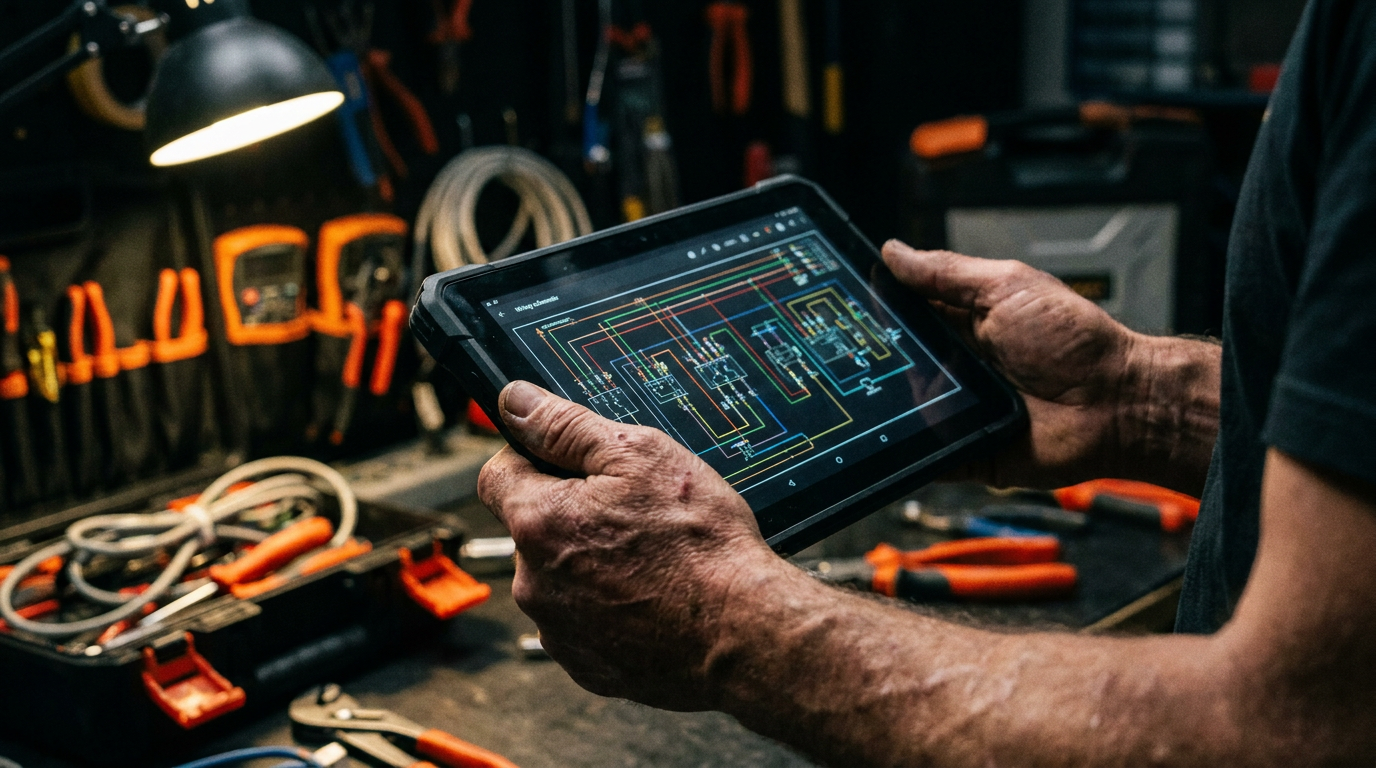
Yes, AI can help with electrical load calculations by organizing data and running preliminary numbers based on your inputs. However, it is not a substitute for a licensed electrician's expertise. You must always verify AI-generated results against the National Electrical Code (NEC) and local requirements for safety and compliance.
Load calculations are a necessary evil. They’re tedious, full of tables and demand factors, and one slip of the pencil can mean a failed inspection or worse. So when a new tool like Artificial Intelligence comes along promising to make things faster, it’s natural to ask: can it handle the job?
The short answer is yes, AI can help. But the long answer is more complicated. AI is a powerful assistant, not a licensed professional. Trusting it completely is a gamble with your license and your reputation. You need to know where it works and where it fails.
What AI Can Do for Load Calculations
Think of AI as the world’s fastest apprentice. It’s great at the grunt work that slows you down. It can’t replace your judgment, but it can definitely speed up your process.
Here’s where AI can give you a real boost:
- Data Organization: Feed it a list of appliances, square footage, and circuit needs. AI can instantly create a clean, organized table with all the values you need to start your calculation. No more messy notes on a piece of plywood.
- Basic Math: AI eliminates simple arithmetic errors. It can add up your general lighting load, apply demand factors you provide, and give you a subtotal in seconds. It’s a calculator on steroids.
- Scenario Modeling: Want to show a homeowner the impact of adding an EV charger, a hot tub, and a tankless water heater? AI can run those different scenarios quickly, helping you and your client make informed decisions without doing three separate calculations by hand.
- Drafting Reports: Once you have your final numbers, you can ask AI to draft a simple, client-facing summary. This saves you time on paperwork and improves your customer communication.
But notice a pattern here. AI is handling the data, not the decision-making. The final call on which NEC table to use or how to interpret a local amendment is still on you.
The Hard Evidence: Where AI Shines and Fails
Let's get real about what happens when you put AI to work. It’s a tool with clear strengths and serious weaknesses.
Where It Shines: Speed and First Drafts
Imagine you're quoting a large custom home. The plans include a ton of specific equipment. Instead of manually looking up every single item, you can use AI to get a running start.
Act as a master electrician's assistant. I'm preparing a preliminary load calculation for a new 3,500 sq ft single-family home. Create a markdown table with three columns: 'Appliance/Load', 'Typical VA Rating', and 'NEC Reference (if applicable)'.

Include the following:
- General lighting load based on sq ft
- Two small appliance branch circuits
- One laundry circuit
- 14 kW electric range
- 5 kW electric water heater
- 4.5 kW electric dryer
- 1.5 HP garbage disposal
- 1.5 HP dishwasher
- Central A/C unit at 24 amps / 240V
- 7 kW EV Charger
This prompt gives you a structured list in seconds. It’s a first draft, a starting point. You still need to verify every single number, but you didn't have to build the list from scratch.
Where It Fails: Code, Liability, and Nuance
Here’s the dangerous part. AI is not a lawyer or a code inspector. It has major blind spots that can get you in serious trouble.
- It Doesn't Know the Current NEC: The National Electrical Code is a copyrighted, constantly updated document. AI models are trained on public internet data, which may include outdated forum posts or incorrect summaries of the code. An AI might confidently cite the 2017 NEC when your jurisdiction adopted the 2023 version. It can't know that.
- It Hallucinates: AI models are designed to provide a confident answer, even if they have to make one up. This is called “hallucination.” An AI might invent a code section or misstate a demand factor from an NEC table. If you don't catch it, the inspector will.
- Zero Liability: When a circuit you designed fails, who is responsible? You are. The AI company has a terms of service agreement that puts all the liability on the user. You can't blame a chatbot when something goes wrong. The signature on the permit is yours.
- No Local Knowledge: Does your town require whole-house surge protection on new services? Does the local utility have specific rules for solar interconnections? An AI has no idea. This local knowledge is a huge part of your value as a pro, and it's something AI can't replicate.
Using AI for anything more than an assistant is like letting a first-year apprentice size a commercial service. It’s a recipe for disaster. Good ops management means using tools smartly, and that includes knowing their limits.
The Bottom Line: Use It as a Tool, Not a Crutch
So, can you trust AI for electrical load calculations? No. But you can use it.
This isn't about replacing your skills; it's about augmenting them. Your brain and your license are your most valuable assets. AI is just another tool in the truck, like a high-end multimeter. It gives you data, but you have to interpret that data and make the right call.
Use AI to get ahead on the paperwork and check your own math. Use it to explore possibilities for a customer. But never, ever copy and paste an AI-generated load calculation and submit it as your own work. The risk is just too high.
I need to explain to a homeowner why a load calculation is necessary before installing a new 48A EV charger. Write a simple, 150-word explanation. Use an analogy they can understand, like water pressure in a house. Avoid technical jargon like 'demand factor' or 'VA rating'. Focus on safety and protecting their home's electrical system.
This kind of prompt uses AI for what it's good at: communication. It helps you do your job better without touching the critical, licensed work.
Ultimately, the responsibility for a safe and compliant electrical system rests on the licensed electrician. AI can help you carry that load, but it can never take it from you.
Frequently asked questions
37 copy-paste prompts that save tradespeople 5+ hours a week. Plus one short email every Friday — no fluff.
More for electricians
AI for Electricians: A Field-Tested Guide
AI for Electricians comes down to using AI to do the slow stuff — quoting, paperwork, marketing, and customer follow-up — so you can stay on the tools. Bel
27 ChatGPT Prompts for Electricians (Copy & Paste)
27 ChatGPT Prompts for Electricians (Copy & Paste) comes down to using AI to do the slow stuff — quoting, paperwork, marketing, and customer follow-up — so

AI Electrical Load Calculator: How It Works & Free Prompt
AI Electrical Load Calculator comes down to using AI to do the slow stuff — quoting, paperwork, marketing, and customer follow-up — so you can stay on the