
Can AI Find Building Code Violations in Photos?
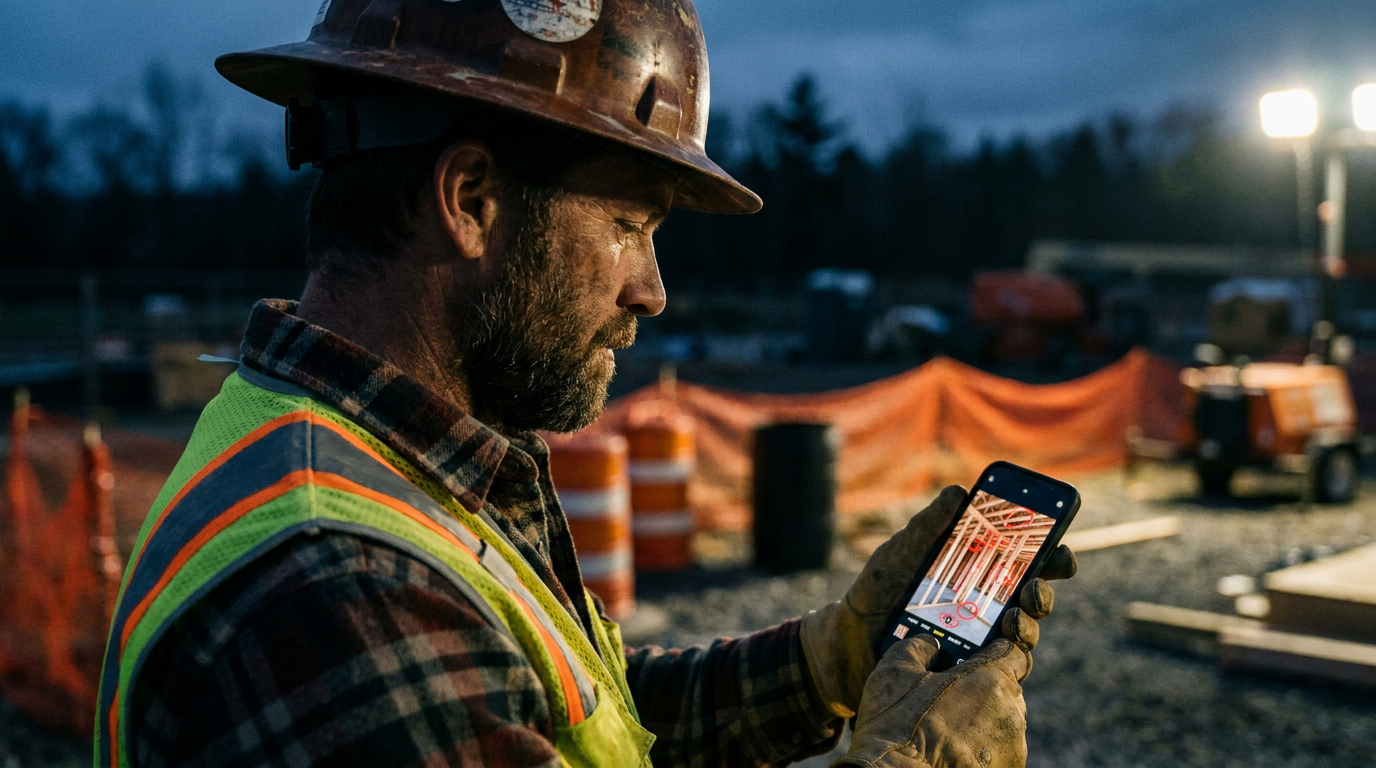
Yes, AI can find potential building code violations in photos by comparing them to vast datasets of images and code standards. However, it's not a substitute for a certified human inspector. AI is best used as a preliminary check or a second set of eyes, as it often misses local code nuances and lacks real-world context.
Your Phone's AI Isn't a Code Inspector, But It's a Powerful Tool
Let's get straight to it. Can you snap a picture of some framing and have an AI tell you if it's up to code? The short answer is yes, sort of. Artificial intelligence, specifically computer vision, is getting smart enough to spot common problems in photos. But it is not, and will not be, a replacement for a licensed inspector or your own hard-won experience.
Think of it like a new guy on the crew. It can point out things that look off, but it doesn't have the full picture and you're still the one responsible. The tech works by analyzing millions of photos of both correct and incorrect work. It learns to recognize patterns, like improper nail spacing, missing fire blocking, or outlets that are too far apart.
For a General Contractor, this is another tool for the belt. It won't sign off on your permit, but it can save you a world of hurt by catching a simple mistake before the official inspection. It’s about efficiency and reducing rework, not cutting corners on safety or compliance.
How AI Spots Problems on the Jobsite
When you upload a photo to an AI, it's not just 'looking' at it. It breaks the image down into pixels and data points. It then runs that data against its training.
Here’s a simple breakdown:
- Object Recognition: The AI first identifies objects in the photo. It sees studs, joists, wires, outlets, and pipes.
- Pattern Matching: It then compares what it sees to the patterns it has learned. For example, it might measure the pixel distance between studs and convert that to inches, flagging anything that isn't 16 or 24 inches on center.
- Rule-Based Analysis: The AI cross-references these patterns with a database of building codes, usually the International Building Code (IBC) or International Residential Code (IRC). If it sees an electrical outlet more than 6 feet from a doorway, it flags it as a potential violation of the '6-foot rule'.
This process is incredibly fast. An AI can scan a photo and give you feedback in seconds. But it's only as good as its training data and the rules it was given.
The Big Limitations: Why You're Still in Charge
Before you start relying on an app to pass inspections, you need to understand where it falls short. The liability for a failed inspection or a safety issue rests on your shoulders, not on a piece of software.
- Local Codes are King: An AI trained on the 2021 IRC has no idea about the specific amendments in Cook County, Illinois, or the hurricane-related requirements in Miami-Dade, Florida. These local codes are what matter to your inspector.
- Context is Everything: A photo can't show if a wire is live, what's behind the drywall, or if the proper grade of lumber was used. AI lacks the hands-on, multi-sensory understanding that a seasoned pro brings to the job.
- It's Not a Legal Document: The output from an AI is just a suggestion. It carries no legal weight. You can't show your inspector a screenshot from an AI app and argue that your work is compliant. Your stamp, your name, your liability.
- Accuracy Varies: AI can make mistakes, or 'hallucinate.' It might flag something that is perfectly fine or, worse, miss a critical safety issue. Always treat its feedback as a starting point for your own review, not the final word.
For more on leveraging technology without creating new problems, check out our guides on jobsite management.
How to Use AI for Code Checks Today
So, with all those warnings, how can you actually use this technology to your advantage? Think of it as a pre-check tool to make your workflow smoother and your team sharper.
Pre-Inspection Walk-Throughs: Before the inspector is scheduled to arrive, take photos of key areas—electrical, plumbing, framing—and run them through an AI tool. It can serve as a digital punch list, highlighting potential issues you or your crew might have overlooked during a busy day.
Training and Quality Control: Use AI-flagged images to train new team members. Show them a picture of improperly supported ductwork pointed out by the AI and explain why it's a problem. It’s a great visual aid for reinforcing best practices.
Enhanced Documentation: When you're documenting project milestones, AI can help automatically tag and categorize photos. Some tools can even add notes like "potential GFCI issue" to an image, making your reports more detailed and easier to search later.
Here are some prompts you can use with a general AI tool that accepts images, like GPT-4 or Gemini.
Act as a senior construction superintendent reviewing a jobsite photo for a pre-inspection check. I know you are not a certified inspector and cannot give legal advice. Based on the 2021 IRC, analyze this image of residential wood framing. Point out any potential visual issues related to stud spacing, fire blocking, header installation, or nailing patterns. Present your findings as a simple bulleted list. Do not make assumptions about things you cannot see.
I'm taking a photo of an exterior deck's guardrail. You are a safety-focused building code assistant. Your goal is to identify potential safety hazards based on general US building standards. Look at the baluster spacing, guardrail height, and overall construction in this photo. List any potential violations, citing the common '4-inch sphere' rule for balusters if it appears relevant. I understand this is not a certified inspection.
The Bottom Line
AI is not going to take your job or replace the need for skilled, licensed professionals. Building codes are complex, localized, and require human judgment.
However, ignoring the technology is a mistake. Using AI as a tool to double-check your work, train your crew, and improve your documentation is a smart move. It can help you catch costly mistakes early, streamline your processes, and run a tighter ship. The final call is always yours, but having a digital assistant in your pocket is a clear advantage.
Frequently asked questions
37 copy-paste prompts that save tradespeople 5+ hours a week. Plus one short email every Friday — no fluff.
More for general contractors
AI for General Contractors: A Builder's Playbook
AI for General Contractors comes down to using AI to do the slow stuff — quoting, paperwork, marketing, and customer follow-up — so you can stay on the too

How to Use AI for Construction Project Management
How to Use AI for Construction Project Management comes down to using AI to do the slow stuff — quoting, paperwork, marketing, and customer follow-up — so