
Can AI Find Flat Roof Leaks? Here's the Real Deal
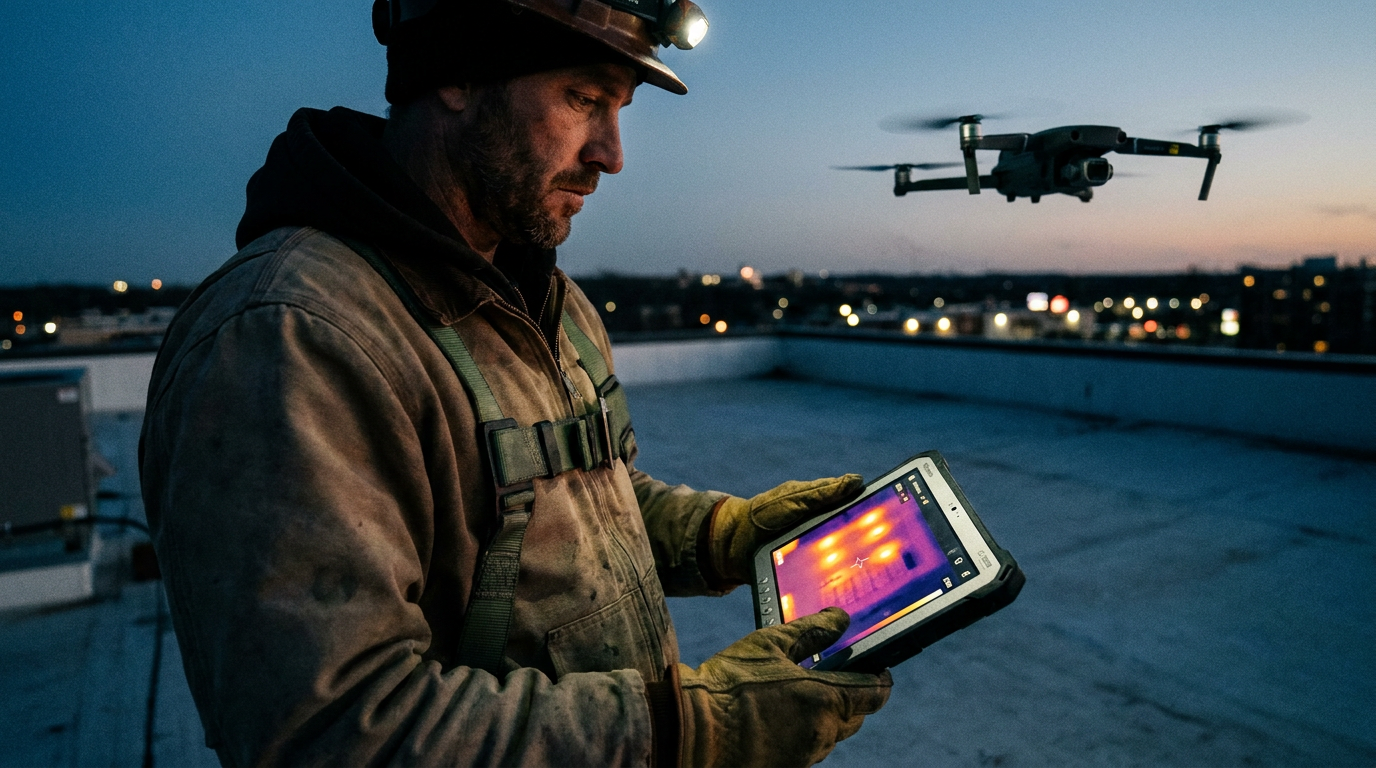
Yes, AI can help find flat roof leaks. It works by analyzing data from drones equipped with thermal and visual cameras. The AI software scans thousands of images to spot temperature differences and subtle patterns that indicate trapped moisture under the roof membrane, pinpointing potential leaks much faster than a manual inspection.
Ask ToolbeltAI: Can AI Help Me Find Leaks on a Flat Roof?
Finding a leak on a flat roof can feel like a wild goose chase. Water travels, and the drip you see inside might be twenty feet from the actual problem on the roof. You walk the roof, check every seam, and hope for the best. It takes time, it’s tough on the body, and it’s not always accurate.
Now, people are talking about Artificial Intelligence, or AI. It sounds like something from a movie, not a tool for a roofer. But the truth is, AI is changing how we work. It’s not here to replace your experience. It’s here to make your experience more valuable by getting you to the problem faster.
This isn't about robots climbing ladders. It's about using smart software to analyze information. Think of it as a partner that can see things you can't, helping you work smarter, not just harder.
The Old Way: Boots on the Roof
For years, finding flat roof leaks meant a few standard methods. Each has its place, but none are perfect.
- Visual Inspection: You get up on the roof and you look. You check for obvious punctures, failing seams, blisters, and areas where water pools. This relies completely on your eyes and your experience. You can miss small cracks or issues hidden under the surface.
- Flood Testing: You block the drains and flood a section of the roof with a few inches of water. Then you wait to see where drips appear below. It's effective but slow, uses a ton of water, and can create bigger problems if the structure can't handle the weight.
- Infrared Scans (Manual): Using a handheld thermal camera, you can scan the roof yourself, usually at dusk. Wet insulation holds heat longer than dry insulation. So, as the roof cools, wet spots show up as warmer areas. This is a big step up, but it still requires you to walk the entire roof and interpret the images yourself.
These methods get the job done. But they take a lot of time and labor. On a massive commercial roof, a manual inspection can take days.
How AI Changes the Game
AI doesn't find the leak by itself. It works with other tools to analyze data at a massive scale. The most common setup for roofers involves drones and specialized software.
Here’s how it works:
- Data Collection: A drone equipped with both a high-resolution visual camera and a thermal (infrared) camera flies over the roof. It follows a pre-programmed flight path to capture thousands of images, ensuring complete coverage.
- Data Processing: The images are uploaded to an AI software platform. This is where the magic happens. The AI stitches all the images together to create a complete, detailed map of the roof.
- AI Analysis: The AI gets to work. It analyzes the thermal data, looking for temperature variations that signal trapped moisture. It compares this with the visual data to identify issues like ponding water, debris, or damaged flashing. It’s trained on millions of images of healthy and damaged roofs, so it knows what to look for.
- Reporting: Instead of a folder of 5,000 images, you get a single, interactive report. The software highlights problem areas, measures their size, and provides exact GPS coordinates. You can click on a trouble spot and see both the thermal and visual images for that specific location.
This process turns a two-day job into a few hours of work. The drone flight might take 30 minutes. The AI analysis is even faster. You get a clear, actionable report that shows your client exactly where the problems are.
Putting AI to Work on the Jobsite
This technology isn't just theory. Companies are using it now. It's one of the right tools for the job that gives you a real edge. Software from companies like Kespry or IMGING (from Loveland Innovations) are built for this.
But you don't always need expensive, specialized software to start using AI. A good drone and a general AI assistant can help you organize your findings and communicate with clients. You can take the data you gather and use prompts to create reports, emails, and action plans.
Here are a few prompts you can use to get started.
Act as a professional roofing consultant. I have completed a drone inspection of a 50,000 sq ft commercial flat roof. My thermal camera identified three high-priority anomalies, and my visual inspection noted ponding water near two drains and failing sealant on a parapet wall.

Anomaly 1: 10'x15' area of heat retention in the northwest corner.
Anomaly 2: 5'x8' area near the central HVAC unit.
Anomaly 3: A long, thin heat signature along a 30-foot seam.

Write a summary for a building manager. The tone should be professional and direct. Focus on the findings and recommend a core sample analysis for the three thermal anomalies to confirm saturation. Structure it as a short, clear email.
This kind of prompt helps you turn your raw data into a professional document in minutes. It saves you time on paperwork so you can spend more time on the roof.
Here's another one for planning your repair work.
I'm a roofing project manager. Based on an AI-assisted drone inspection, I need to create a repair plan. The inspection identified the following issues on a TPO roof:

- Confirmed moisture saturation in a 150 sq ft area (requires tear-off and replacement).
- 45 feet of failed seam weld.
- Debris and ponding water around two blocked roof drains.
- Minor punctures in three locations.

Create a bulleted list of action items for my 3-person crew. Include materials needed and estimated time for each task. Prioritize the tasks from most to least critical.
The Bottom Line: Is It Worth It?
For a roofer focused on residential shingle roofs, this tech might be overkill. But for anyone working on large commercial or industrial flat roofs, the answer is a clear yes.
The initial investment in a thermal drone (like a DJI Mavic 3 Thermal) and software can be significant. You also need to get your FAA Part 107 license to fly a drone for commercial purposes. But the return on that investment is massive.
- Speed: Inspect a massive roof in under an hour.
- Accuracy: AI finds issues the human eye would miss.
- Safety: Less time walking on potentially unsafe roofs.
- Sales: The reports are powerful sales tools. Showing a building manager a thermal map with a glowing red spot is more convincing than just saying, "You have a leak."
AI isn't taking your job. It’s a tool, like a screw gun or a seam welder. It lets you do your job faster, safer, and more accurately. It helps you prove your value and win bigger, better contracts. The roofers who learn to use these tools will be the ones leading the industry tomorrow.
Frequently asked questions
37 copy-paste prompts that save tradespeople 5+ hours a week. Plus one short email every Friday — no fluff.
More for roofing

AI for Roofing Contractors: The Complete Guide
AI for Roofing Contractors comes down to using AI to do the slow stuff — quoting, paperwork, marketing, and customer follow-up — so you can stay on the too
AI Roof Measurement From a Photo: Apps That Work
AI Roof Measurement From a Photo comes down to using AI to do the slow stuff — quoting, paperwork, marketing, and customer follow-up — so you can stay on t