Chasing Ghosts: Can AI Find an Intermittent Electrical Fault?
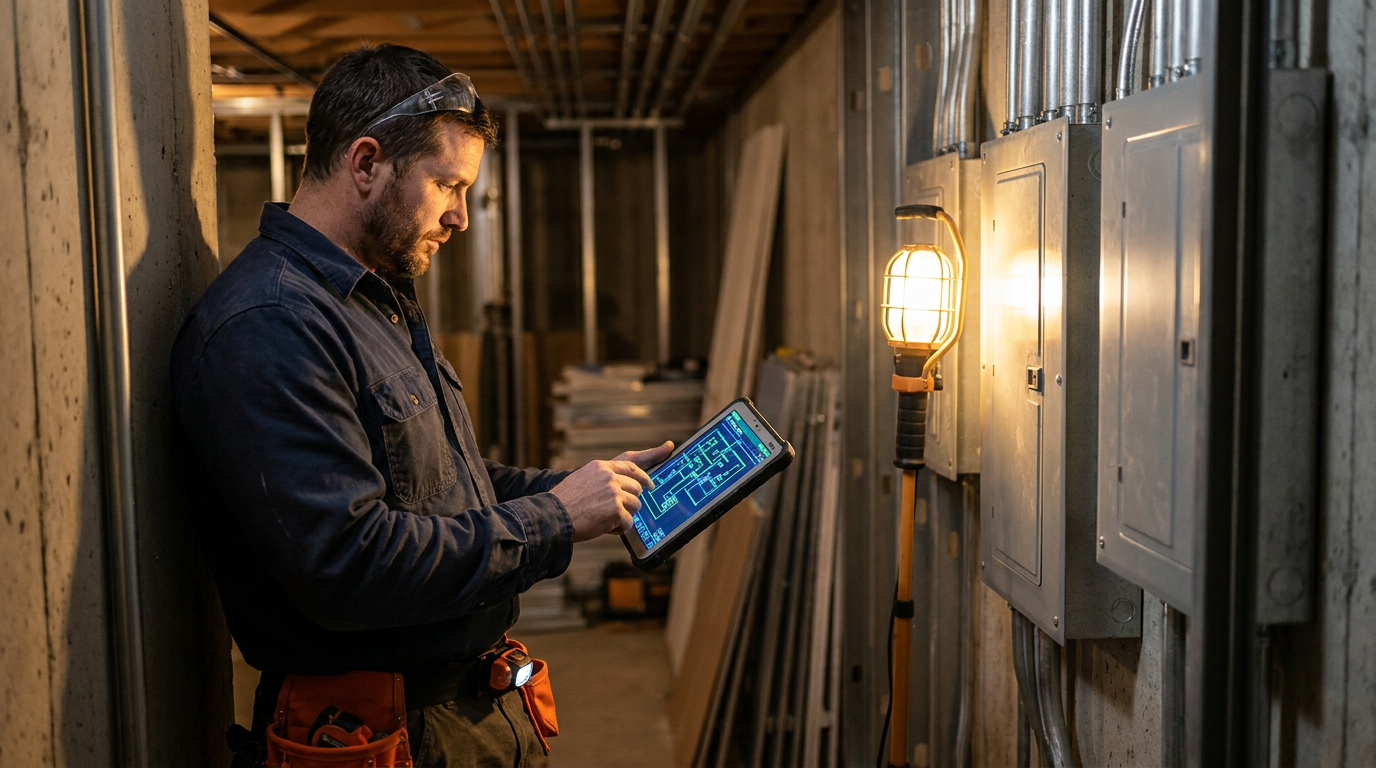
Yes, AI can help find an intermittent electrical fault. While it won't physically trace wires, AI tools can analyze data from smart devices, predict patterns, and suggest diagnostic steps. This helps you narrow down possibilities and solve the problem faster than with traditional methods alone.
Chasing Ghosts: Can AI Find an Intermittent Electrical Fault?
We’ve all been there. A customer calls about a flickering light or a breaker that trips for no reason. You get to the job site, and everything works perfectly. You check the connections, test the voltage, and find nothing. The problem is a ghost. These intermittent faults are the biggest time-wasters and head-scratchers in our trade.
They test a customer's patience and your bottom line. Every minute you spend trying to replicate a random problem is a minute you're not on the next job. But what if you had a new tool in your belt? Not a new meter or tracer, but an assistant that can think, analyze patterns, and give you a solid lead.
That's where Artificial Intelligence, or AI, comes in. It's not here to replace your skills. It's here to make them sharper. Think of it as a rookie partner who has read every electrical manual ever written. It can help you connect the dots faster and turn a phantom problem into a fixed one.
What We're Up Against
An intermittent electrical fault is a problem that comes and goes. It's not a dead short or a complete open circuit that's easy to spot. It’s sneaky. It could be a loose wire that only disconnects when a door slams. It might be a failing component that only acts up when it gets hot. Or it could be a voltage fluctuation from the utility that only happens at 3 PM.
These issues are tough because:
- They are hard to replicate. You can't fix what you can't find. If the problem isn't happening when you're there, you're just guessing.
- They frustrate customers. To them, the problem is simple: "The light flickers." They don't understand why you can't just "fix it." This can lead to callbacks and bad reviews.
- They kill productivity. A job that should take an hour can turn into a half-day affair, eating into your profits and schedule.
Common culprits include thermal expansion causing loose connections, vibration from appliances, faulty electronics in a device, or even issues with the power grid itself. Your experience tells you where to look first, but sometimes experience isn't enough.
Where AI Fits in Your Diagnostic Workflow
AI won't put on gloves and pull a wire for you. But it can do the mental heavy lifting that helps you know which wire to pull. Its strength is in processing huge amounts of information and finding connections a human brain might miss.
Here’s how it helps:
Data Analysis and Pattern Recognition
Modern homes are starting to generate data. Smart circuit breakers from companies like Leviton or Schneider Electric can log every trip and the reason for it (overload, arc fault, ground fault). Smart plugs can monitor the power draw of a single appliance. Even a simple log from the homeowner—noting the time and day of every incident—is data.
Feed this information to an AI. It can analyze the timeline and look for patterns you wouldn't spot.
- Example: A GFI outlet trips randomly. The homeowner log shows it always happens on sunny Saturday afternoons. An AI might correlate this with the use of a pressure washer plugged into an outside outlet on the same circuit. It's a pattern, and now you have a lead.
Creating a Diagnostic Roadmap
Instead of just starting with the most common cause, you can give an AI the specific symptoms and ask it to generate a logical troubleshooting plan. It acts like a seasoned master electrician looking over your shoulder.
You provide the facts: the age of the house, the type of circuit, the symptoms, and what you've already checked. The AI gives you a prioritized list of what to check next, from most to least likely. This systematic approach saves time and ensures you don't miss a potential cause. It improves your jobsite efficiency by giving you a clear plan of attack.
Putting AI to Work: Prompts for the Field
You don't need special software to start. A good AI chatbot on your phone can become a powerful diagnostic partner. The key is giving it a good prompt. Here are a couple you can use today.
I'm troubleshooting an intermittent electrical fault in a 2-story, 2,500 sq ft home built in 1995. Symptoms: a single 15-amp circuit breaker for the upstairs bedrooms trips randomly, 2-3 times a week. It happens at different times of day. The homeowner reports no new appliances. Based on this, provide a prioritized checklist of potential causes, from most likely to least likely. For each cause, list the specific tests to perform.
This prompt gives the AI the context it needs to provide a useful, structured answer. It turns a vague problem into a clear checklist.
Write a simple, 100-word explanation for a homeowner about why an intermittent electrical fault is difficult to diagnose. Use an analogy to make it easy to understand. Explain that finding it requires a process of elimination and patience, and set the expectation that it might take more than one visit. Keep the tone professional and reassuring.
This one helps with the other side of the job: customer management. A clear explanation builds trust and makes it easier to bill for diagnostic time.
The Limits of AI: It's a Tool, Not a Technician
We need to be realistic. AI is a powerful assistant, but it has serious limitations. Always remember:
- AI Can't Use Tools: It can't use a multimeter, an insulation tester, or a thermal camera. Your hands-on testing is what confirms the problem.
- Garbage In, Garbage Out: The AI's advice is only as good as the information you give it. If you provide vague or incorrect symptoms, you'll get vague or incorrect advice.
- It Lacks Your Intuition: AI doesn't have your gut feeling. It can't hear the faint buzz of a failing transformer or smell the scent of an overheating wire. Your senses and years of experience are irreplaceable.
- Always Verify: Never trust an AI's output without question, especially on things related to safety or code. Use its suggestions as a starting point, but always confirm with the latest NEC and your own expertise.
Think of AI as one of the best tools in your truck. You wouldn't use a hammer to test for voltage, and you shouldn't use AI to make your final diagnosis. It's there to guide you, not replace you.
Intermittent faults will always be a part of the job. But they don't have to be a drain on your time and profits. By adding AI to your diagnostic process, you can work smarter. You can narrow down the possibilities faster, find the ghost in the machine, and get on to the next job with confidence.
Frequently asked questions
37 copy-paste prompts that save tradespeople 5+ hours a week. Plus one short email every Friday — no fluff.
More for electricians
AI for Electricians: A Field-Tested Guide
AI for Electricians comes down to using AI to do the slow stuff — quoting, paperwork, marketing, and customer follow-up — so you can stay on the tools. Bel
27 ChatGPT Prompts for Electricians (Copy & Paste)
27 ChatGPT Prompts for Electricians (Copy & Paste) comes down to using AI to do the slow stuff — quoting, paperwork, marketing, and customer follow-up — so

AI Electrical Load Calculator: How It Works & Free Prompt
AI Electrical Load Calculator comes down to using AI to do the slow stuff — quoting, paperwork, marketing, and customer follow-up — so you can stay on the