AI for Fuel Costs: A Contractor's Fleet Guide
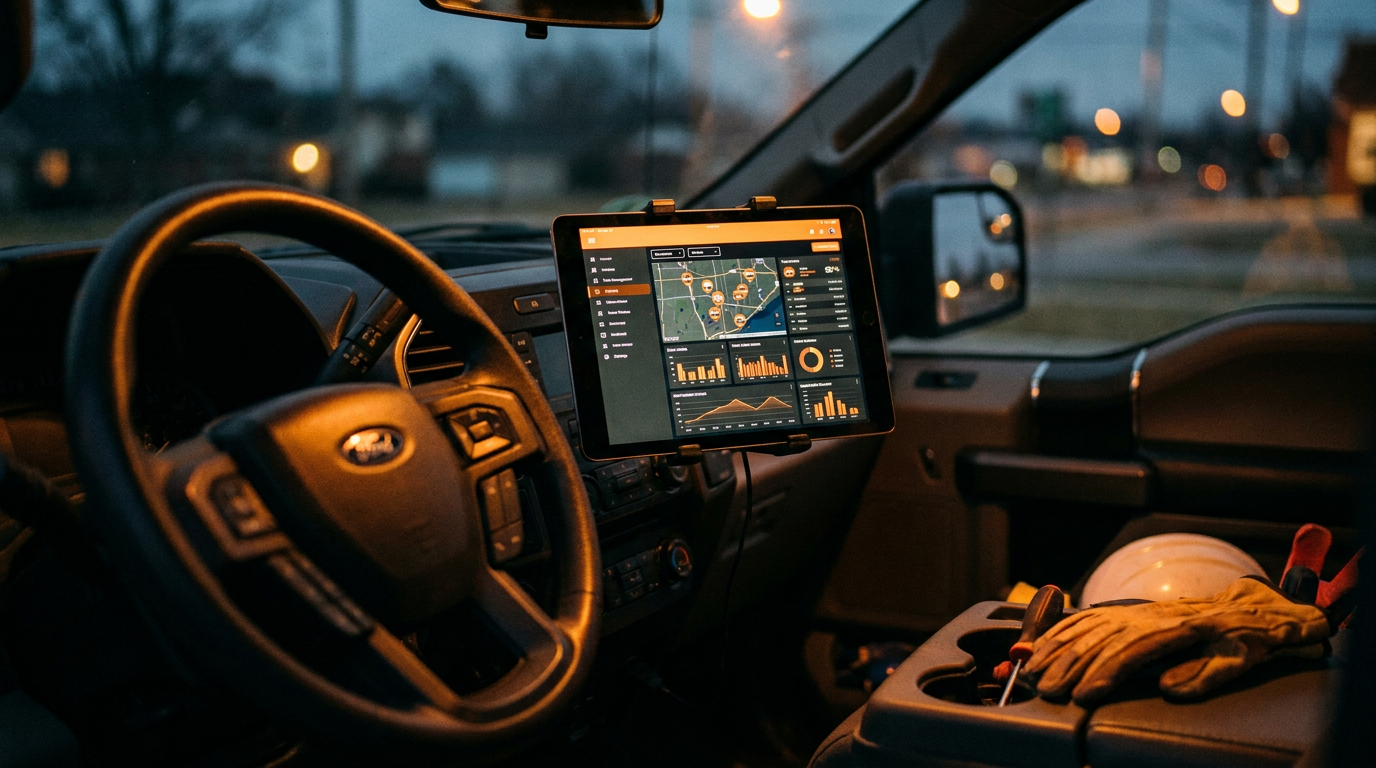
AI for fuel cost optimization for contractor fleets works by analyzing data to find the most efficient routes, monitor driver habits, and predict maintenance needs. This technology cuts down on wasted fuel from idling, speeding, and poor routing, directly lowering your operational expenses and increasing job profitability.
Your Fuel Bill Is Too High. Here’s How AI Can Fix It.
Fuel is one of the biggest costs you can't control. Or can you? Prices at the pump go up and down, but the amount of fuel your trucks burn is something you can manage. For a modern contractor, using Artificial Intelligence (AI) to manage your fleet isn't a luxury. It's how you stay competitive.
Think about it. Every gallon wasted on a bad route, unnecessary idling, or a poorly maintained engine is pure profit leaking out of your business. According to the American Transportation Research Institute (ATRI), fuel costs consistently represent over 20% of a fleet's total operating budget. A small saving here makes a big difference on your bottom line.
This guide will break down how AI fleet management works in plain English. We'll show you how it saves you money and what you need to get started. It's not science fiction; it's a tool for your business, just like a new power drill or a laser level.
What Is AI Fleet Management, Really?
Don't let the term "AI" scare you off. At its core, AI fleet management is about using data to make smarter decisions. It combines a few key pieces of technology:
- Telematics Devices: These are small gadgets that plug into your truck's OBD-II port (the same one mechanics use for diagnostics). They collect data directly from the vehicle's engine and systems.
- GPS Tracking: This is the basic "where are my trucks?" function. But it's more than just a dot on a map. It tracks speed, location history, and time spent at each job site.
- Software: This is the brain of the operation. It takes all the data from the telematics and GPS, analyzes it using AI algorithms, and presents it to you in a simple dashboard. You can see reports, get alerts, and spot trends without needing to be a data scientist.
The AI part is what connects the dots. It doesn't just tell you a truck was speeding. It tells you which drivers speed the most, on which roads, and how much that behavior is costing you in fuel each month.
How AI Directly Cuts Your Fuel Bill
This is where the rubber meets the road. AI doesn't magically make fuel cheaper. It helps you use less of it in four concrete ways.
1. Smarter Route Planning
Your crew probably has their standard routes. But are they the most efficient? AI route optimization considers everything: traffic patterns, distance, number of turns, and even the location of cheaper gas stations. It can plan a day's worth of jobs in the most logical order, cutting down on drive time and mileage. Less time on the road means less fuel burned.
2. Monitoring Driver Behavior
This isn't about playing Big Brother. It's about coaching your team to be safer and more efficient. AI systems flag costly habits like:
- Excessive Idling: Leaving the truck running on a job site or during lunch burns fuel for zero miles. Some systems report that every hour of idling wastes about a gallon of fuel.
- Speeding: Driving faster burns exponentially more fuel. The Department of Energy estimates that every 5 mph you drive over 50 mph is like paying an extra $0.25 per gallon.
- Harsh Braking and Rapid Acceleration: This driving style is a major fuel waster and also increases wear and tear on the vehicle. Gentle driving is efficient driving.
By identifying these habits, you can train your drivers and even offer bonuses for the most fuel-efficient team members.
3. Predictive Maintenance
A well-maintained truck is a fuel-efficient truck. Simple things like proper tire pressure can improve gas mileage by up to 3%. AI systems monitor engine health, sending you alerts for potential issues before they become big, expensive problems. It can track maintenance schedules automatically, ensuring oil changes and tune-ups happen on time. This proactive approach keeps your fleet running at peak efficiency.
4. Fuel Card Integration
Many AI platforms let you integrate your company fuel cards. This gives you a complete picture. You can see exactly how much fuel was purchased, where it was purchased, and which vehicle it went into. The AI can then compare the fuel purchased to the miles driven to calculate the true MPG for each truck in your fleet. It can also flag suspicious purchases and help you build a more accurate job quoting process by providing real data on fuel costs per job.
Prompts to Help You Think with AI
Even without a full telematics system, you can use AI models to analyze data and create policies. Use these prompts with a tool like ChatGPT or Claude to see how AI can help you strategize. Just replace the sample data with your own.
Act as a fleet manager for a small plumbing company. I'm providing you with a week's worth of data for three drivers. The data includes total hours driven, total idle time in hours, and number of speeding events. My goal is to reduce fuel costs.

- Driver A: 40 hours driven, 8 hours idle, 15 speeding events.
- Driver B: 38 hours driven, 3 hours idle, 4 speeding events.
- Driver C: 42 hours driven, 9 hours idle, 22 speeding events.

Based on this data, identify which driver is likely costing the most in wasted fuel and suggest a 3-step plan to address this with the drivers in a constructive way.
Draft a simple, one-page 'Fuel Efficiency and Vehicle Care' policy for my contracting business. We have a fleet of 8 Ford F-150s. The policy should be easy for my crew to read and understand. Cover these four key areas:

1.  Engine Idling: Set a clear limit (e.g., 5 minutes max unless required for tool operation).
2.  Driving Speed: State our policy on adhering to posted speed limits.
3.  Vehicle Inspections: A simple pre-trip check drivers must perform (tires, fluids).
4.  Fueling: Instructions on using company fuel cards and recording mileage.

Keep the tone professional but straightforward, not corporate.
Is It Worth the Investment?
AI fleet management systems typically charge a monthly fee per vehicle. This can range from $15 to $40 per truck. It sounds like another bill, but the return on investment is usually fast.
Let's say a system costs you $25 per month for one truck. If that truck drives 2,000 miles a month and gets 15 MPG, it uses about 133 gallons of fuel. With fuel at $3.75/gallon, that's a $500 monthly fuel bill.
An AI system can easily help you achieve a 10-15% reduction in fuel use. A 10% saving is $50 a month. Your $25 investment is now making you $25 in pure profit. That's for one truck. Multiply that across your entire fleet. The savings add up quickly, not to mention the reduced maintenance costs and potential for lower insurance premiums due to safer driving.
Getting started is easier than you think. Most telematics devices are plug-and-play. You plug them into the OBD-II port under the steering wheel, and they start working immediately. The software is cloud-based, so you can access it from your office computer or a tablet in your truck.
Choosing the right system means looking for one built for the trades. You have different needs than a long-haul trucker. Look for features like job site arrival/departure alerts, simple driver scorecards, and easy-to-read reports. Don't get sold on features you'll never use. Start with the basics: route efficiency, driver behavior, and maintenance alerts. That's where you'll find the fastest and biggest savings.
Frequently asked questions
37 copy-paste prompts that save tradespeople 5+ hours a week. Plus one short email every Friday — no fluff.
More for business ops

AI Voicemail for Electricians: Catch Every Lead
AI Voicemail for Electricians comes down to using AI to do the slow stuff — quoting, paperwork, marketing, and customer follow-up — so you can stay on the

AI Answering Service for Plumbers: Real Costs & Picks
AI Answering Service for Plumbers comes down to using AI to do the slow stuff — quoting, paperwork, marketing, and customer follow-up — so you can stay on
HVAC Maintenance Plan Template (AI-Built)
HVAC Maintenance Plan Template (AI-Built) comes down to using AI to do the slow stuff — quoting, paperwork, marketing, and customer follow-up — so you can