Can AI Create a Native Plant List for Your Jobsite?
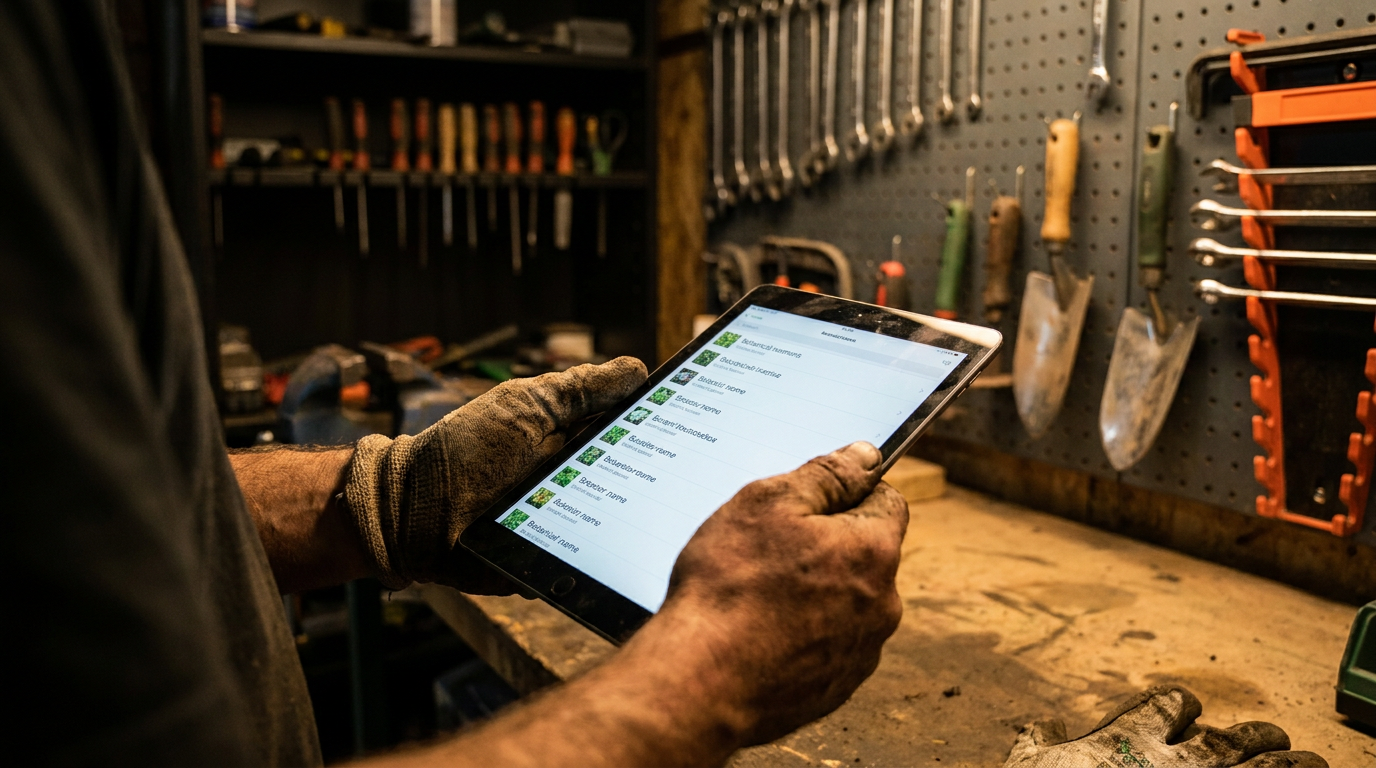
Yes, AI can generate a local native plant list for your specific jobsite. By giving it key details like the USDA plant hardiness zone, soil type, sun exposure, and moisture levels, you can get a solid starting point. However, always double-check its suggestions with local nursery or extension office data.
Can AI Give You a Native Plant List for Your Exact Jobsite? We Asked.
You know the drill. New job, new client, new set of challenges. This one wants a low-water, native plant garden. But their yard has that one soggy corner that never dries out and a strip along the driveway that bakes in the sun. Building the right plant list takes time. You're cross-referencing your experience with nursery availability and maybe a dog-eared book you trust.
But what if you could get a solid first draft in about 30 seconds? That's the promise of AI. We put it to the test to see if it can really generate a local native plant list that's actually useful on a real jobsite. The answer is yes, but it’s not a magic button. It's a power tool, and you need to know how to use it right.
Why Bother with AI for Plant Lists?
Time is money. Spending hours researching the perfect blend of perennials and shrubs for a specific microclimate is billable, but it’s not efficient. Using an AI chat tool, like ChatGPT or Google Gemini, is like having a research assistant who never gets tired.
Here’s where it really helps:
- Speed: Get a starting list in seconds instead of hours. This lets you spend more time on design, sourcing, and installation.
- Customization: You can feed it very specific details. Got a client in Austin, Texas with clay soil, full sun, and a deer problem? You can ask for a list that fits those exact needs.
- Client Communication: Quickly generate different options for a client. You can create a “sun-loving” list and a “shade garden” list in minutes, helping them visualize the project and make faster decisions.
- New Ideas: Sometimes the AI will suggest a native plant you haven't used in a while, or one that’s perfect for the situation but slipped your mind.
It’s not about replacing your knowledge. It’s about speeding up the tedious parts of the job so you can focus on the expert work.
The Catch: AI Isn't a Botanist
Before you start building all your proposals with AI, you need to understand its limits. An AI is a language tool. It reads massive amounts of information from the internet and predicts the next best word. It has not spent a day in the field.
This means a few things for you:
- It Can Be Wrong: AI can pull outdated information or confuse similar plant names. It might suggest a plant that is native to the state, but not your specific region or elevation.
- It Can Miss Nuance: It might not understand that a certain plant is overused, or that a new cultivar has better disease resistance. It doesn't know what your local suppliers actually have in stock.
- Verification is a Must: Never, ever take an AI-generated list and give it straight to a client or supplier. You are the professional. Your job is to use your expertise to check every single suggestion. Cross-reference the list with a trusted source like the USDA PLANTS Database or your local university's agricultural extension office website.
Think of the AI as a new guy on his first day. He can do the basic fetching, but you need to check his work before it goes anywhere important.
Building the Perfect AI Prompt
The quality of the plant list you get depends entirely on the quality of your prompt. Garbage in, garbage out. To get a useful list, you need to give the AI specific details from your site assessment.
Here are the key ingredients for a strong prompt:
- Location: City, State, and ZIP Code. This is the most important piece.
- Hardiness Zone: Always include the USDA Plant Hardiness Zone if you know it.
- Site Conditions: Be specific about soil (clay, sandy, loam), sun (full sun, part shade, deep shade), and water (dry, xeric, average, moist, boggy).
- Plant Types: Ask for what you need. Are you looking for evergreen trees, flowering perennials, groundcover, or a mix?
- Project Goals: What is the client trying to achieve? Specify things like “drought-tolerant,” “deer-resistant,” “attracts pollinators,” “fast-growing privacy screen,” or “low-maintenance.”
Act as a professional landscape designer. Generate a list of 10 native plants suitable for a residential property in Boise, Idaho (ZIP code 83709), which is in USDA Zone 6b. The area has clay-like soil, receives full sun for 6+ hours a day, and requires drought-tolerant plants. I need a mix of perennials and shrubs.
Taking Your Prompts to the Next Level
Once you have the basics down, you can ask the AI to do more complex tasks. This is where it starts to feel like a real assistant. You can refine your results to help with everything from design to long-term care.
Try asking the AI to:
- Organize the list in a table. This makes the information much easier to read and compare. You can ask for columns like Plant Name, Type, Height, Spread, Sun Needs, and Water Needs.
- Suggest companion plants. Ask for plants that grow well together based on their needs and aesthetics.
- Create a bloom schedule. Ask for a list of plants that will provide color throughout the seasons, with bloom times from spring through fall.
- Generate a basic maintenance schedule. You can ask for a simple guide on watering, pruning, and fertilizing the plants on your list. This is a great value-add for your clients and can help with your initial client quotes.
Based on the previous list of plants for Boise, Idaho, create a table. The columns should be: Common Name, Scientific Name, Plant Type (Shrub/Perennial), Mature Height, Sun Exposure, and Water Needs. Also, add a column for Bloom Season. Finally, suggest two groundcover plants from the list that would work well at the base of the taller shrubs.
Your AI-Powered Workflow
Here is a simple, repeatable process for using AI in your landscaping business.
- Assess the Site: Do your normal site visit. Take notes on soil, sun, water, and client goals. Don't skip this. Your professional eye is the most important tool you have.
- Generate the Draft: Use a detailed prompt with your site assessment info to get a draft list from your AI tool.
- Verify and Refine: This is the critical step. Take that AI list and check every plant against a trusted source. Does it really fit the conditions? Is it known to be invasive in your area? Is it even available locally? Remove bad suggestions and add plants from your own experience.
- Finalize the Plan: Use the verified, refined list to build your final design and proposal for the client. You now have a professional, well-researched plan that took you a fraction of the time to create.
AI is not going to take your job. But the landscaper who uses AI effectively will work faster and smarter than the one who doesn't. Start experimenting. See what it can do for your business. You might be surprised at how much time you get back.
Frequently asked questions
37 copy-paste prompts that save tradespeople 5+ hours a week. Plus one short email every Friday — no fluff.
More for landscaping
AI for Landscaping Business Owners: Real ROI
AI for Landscaping Business Owners comes down to using AI to do the slow stuff — quoting, paperwork, marketing, and customer follow-up — so you can stay on

ChatGPT Prompts for Lawn Care Business (20 Tested)
ChatGPT Prompts for Lawn Care Business (20 Tested) comes down to using AI to do the slow stuff — quoting, paperwork, marketing, and customer follow-up — so