Texas Hailstorms: AI Hail Damage Detection for Roofers
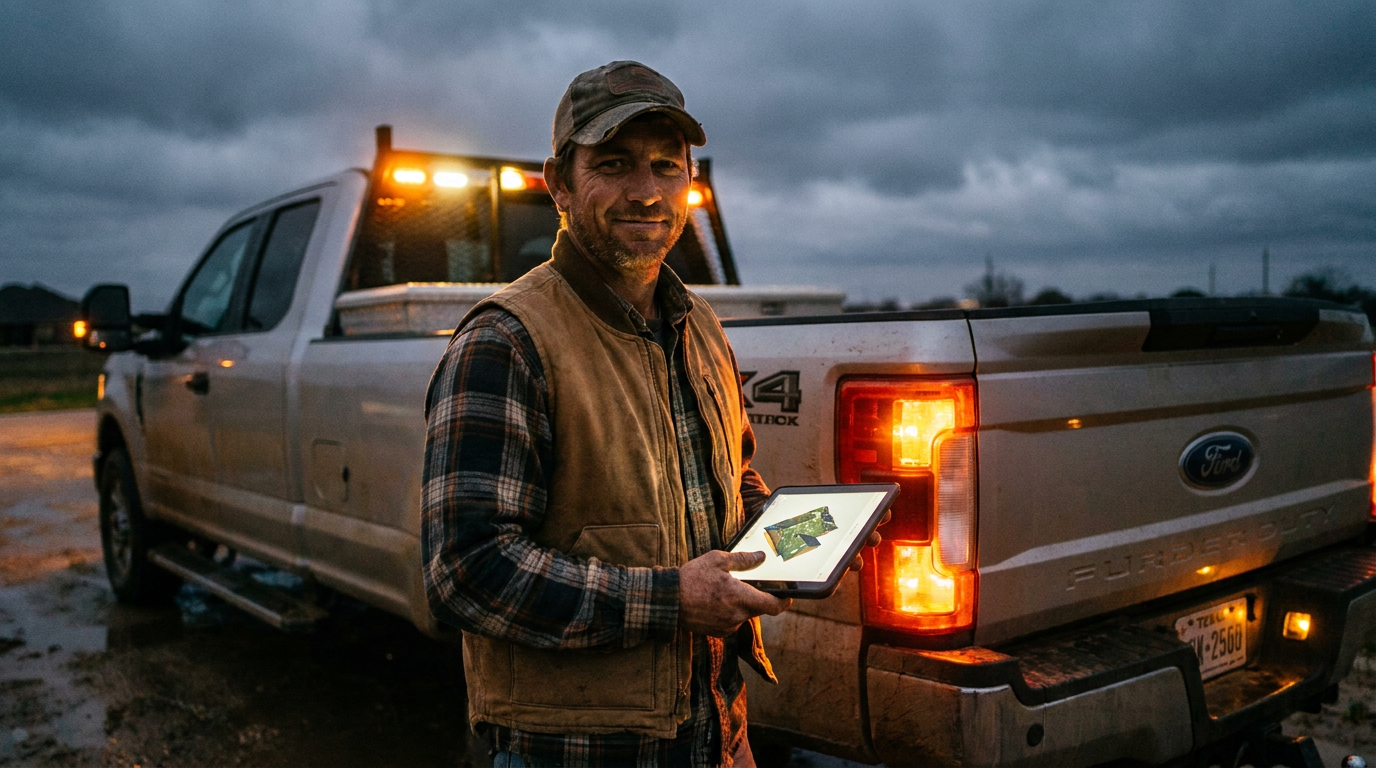
AI hail damage detection for roofers in Texas uses drones and software to automatically find, count, and measure hail impacts on a roof. This tech creates fast, accurate reports that help you build stronger insurance claims and get more jobs done after a storm, saving time and reducing disputes.
Texas Hailstorms Don't Stand a Chance
If you're a roofer in Texas, you know hail is not a matter of if, but when. The Dallas-Fort Worth area, Austin, and San Antonio sit right in the heart of what insurers call "Hail Alley." After a big storm rolls through, the race is on. Homeowners are calling, the competition is fierce, and insurance adjusters are swamped. The old way of chalking a 10x10 square on a steep roof feels slow and outdated. It’s time for a better tool.
AI-powered hail damage detection is that tool. It’s not science fiction. It’s practical tech that Texas roofing contractors are using right now to get an edge. It helps you inspect more roofs, create undeniable proof for claims, and look like a pro to homeowners. This isn't about replacing your skills; it's about adding a high-tech tool to your belt that makes you faster, safer, and more profitable.
What Exactly is AI Hail Damage Detection?
Think of it as a smart assistant for your roof inspections. Instead of you climbing up and spending an hour searching for dings, a drone does the dangerous work. Here’s the simple version:
- Fly the Roof: A drone flies a pre-planned, automated path over the property, taking hundreds of high-resolution photos from different angles.
- Upload the Data: You upload these images to a software platform, usually in the cloud.
- AI Gets to Work: The artificial intelligence scans every single image. It’s been trained on millions of photos of hail damage, so it knows exactly what to look for. It identifies, measures, and counts each impact.
- Get the Report: Within minutes, the software generates a detailed report. It shows you a 3D model of the roof, marks every single hail strike, and gives you the hard numbers: total impacts, impacts per square, and their sizes. It's the kind of solid evidence that makes insurance claims go smoothly.
This process turns a one or two-hour manual job into a 15-minute flight and a short wait for a report. It’s a game-changer when you have a dozen potential jobs to look at after a storm.
Why Texas Roofers Need This Edge
Texas gets hit harder by hail than any other state. According to the Insurance Information Institute, Texas had over 500,000 hail loss claims in a single recent year, far more than any other state. That means more work, but it also means more competition.
Here’s why AI gives you an advantage in the Texas market:
- Speed Wins Jobs: After a storm, the first contractor to provide a detailed, professional report often wins the job. While your competitor is still scheduling time to get on the roof, you can have a full AI-generated report in the homeowner's inbox.
- Beat the Labor Shortage: Good help is hard to find. AI lets your existing team do more with less. One skilled drone pilot can inspect multiple roofs in the time it takes a crew to inspect one manually. This helps you scale up quickly when demand is high.
- Win Against Tough Adjusters: Insurance companies are using their own tech to scrutinize claims. You need to fight fire with fire. An AI report with photographic evidence, GPS data, and precise measurements is much harder to argue with than a few chalk marks and a handful of photos. It helps you build better, more accurate quotes and estimates.
Generate a short script for a 30-second local radio ad. The ad should target homeowners in the Dallas-Fort Worth area who may have hail damage after a recent storm. Highlight that our roofing company uses advanced AI drone technology for fast, accurate, and free inspections. Emphasize trust and getting them the new roof they deserve without the hassle. The tone should be confident and reassuring.
The Nuts and Bolts: How It Really Works
Let's break down the process. It's simpler than you might think. Most AI roofing platforms are designed for people who work with their hands, not computer scientists.
Step 1: The Drone Flight
You don’t need to be a professional pilot. Modern drones and apps make this easy. You outline the property on a map on your tablet, and the software creates an automatic flight path. The drone takes off, captures the images, and lands all by itself. This ensures you get consistent, overlapping photos every time, which is key for the AI to work properly.
Step 2: The AI Analysis
Once the photos are uploaded, the AI engine takes over. This is where the magic happens. The software uses a type of AI called computer vision. It analyzes the pixels in each photo to identify patterns that match hail strikes. It can distinguish between hail dings, shadows, debris, or normal roof wear.
Step 3: The Damage Report
The final output is what sells the job and gets the claim approved. A typical AI hail report includes:
- A fully interactive 3D model of the house.
- High-resolution photos of every roof facet.
- Each identified hail impact is marked, measured, and cataloged.
- A summary page with key stats: total roof area, pitch of each facet, and a hail-hit-count per square.
- Export options to PDF or other formats to easily share with homeowners and adjusters.
This isn't just a report; it's a complete, undeniable record of the damage. It builds trust and shows you're a serious professional.
I am a roofing contractor in Austin, Texas. Write a short email to my crew chiefs introducing our new AI drone inspection system. Explain in simple terms that this tool will help us inspect roofs faster and safer after storms. Outline the key benefits for them: less time on steep roofs, automated reports so they don't have to count hits manually, and the ability to get to more jobs in a day. Announce a mandatory training session next Friday and keep the tone straightforward and positive.
Choosing the Right AI Platform
Several companies offer this technology, and the right one depends on your business. Here are a few things to look for:
- Report Quality: Does the report look professional? Is it easy for a homeowner and an adjuster to understand? Get samples before you commit.
- Accuracy: Ask for case studies or data on the AI's accuracy. Some systems are better than others at detecting smaller impacts or working on different roof materials.
- Ease of Use: The software should be intuitive. You and your team should be able to learn it quickly without needing a ton of technical support.
- Cost: Pricing models vary. Some charge per report, while others have a monthly or annual subscription. Do the math to see what makes sense for your job volume.
- Integrations: Does it connect with other software you use, like your CRM or project management tool? This can save a lot of administrative time.
The Bottom Line
The weather in Texas isn't getting any calmer. For a roofing contractor, that means opportunity, but only if you have the right tools to handle the rush. AI hail damage detection is no longer a luxury; it's becoming a standard tool for top-performing roofing companies.
By adopting this tech, you're not just buying a piece of software. You're investing in speed, safety, and professionalism. You're giving your team the ability to do their best work and providing homeowners with the proof they need to get their lives back to normal. In the competitive Texas roofing market, that’s how you win.
Frequently asked questions
37 copy-paste prompts that save tradespeople 5+ hours a week. Plus one short email every Friday — no fluff.
More for roofing

AI for Roofing Contractors: The Complete Guide
AI for Roofing Contractors comes down to using AI to do the slow stuff — quoting, paperwork, marketing, and customer follow-up — so you can stay on the too
AI Roof Measurement From a Photo: Apps That Work
AI Roof Measurement From a Photo comes down to using AI to do the slow stuff — quoting, paperwork, marketing, and customer follow-up — so you can stay on t