
Can AI Help You Find the Source of a Gas Leak?
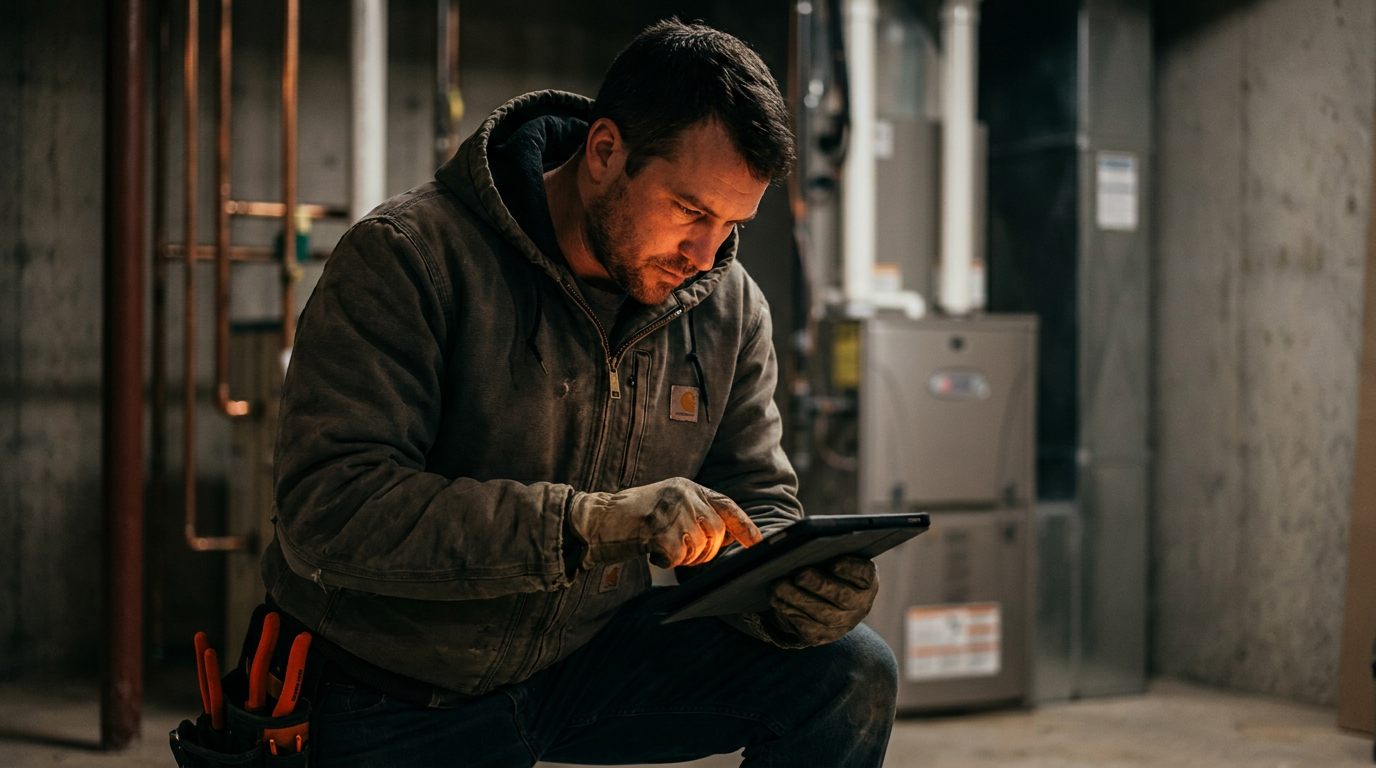
No, AI cannot directly find the source of a gas leak because it lacks physical sensors to detect gas. However, AI can assist plumbers by analyzing building schematics, historical data, and appliance manuals to create diagnostic checklists, helping you narrow down potential sources faster and improve your workflow efficiency.
Can AI Actually Help You Find a Gas Leak?
Let's get straight to it. A gas leak is one of the most serious calls you can get. It’s a threat to life and property, and there’s no room for error. So when someone asks if a computer program can help you find the source, it’s a fair question. The answer isn't a simple yes or no.
AI can't smell gas. It can't put a sensor on a pipe fitting. Your experience, your senses, and your combustible gas detector are, and will remain, your primary tools. But to write AI off completely is a mistake. Think of it as a new kind of apprentice—one that has read every service manual ever written and can recall it instantly. It’s a tool for your brain, not a replacement for your hands.
This technology is here to help you organize information, diagnose problems based on data, and communicate better with your customers. It's about working smarter, not cutting corners on safety.
Where AI Fits In (and Where It Doesn't)
First, let's be crystal clear about the non-negotiables.
AI is NOT a primary detection tool.
If you or a customer smells mercaptan (the rotten egg smell added to natural gas), the protocol is the same as it has always been:
- Evacuate: Get everyone out of the building immediately.
- Don't Touch Anything: No light switches, no phones, no creating a spark.
- Call from a Safe Distance: Once clear of the building, call 911 and the local gas utility company.
Your combustible gas detector, or "sniffer," is your go-to for pinpointing a leak. AI has no physical presence. It cannot and should not ever replace your fundamental safety procedures and trusted equipment.
Where AI Shines: As a Diagnostic Partner
So, what can it do? AI, specifically Large Language Models (LLMs) like ChatGPT or Gemini, acts as a powerful data processor. It helps you think through the problem methodically.
- Building a Differential Diagnosis: You have symptoms—a faint smell of gas in the basement, a pilot light that won't stay lit, a high gas bill. You can feed these symptoms to an AI and ask it to generate a checklist of possible causes, ordered from most to least likely. It can cross-reference the building's age, the types of appliances present, and common failure points for that specific equipment.
- Accessing Technical Data: Instead of digging through a PDF manual on your phone for the proper manifold pressure on a 12-year-old furnace, you can just ask. AI can pull that specific data point in seconds, saving you time and frustration on the job.
- Customer Communication: Explaining a gas leak situation to a panicked homeowner is tricky. You need to be reassuring but firm, clear but not overly technical. AI can help you draft a calm, professional script to explain what you're doing, why you're doing it, and what the next steps are.
- Job Documentation: After the repair is done and the site is safe, you need to document your work. You can dictate your notes and have AI turn them into a clean, structured report for your records and the customer's invoice. This is a huge boost for your operations.
Prompts to Use on the Job
Theory is one thing, but practical use is what matters. Here are some prompts you can copy and paste into an AI chat tool today. Tweak them to fit your specific situation.
Act as a master plumber with 30 years of experience specializing in gas systems. I'm at a single-family home built in 1985. The homeowner reports a faint, intermittent smell of gas in the utility room, which contains a 15-year-old natural gas furnace and a 10-year-old gas water heater. Create a prioritized diagnostic checklist for me to follow to identify the potential source of the leak. Start with the most common and simple checks and move to more complex ones. Include specific tool recommendations for each step, like a gas sniffer and manometer. Emphasize safety checks throughout the process.
I'm a plumber on-site and have confirmed a small gas leak at the union fitting for a gas dryer. The gas is shut off and the area is ventilated. I need to explain the situation to the homeowner, who is very anxious. Write a clear, calm, and professional script for me to use. The script should explain what the problem is in simple terms, confirm that the situation is now safe, and outline the repair I will perform and how long it will take. Avoid overly technical jargon. The goal is to build trust and reduce their anxiety.
Create a detailed service summary for a completed job. Here are my notes:

- Job: Respond to customer report of gas smell.
- Findings: Used TIF 8900 to detect a small leak at the flex line connection to the gas range.
- Action: Shut off gas at the meter. Disconnected the old line. Cleaned and inspected the threads on the range and shutoff valve. Applied new pipe dope. Installed a new stainless steel flex line.
- Test: Turned gas back on, tested for leaks with soap solution and TIF 8900. No leaks detected. Relit pilot lights on furnace and water heater.
- Time on site: 1.5 hours.

Format this into a professional summary for an invoice and our internal job records.
The Bottom Line: AI is Your Co-pilot, Not the Pilot
AI is not coming for your job. It's a powerful addition to your digital toolbox, just like a thermal camera or a modern press tool. It can’t replace your instincts, your experience, or the trust you build with a customer when you look them in the eye and tell them their home is safe.
For finding a gas leak, your most important assets are still your nose, your brain, and your sniffer. But for everything that comes before and after—the diagnosis, the research, the communication, the documentation—AI is ready to help you work faster and smarter. It handles the data so you can focus on the real work.
Frequently asked questions
37 copy-paste prompts that save tradespeople 5+ hours a week. Plus one short email every Friday — no fluff.
More for plumbers
AI for Plumbers: The Practical Field Guide
AI for Plumbers comes down to using AI to do the slow stuff — quoting, paperwork, marketing, and customer follow-up — so you can stay on the tools. Below i

25 ChatGPT Prompts for Your Plumbing Business
25 ChatGPT Prompts for Your Plumbing Business comes down to using AI to do the slow stuff — quoting, paperwork, marketing, and customer follow-up — so you

AI Plumbing Diagnosis Apps: What Actually Works
AI Plumbing Diagnosis Apps comes down to using AI to do the slow stuff — quoting, paperwork, marketing, and customer follow-up — so you can stay on the too