
AI for Historic Paint Color Matching in New England
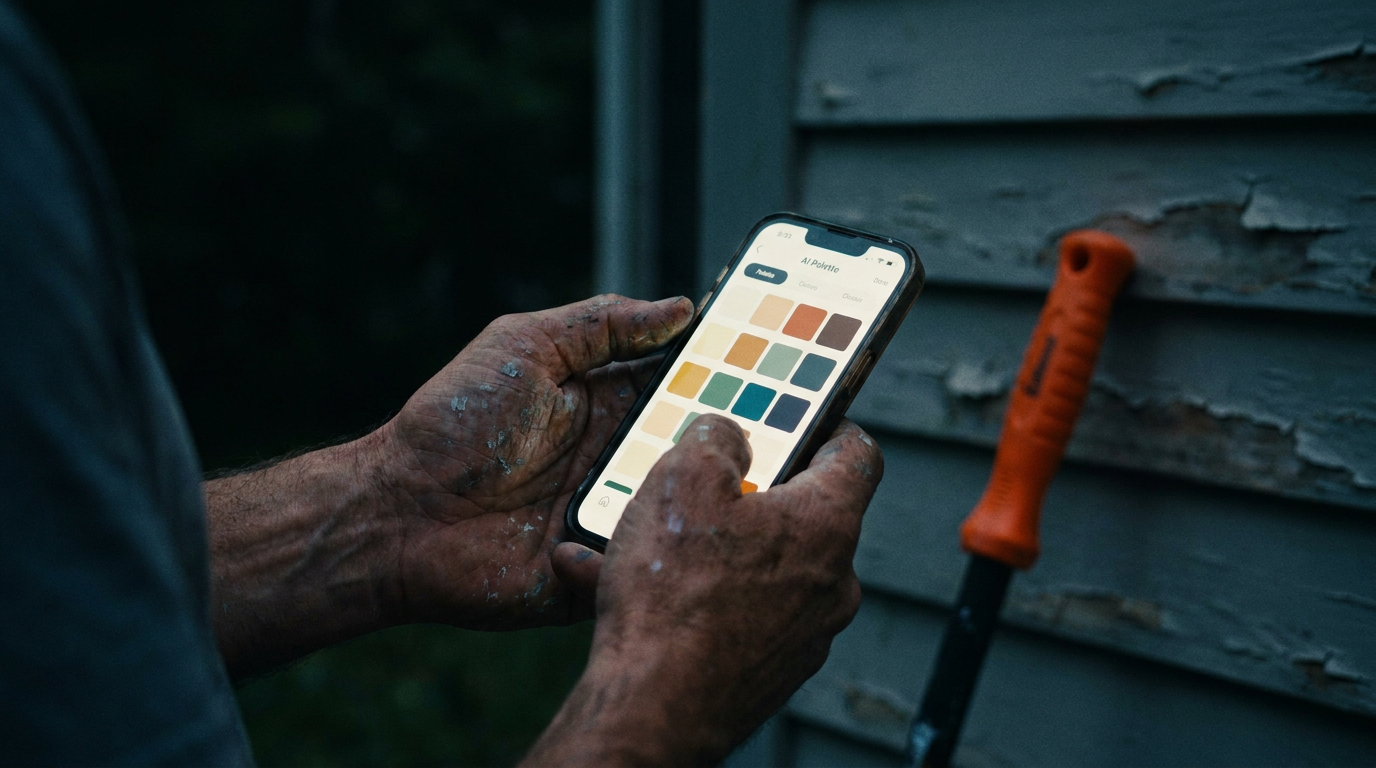
AI helps painters match historic New England paint colors by analyzing images of existing paint chips or period photos. Large language models can cross-reference this data with historical color palettes from brands like Benjamin Moore or Sherwin-Williams, suggesting modern paint codes for an authentic look.
Old House, New Tech
Working on old houses in New England is a different game. From Boston to Burlington, every town has homes that are hundreds of years old. Clients want to keep that historic feel, especially with paint. But matching a color that's been on a wall since the 1800s is tough. It's faded, chipped, and sometimes covered in layers of other colors.
For years, the job meant grabbing a paint chip, heading to the store, and hoping the machine could get it right. Or you'd spend hours flipping through fan decks, holding them up in different lights. It’s slow and not always accurate.
Now, there’s a new tool in the box: artificial intelligence. Using the phone in your pocket, you can get a solid starting point for a historically accurate color in minutes, not hours. It’s not magic, but it’s a powerful way to work smarter.
The Old Way vs. The New Way
Let's be honest, the old way has problems.
- Faded Samples: The chip you pull off a sun-beaten piece of siding isn't the original color. It’s a ghost of it. Relying on that alone is a guess.
- Lighting: The color you see under fluorescent lights at the paint store looks different in the morning sun on a house in Concord, Massachusetts.
- Human Error: Your eyes and the paint tech's eyes can see color differently. It’s subjective.
The new way uses AI to cut through some of this fog. You take a clear picture of the best paint sample you can find. The AI analyzes the color data in the image. It then checks that against huge databases of modern and historical paint colors.
Instead of just one person's opinion, you get a data-driven suggestion. It gives you a specific paint code from Sherwin-Williams or Benjamin Moore to start with. This saves you a trip and gets you closer to the right color on the first try.
How AI Gets the Job Done
This isn't sci-fi. It's just pattern matching on a massive scale. When you give an AI an image, it doesn't 'see' a color. It sees a collection of pixels, each with a numerical value (like a HEX or RGB code).
The AI can isolate the main color in your sample photo. Then it does what you would do, but thousands of times faster. It compares that color value to known paint collections.
Where it gets really smart is understanding context. You can tell it, "This is from a 1910 Craftsman home near Portland, Maine." The AI can use that information to search for color palettes popular during that time and in that region. It can pull information from sources like Historic New England or old architectural guides to find authentic options.
This turns your phone from a simple camera into a research assistant. It’s the difference between guessing and making an educated decision.
Analyze the uploaded image of a paint chip from an old house. Identify the primary color. Provide the closest available paint color matches from the Benjamin Moore Historical Collection and the Sherwin-Williams Historic Color collection. List the name, color code, and HEX code for each match.
More Than Just a Color Code
Getting a single color match is useful, but AI can do more. It can help you build an entire, historically accurate color scheme. This is a huge value-add for clients who want their property to look right.
Imagine a client with a Queen Anne Victorian in Providence. They don't just need a siding color. They need colors for the trim, the porch, the gables, and the front door. These homes were famous for their complex, multi-color paint jobs.
You can use AI to generate a full palette. Give it the home's style, age, and location. It can suggest a main color, a trim color, and two or three accent colors that work together and are true to the period.
This helps you sell the job. You’re not just a painter; you're a consultant who understands the history of the home. You can show the client AI-generated reports that back up your choices. For more ideas on how to use tech in your business, see what people in other trades are doing.
Generate a historically accurate exterior paint palette for an 1890s Queen Anne style house in Portsmouth, New Hampshire. The palette should be based on colors common for that architectural style and period. Provide suggestions for the main body, primary trim, accent trim, and front door. List options from both Farrow & Ball and Benjamin Moore.
Getting Started on the Jobsite
Using AI for color matching is straightforward. You likely already have the main tool you need: a smartphone.
- Get a Good Sample: Find the best-preserved paint chip you can. Look inside a closet, under a piece of trim, or on a part of the house that's been protected from the weather.
- Take a Clear Photo: Good lighting is key. Take the picture outdoors in natural, indirect light if possible. Avoid harsh shadows or direct sun. Place a white piece of paper or a gray card next to the sample in the photo. This helps the AI correct for lighting and white balance.
- Use a Capable AI: A tool like ChatGPT-4o or Google Gemini, which allows image uploads, is perfect for this. Upload your photo and use one of the prompts in this article.
- Always Test It: The AI suggestion is your starting point, not the final word. Get a physical paint sample of the suggested color. Paint a small test patch on the house. Look at it in the morning, at noon, and in the evening. The real world is the final test.
This process adds a professional step that builds client trust. You’re showing them you use every tool available to get the job done right.
Write a short, professional paragraph for a client quote. Explain that we used AI analysis of their home's original paint and historical architectural data to select the proposed color, 'Benjamin Moore Wythe Blue HC-143'. Mention that this color is a historically accurate choice for a colonial-era home in this region.
The Right Tool for the Right Job
AI is not going to replace your experience or a painter's eye. You know how different sheens look on old wood. You know how to prep a surface that's seen 200 years of weather. AI doesn't know any of that.
Think of it as another specialty tool, like a high-quality sprayer or a precision brush. It helps you do one part of your job faster and with more accuracy. It handles the tedious research so you can focus on the hands-on work that you do best.
By adding AI to your workflow, you save time, reduce guesswork, and give your clients better results. In a competitive market, that’s how you stay ahead.
Frequently asked questions
37 copy-paste prompts that save tradespeople 5+ hours a week. Plus one short email every Friday — no fluff.
More for other trades

AI for Painting Contractors: Quoting to Marketing
AI for Painting Contractors comes down to using AI to do the slow stuff — quoting, paperwork, marketing, and customer follow-up — so you can stay on the to
AI for Fence Companies: 9 Practical Plays
AI for Fence Companies comes down to using AI to do the slow stuff — quoting, paperwork, marketing, and customer follow-up — so you can stay on the tools.

AI for Handyman Business: The Solo Operator Stack
AI for Handyman Business comes down to using AI to do the slow stuff — quoting, paperwork, marketing, and customer follow-up — so you can stay on the tools