
AI for High-Altitude HVAC Load Calculation
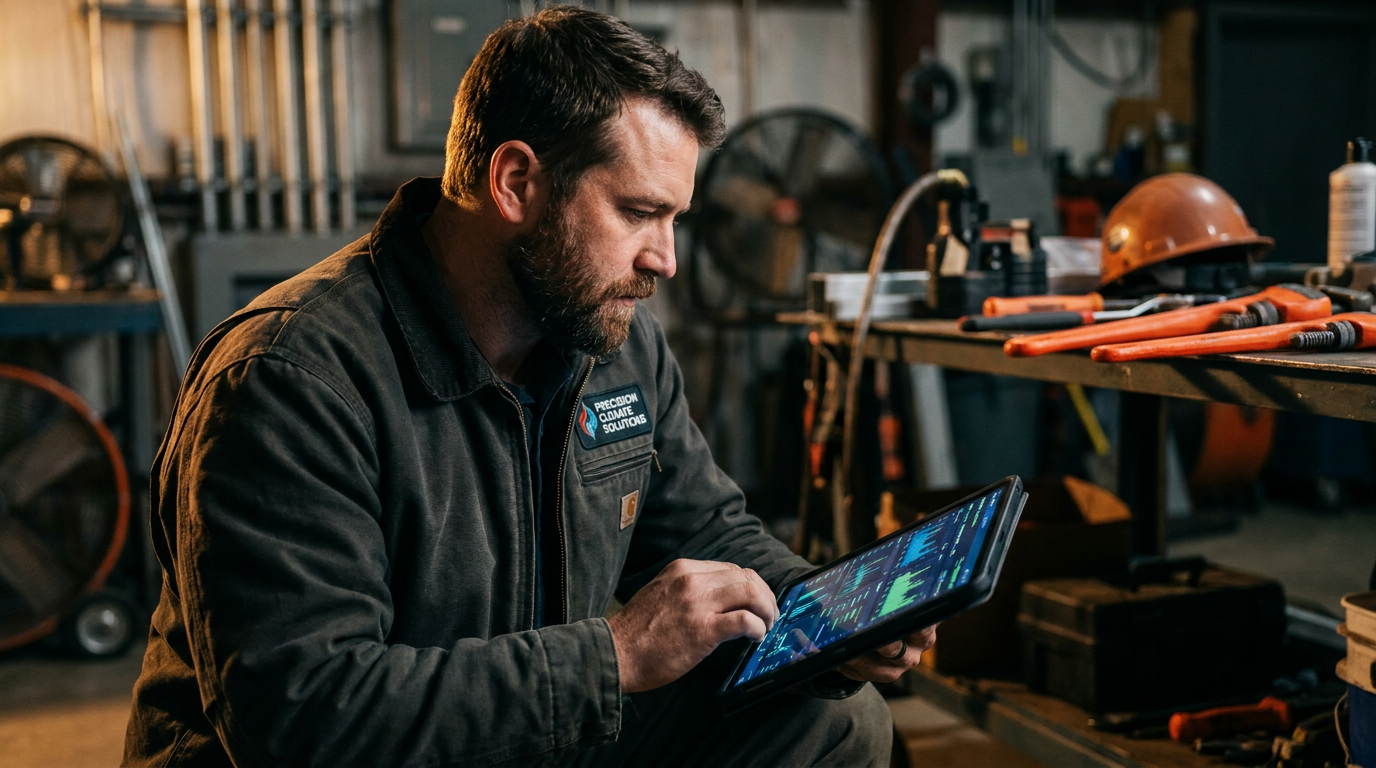
Yes, AI can significantly improve HVAC load calculations at high altitude. AI tools analyze thinner air density, reduced oxygen, and specific site data to adjust Manual J calculations. This leads to more accurate BTU requirements and properly sized equipment for mountain homes, preventing common performance issues.
Doing HVAC work in the mountains is a different game. From Denver to Durango, the thin air changes everything. A standard load calculation that works in Dallas will leave a customer cold in Aspen. The old way meant digging through manufacturer spec sheets and doing a lot of guesswork to get it right.
Now, we have a new tool in our belt. Artificial intelligence can take the headache out of high-altitude jobs. Using AI for your HVAC load calculation helps you nail the BTU requirements every time, ensuring your equipment runs right and your customers stay happy.
The High-Altitude Problem
Why is HVAC so tricky a mile or two up? It comes down to air density. At 7,000 feet, the air is about 25% thinner than at sea level. This simple fact messes with your whole system.
- Reduced Heat Transfer: Thinner air carries less heat. Your furnace and AC coils can't transfer thermal energy as efficiently. A 100,000 BTU furnace at sea level won't deliver 100,000 BTUs in Vail.
- Furnace Derating: Gas furnaces need oxygen to burn fuel. Less oxygen means less efficient combustion. Most manufacturers require you to derate a furnace's input capacity by 4% for every 1,000 feet above sea level. Forgetting this step is a recipe for a weak system.
- Fan and Blower Performance: A fan moves a volume of air, not a mass of air. Since the air is less dense, the blower is moving less actual 'stuff'. This affects airflow (CFM) and the system's ability to push conditioned air through the ductwork.
- Increased Solar Gain: High-altitude areas often have more clear, sunny days. The thinner atmosphere also lets more solar radiation through. This can dramatically increase the cooling load, especially on south- and west-facing windows.
Ignoring these factors leads to big problems. An undersized unit will run constantly and never keep up. An oversized unit—a common mistake to 'compensate'—will short-cycle, wrecking humidity control and efficiency. You need to be precise, and that's where AI comes in.
How AI Changes the Game
An ACCA Manual J calculation is still the standard, but AI can supercharge the process. Think of it as the smartest apprentice you've ever had. It can process huge amounts of data in seconds, helping you account for all the high-altitude variables.
Here’s how AI helps:
- Data Analysis: AI can instantly analyze elevation, historical weather data for a specific zip code, solar orientation, and home construction details (R-values, U-factors, air leakage).
- Derating Calculations: Instead of manually looking up derating tables for every piece of equipment, you can feed the specs to an AI. It can apply the correct derating percentages for furnaces, air conditioners, and heat pumps based on the job's specific altitude.
- Cross-Referencing: AI can check your work. It can compare the load calculation against manufacturer specs and ACCA guidelines to flag potential issues before you ever order the equipment. This helps you build better quotes that are accurate and profitable.
- Scenario Modeling: You can ask an AI to model different scenarios. What happens if the customer upgrades their windows? What's the impact of adding more insulation in the attic? AI gives you fast answers, helping you upsell with confidence.
Using AI isn't about replacing your skills. It's about making your skills more powerful. It handles the tedious math so you can focus on system design and quality installation.
Prompts to Get You Started
Don't just stare at a blank chat window. Use these prompts to put your AI assistant to work today. Copy and paste them into your preferred tool.
Act as a senior HVAC engineer specializing in high-altitude environments. I am performing a Manual J load calculation for a residential property at 8,500 feet in Colorado. List the top 5 critical adjustments and derating factors I must apply compared to a sea-level calculation. For each factor, explain its impact on sensible and latent heat load and furnace performance.
This first prompt helps you build a foundational checklist for any mountain job. It forces the AI to think like an expert and explain the 'why' behind the numbers.
Now, let's get more specific with a project scenario.
I have a 3,000 sq. ft. new construction home project in Park City, Utah (elevation ~7,000 ft). The home has R-21 walls, an R-49 attic, and double-pane windows with a U-factor of 0.30. Create a step-by-step checklist for performing an AI-assisted HVAC load calculation. Include how to account for air density, furnace derating (typically 4% per 1,000 ft), and increased solar heat gain. Suggest specific data points to collect on-site.
This second prompt gives the AI a concrete task. It will output a clear action plan you can use for a real-world project, making sure you don't miss any critical steps.
The Bottom Line
Working at high altitude requires more than just standard know-how. It demands precision. Using AI for HVAC load calculations gives you a serious edge. It reduces guesswork, prevents costly mistakes, and ensures the systems you install perform exactly as they should.
This technology helps you work smarter, not harder. By embracing AI as a tool, you can deliver better results for your customers, reduce callbacks, and protect your reputation as the go-to expert for tough jobs in the mountains. The final decision is always yours, but now you have better data to make it.
Frequently asked questions
37 copy-paste prompts that save tradespeople 5+ hours a week. Plus one short email every Friday — no fluff.
More for hvac

AI for HVAC Contractors: Everything You Need to Know
AI for HVAC Contractors comes down to using AI to do the slow stuff — quoting, paperwork, marketing, and customer follow-up — so you can stay on the tools.

ChatGPT for HVAC Technicians: 20 Real Use Cases
ChatGPT for HVAC Technicians comes down to using AI to do the slow stuff — quoting, paperwork, marketing, and customer follow-up — so you can stay on the t
AI HVAC Load Calculation: Manual J in Minutes
AI HVAC Load Calculation comes down to using AI to do the slow stuff — quoting, paperwork, marketing, and customer follow-up — so you can stay on the tools