
AI HVAC Service Contract Pricing in the Pacific Northwest
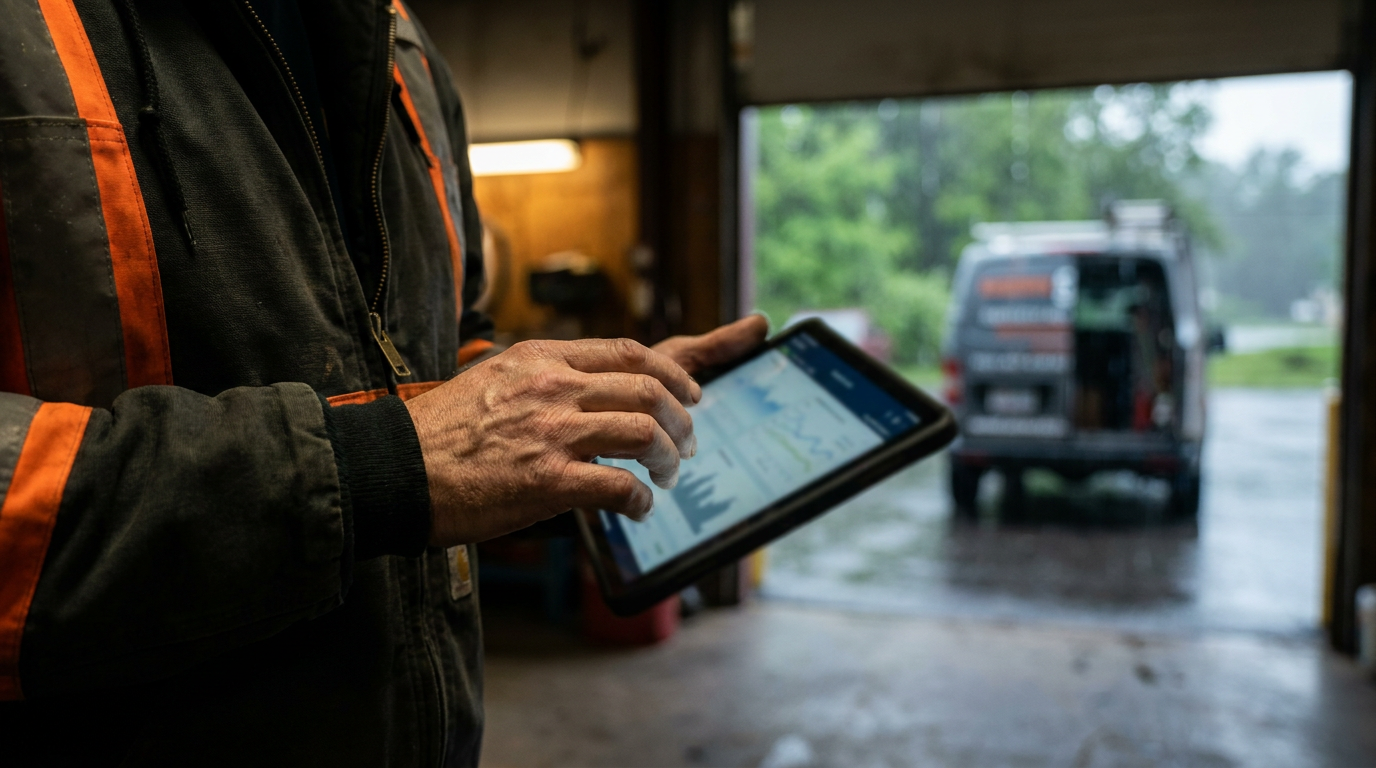
AI HVAC service contract pricing in the Pacific Northwest uses local data to create accurate, profitable agreements. By analyzing factors like regional weather, equipment age, and local labor costs, AI helps you move beyond guesswork. This ensures your prices cover costs and match the value you provide in this unique climate.
Why Your Gut Feeling on Pricing is Costing You Money
In the Pacific Northwest, pricing an HVAC service contract is a tough job. You have wet, corrosive air from Seattle to Portland, older housing stock with ancient furnaces, and new high-efficiency heat pumps going into builds in Boise. Then you have variable energy costs and local rebates from providers like Puget Sound Energy or the Energy Trust of Oregon. Guessing at a price just doesn't cut it anymore.
Using a flat rate you copied from a competitor or a price you've used for ten years is leaving money on the table. It also risks underbidding a job that will cost you in callbacks and parts. This is where AI comes in. It’s not about robots taking over. It's about using a smart tool to analyze all the factors that make a PNW HVAC contract unique, so you can price for profit and value.
AI Pricing: A Game-Changer for PNW HVAC Shops
Artificial intelligence sounds complicated, but it's really just a powerful calculator. It can look at thousands of data points at once to find patterns you'd miss. For an HVAC business in Washington, Oregon, or Idaho, this is a huge advantage.
Think about the variables:
- Climate: The high humidity and constant drizzle west of the Cascades mean more wear, potential corrosion, and mold risk. East of the mountains, you have hotter summers and colder winters, putting different strains on systems.
- Equipment: Heat pumps are king in the moderate parts of the PNW, but you still have plenty of gas furnaces and older AC units. Each has a different failure rate and maintenance need.
- Travel Time: A job in downtown Seattle has different travel costs than one in rural Snohomish County or out in the Palouse. AI can analyze zip codes and your past travel logs to build that cost into the price automatically.
- Local Costs: Labor rates, parts availability, and permit fees are not the same in Portland as they are in Spokane. AI can use this local data to adjust your pricing for each market you serve.
AI takes this data and turns it into a clear, defensible price. You're no longer just picking a number. You're building a price based on real-world facts.
Getting Started with AI for Service Contracts
This is easier than you think. You don't need a computer science degree. You just need the data you already have and a tool to help you make sense of it.
Your goldmine is your past work history. Every invoice, service call, and customer record is a piece of the puzzle. Start by organizing this information. A simple spreadsheet is a great first step. For each past job, try to log:
- Customer Zip Code
- Age of HVAC System
- Type of System (Heat Pump, Furnace, Ductless, etc.)
- Number of service calls in the last 2 years
- Total cost of repairs made
- The final price you charged
Once you have this data, you can start feeding it to an AI tool like ChatGPT, Claude, or a specialized trade software. The tool's job is to find the hidden connections between a customer's situation and your actual costs.
Here's a prompt you can use to start organizing your thoughts.
Act as an HVAC business consultant. I want to create three tiers of service contracts: Bronze, Silver, and Gold. Based on the features below, help me structure what each tier should include.

Features to distribute:
- Two seasonal tune-ups (spring/fall)
- One seasonal tune-up
- 15% discount on repairs
- 25% discount on repairs
- No diagnostic fee
- Priority scheduling
- Condensate drain cleaning
- Blower motor cleaning
- Filter replacement (customer supplied)
- Filter replacement (we supply)
- Electrical connection check
- Refrigerant level check
Building Your PNW Pricing Tiers with AI
Now let's get specific to the Pacific Northwest. You can't use a pricing model built for Arizona's dry heat. Your model needs to account for our damp, mild climate and unique housing. The goal is to create pricing tiers that make sense to the customer and protect your profit margin.
Here’s a more advanced prompt that brings in local factors. It tells the AI to think like a local contractor.
Act as an experienced HVAC operations manager in the Pacific Northwest (specifically the Seattle-Tacoma area). I need to price my Bronze, Silver, and Gold service contracts. My base labor rate is $120/hour.

Use the following data to create a monthly price for each tier. Explain your reasoning.

- **Bronze Tier:** One tune-up per year. 10% repair discount.
- **Silver Tier:** Two tune-ups per year. 15% repair discount. Priority scheduling.
- **Gold Tier:** Two tune-ups. 20% repair discount. No diagnostic fees. We supply filters.

**Local Factors to Consider:**
1.  **High Humidity:** Systems run hard to dehumidify. Price in extra time for coil and drain line cleaning to prevent mold.
2.  **Travel Zones:** Create a 10% price increase for customers outside a 20-mile radius of my shop (zip code 98402) to cover fuel and time.
3.  **Heat Pump Prevalence:** Assume 60% of customers have heat pumps, which require more complex tune-ups (reversing valve, defrost cycle check). Add a 15% factor to the base price for this.
4.  **Equipment Age:** For systems over 10 years old, add a $5/month 'risk' premium to the Silver and Gold tiers to cover the higher likelihood of repairs where we offer a discount.

Give me the final monthly prices and a short justification for each.
This kind of detailed prompt gives you a data-backed starting point. It's not the final word, but it's a lot better than a wild guess. It helps you build a logical pricing structure you can explain to your customers and your team. For more on this, check out our guides on building better quotes.
Putting Your AI-Powered Prices to the Test
Once the AI gives you a set of prices, don't just roll them out to everyone. You need to test them in the real world.
- Benchmark Internally: Compare the AI's prices against your last 20-30 service agreements. Would you have made more money? Lost money? By how much? This helps you see if the AI's logic is sound.
- Run a Pilot Program: Offer the new contract pricing to a small group of new customers for one month. See how they react. Is the value clear? Is the price a dealbreaker?
- Get Feedback: Ask customers what they think of the tiers. Is it easy to understand what they're getting for their money? Their feedback is crucial. A price might be profitable, but if customers don't understand the value, they won't buy.
- Adjust and Repeat: Use the feedback and financial results to tweak your pricing. Maybe the discount on repairs needs to be higher, or the value of 'priority scheduling' needs to be explained better. AI is a tool for continuous improvement, not a one-time fix.
AI pricing isn't about letting a machine run your business. It's about giving you the best information possible to make smart decisions. It helps you protect your profits, price your services fairly, and build a stronger business that can handle the unique challenges of the Pacific Northwest.
Frequently asked questions
37 copy-paste prompts that save tradespeople 5+ hours a week. Plus one short email every Friday — no fluff.
More for hvac
AI for HVAC Contractors: Everything You Need to Know
AI for HVAC Contractors comes down to using AI to do the slow stuff — quoting, paperwork, marketing, and customer follow-up — so you can stay on the tools.

ChatGPT for HVAC Technicians: 20 Real Use Cases
ChatGPT for HVAC Technicians comes down to using AI to do the slow stuff — quoting, paperwork, marketing, and customer follow-up — so you can stay on the t
AI HVAC Load Calculation: Manual J in Minutes
AI HVAC Load Calculation comes down to using AI to do the slow stuff — quoting, paperwork, marketing, and customer follow-up — so you can stay on the tools