
Can AI Spot Turf Disease from a Drone Photo?
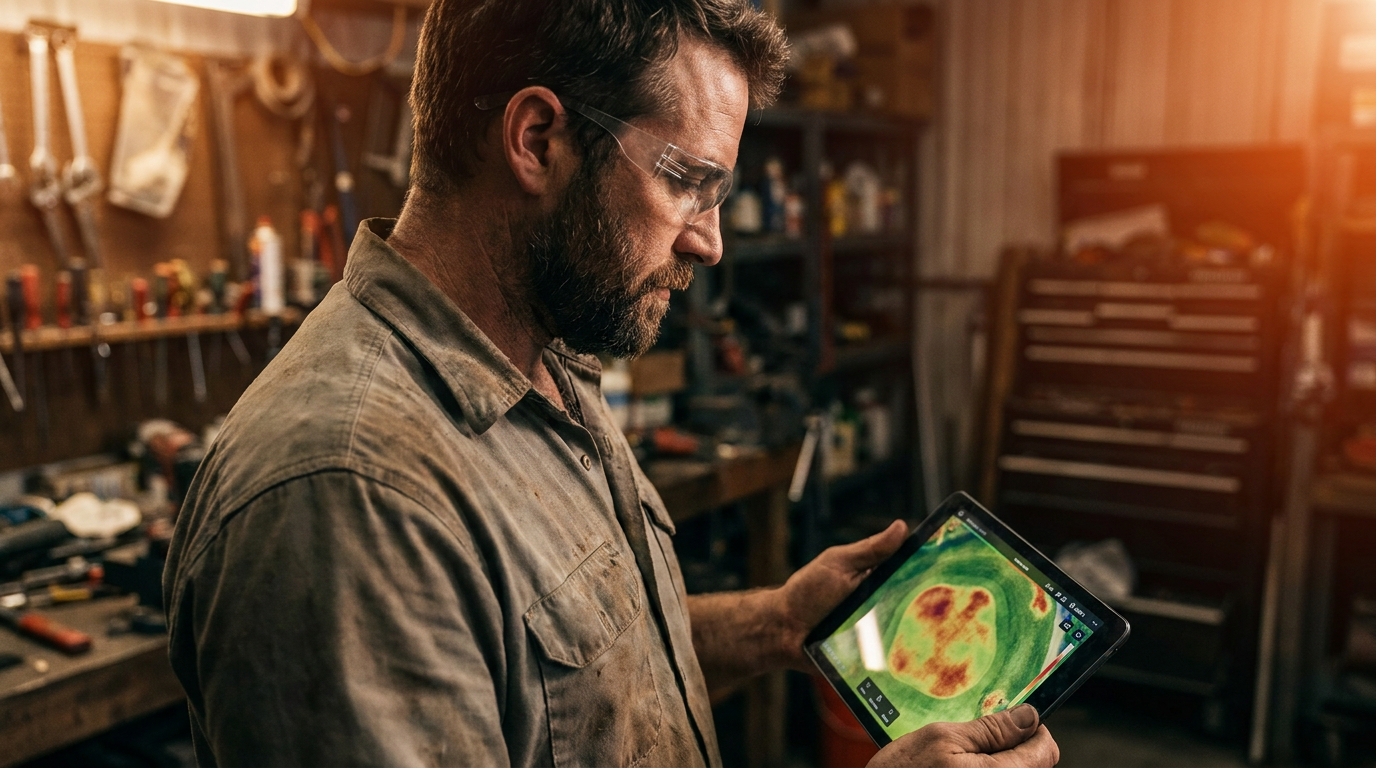
Yes, AI can identify turf diseases from a drone photo. By analyzing high-resolution images for subtle changes in color, texture, and patterns, AI models can spot potential problems like dollar spot or brown patch. This allows for early detection and treatment before an issue spreads across a large property.
You Can't Be Everywhere at Once
Managing large turf areas is a constant battle. Whether it's a golf course, a sports complex, or a high-end residential property, keeping that grass green and healthy is your job. But walking every square foot to look for trouble takes time you don't have. Problems like brown patch or pythium blight can pop up overnight and spread fast.
For years, the best tool was a sharp eye and a lot of walking. Now, you have a new tool in your belt: a drone paired with artificial intelligence. It sounds like something from a sci-fi movie, but it's real, and it's changing how pros manage turf. The idea is simple. Fly a drone, take pictures, and let an AI analyze them to flag potential diseases before they become disasters.
But does it actually work? We put it to the test to see if this tech is ready for the jobsite or if it's just hype.
How It Works: Pixels, Patterns, and Predictions
AI isn't magic. It's just a powerful tool for recognizing patterns. Think of it like a crew member who has studied hundreds of thousands of pictures of sick grass. That's essentially what we're doing when we use AI for turf analysis.
Here's the breakdown:
Data Collection: You fly a drone over the turf in a pre-planned grid pattern. This ensures you get consistent, overlapping photos of the entire area. For best results, you fly at the same altitude and time of day to keep the lighting the same.
Image Analysis: The high-resolution photos are fed into an AI model. This can be a general-purpose AI like ChatGPT-4o or a specialized piece of software designed for agriculture (AgTech).
Pattern Recognition: The AI scans the images pixel by pixel. It's been trained to recognize the specific visual signatures of different turf diseases.
- Dollar Spot: Shows up as small, circular, straw-colored patches about the size of a silver dollar.
- Brown Patch: Appears as larger, irregular circular patches that can be several feet in diameter, often with a darker ring around the edge.
- Fairy Ring: Creates dark green rings, sometimes with a band of dead turf inside or outside the ring.
The AI compares the patterns in your photo to its massive database and flags areas that match the profile of a known disease. More advanced systems use multispectral cameras that capture light beyond what the human eye can see, like near-infrared (NIR). This helps create what's called an NDVI (Normalized Difference Vegetation Index) map, which is a fancy way of showing plant health. Healthy plants reflect a lot of NIR light, while stressed or diseased plants don't. An NDVI map makes unhealthy spots jump out in bright red or yellow.
Prompts to Get You Started Today
You don't need a PhD to use this tech. You just need a clear prompt. Think of it as telling your smartest employee exactly what to look for. Here are a few you can copy and paste.
Analyze this drone image of a tall fescue athletic field. I am looking for early signs of turfgrass diseases, specifically brown patch and dollar spot. Highlight the exact areas where you see symptoms. For each area, describe the color, shape, and pattern of the damage. Provide a confidence score (low, medium, high) for your identification.
Once you have a potential ID, you need a plan. AI can help with that, too.
Based on the high-confidence identification of brown patch, develop a simple Integrated Pest Management (IPM) plan for a 2-acre property. Focus on cultural practices first, such as changes to irrigation and aeration. Then, suggest the general type of fungicide to use (e.g., a QoI or DMI fungicide) and a recommended application schedule for the summer months.
Finally, you need to sell the work to the client. AI can help you sound like the expert you are.
I'm a turf manager. Write a short, professional email for my client, the property manager of 'The Fairway Estates'. Explain that our routine drone analysis has detected early signs of what appears to be dollar spot on the lawn near the clubhouse. Keep it simple and confident. State that early detection allows for more effective, targeted treatment and that we will present a plan of action within 24 hours.
The Real-World Payoff for Your Business
This is more than just a cool new gadget. Using AI and drones for turf analysis has real benefits that hit your bottom line.
Work Faster: You can survey a 20-acre property in under an hour with a drone. Walking that same area to inspect it properly could take half a day or more. This frees you and your crew up for revenue-generating work.
Catch Problems Early: Disease and pest issues are always cheaper to solve when they're small. Spotting a few patches of dollar spot and treating them costs a fraction of what it costs to rehab a whole fairway that's been destroyed.
Look More Professional: Showing up with a drone and providing clients with a detailed, data-driven report sets you apart from the competition. It's a powerful marketing tool that proves you are on the cutting edge of the industry.
Better Record Keeping: You can save flight data and analysis reports over time. This creates a historical record of turf health, allowing you to track the effectiveness of your treatments and predict future problems. It’s hard evidence that your work is paying off.
Know the Limits: It's a Tool, Not a Silver Bullet
Before you sell your soil probe and fire your best scout, let's be realistic. AI is not perfect.
It Can Be Wrong: An AI's diagnosis is an educated guess based on visual data. It might mistake drought stress for disease, or misidentify one fungus for another. You still need to do 'ground-truthing'—walk over to the flagged spot and use your own expertise to confirm the diagnosis.
Image Quality is Everything: Bad photos lead to bad analysis. Flying on a cloudy, overcast day is best to avoid harsh shadows. Blurry images or photos taken from too high up won't give the AI enough detail to work with.
It Can't See Underground: AI can't tell you if you have a grub problem just by looking at the top of the grass. It can show you the resulting damage, but it can't diagnose the cause without more information.
Think of AI as a scout that can cover a huge amount of ground quickly and point you in the right direction. It’s your job, as the expert, to make the final call and execute the plan. It enhances your skills; it doesn't replace them.
Frequently asked questions
37 copy-paste prompts that save tradespeople 5+ hours a week. Plus one short email every Friday — no fluff.
More for landscaping
AI for Landscaping Business Owners: Real ROI
AI for Landscaping Business Owners comes down to using AI to do the slow stuff — quoting, paperwork, marketing, and customer follow-up — so you can stay on
ChatGPT Prompts for Lawn Care Business (20 Tested)
ChatGPT Prompts for Lawn Care Business (20 Tested) comes down to using AI to do the slow stuff — quoting, paperwork, marketing, and customer follow-up — so