Can AI Read a Combustion Analysis Report? The HVAC Guide
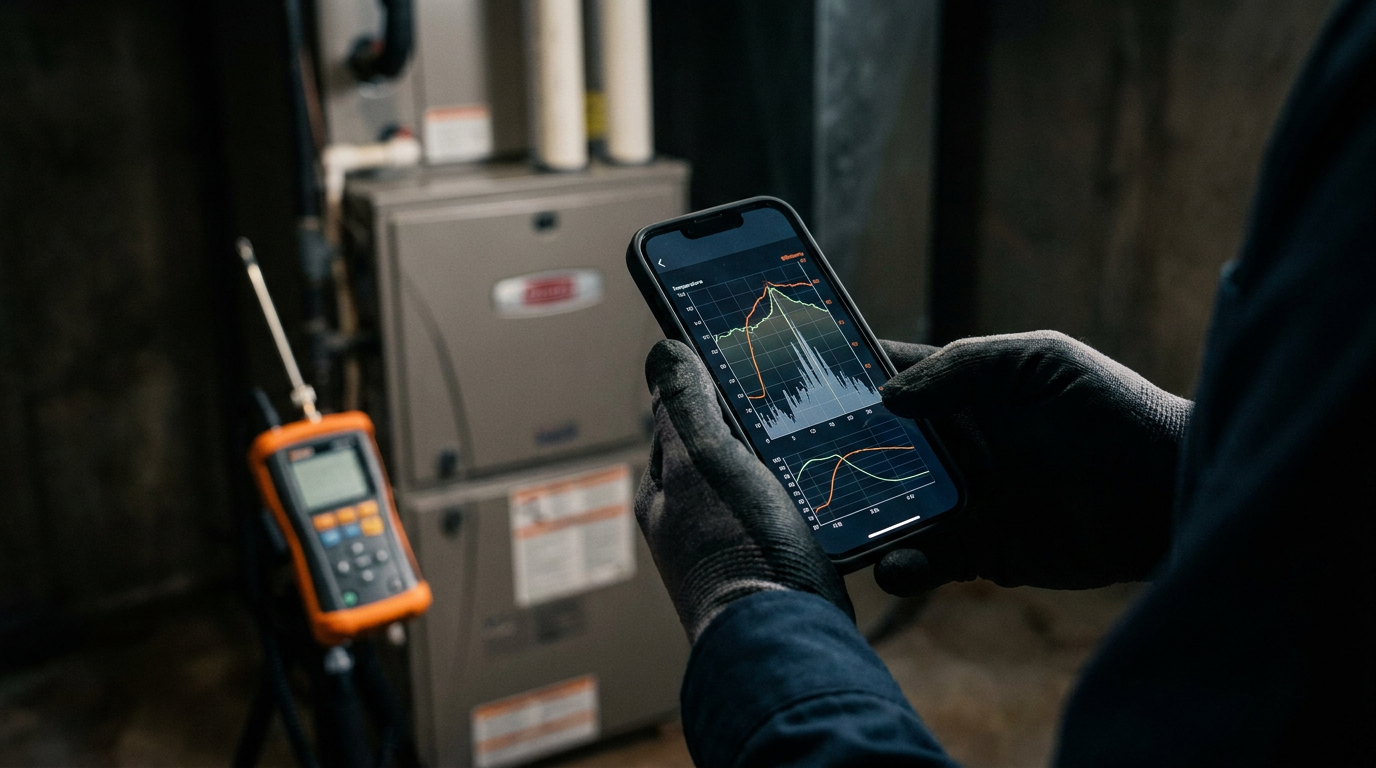
Yes, AI can interpret a combustion analysis report. It processes key data like oxygen, carbon monoxide, stack temperature, and efficiency. By comparing these numbers to manufacturer specs and safety standards, AI can quickly flag potential problems, suggest adjustments, and even draft a summary for your customer.
Can AI Read a Combustion Analysis Report? The HVAC Guide
Out on a job, time is money. You move from a no-cool to a furnace tune-up, and your combustion analyzer is one of your most trusted tools. It gives you the hard data. But reading those numbers, comparing them to specs, and figuring out the next step takes focus. Now, there's a new tool in the box: artificial intelligence.
The question is, can you trust it? Can AI actually interpret a combustion analysis report and give you reliable advice? The short answer is yes, but it's not here to take your job. It's here to make your job easier. Think of it as a sharp apprentice who has read every manual ever written, ready to give you a second opinion in seconds.
What's in a Combustion Analysis Report Anyway?
Before we let a machine read the report, let's get back to basics. Your analyzer is sniffing the flue gas for a few key things. Each number tells a piece of the story about how safely and efficiently a furnace is running.
- O2 (Oxygen): This tells you how much unused oxygen is left in the flue gas. Too much means you might be losing heat up the chimney. Too little could mean you're not getting complete combustion, which is a safety risk.
- CO (Carbon Monoxide, air-free): This is the big one for safety. High CO levels mean the fuel isn't burning completely. This is a dangerous condition that needs to be fixed immediately. We measure it 'air-free' to get a true reading of the combustion process itself.
- Stack Temperature: This is the temperature of the exhaust gases leaving the furnace. If it's too high, you're sending valuable heat up the flue. If it's too low on a non-condensing furnace, you risk creating corrosive condensation in the flue pipe.
- Efficiency (%): This is a calculation based on the other readings. It gives you a snapshot of how much heat from the fuel is going into the house versus up the chimney. It's a key number for homeowners.
- Excess Air (%): Related to O2, this shows how much more air is being supplied than is needed for complete combustion. It helps you dial in the fuel-to-air mixture for peak performance.
These numbers are the language of combustion. And it turns out, AI is getting very good at speaking this language.
How AI Interprets Your Report
AI isn't doing magic. It's doing data analysis, just much faster than a human can. When you feed it the numbers from your report, here’s what happens:
- Data Recognition: The AI identifies each value, whether you type it in or upload a picture. It knows 'O2' is oxygen and 'ppm' means parts per million.
- Pattern Matching: The AI compares your report's numbers against a huge database. This includes general safety standards (like those from ANSI), typical ranges for different types of equipment (80% vs 95% furnaces), and even specific manufacturer specs if you provide them.
- Inference and Diagnosis: Based on this comparison, the AI flags numbers that are out of range. It can then infer potential problems. For example, if it sees high CO and high excess air, it might suggest looking for a cracked heat exchanger or an issue with the gas pressure.
This process gives you a quick, data-driven second opinion. It's a good way to double-check your own thoughts, especially at the end of a long day.
Analyze this combustion report for a standard efficiency (80%) natural gas furnace. Flag any values outside of typical safe and efficient ranges. Provide a brief explanation for each flagged item.

- O2: 11.2%
- CO (air-free): 450 ppm
- Stack Temp: 550°F
- Draft: -0.02" WC
- Efficiency: 78%
The Real-World Benefits for HVAC Techs
This isn't just a tech toy. Using AI to review your reports can have a real impact on your daily work.
- Speed and Efficiency: Instead of calling a senior tech or digging through a manual, you can get an initial analysis in under a minute. This lets you move faster from diagnosis to solution.
- Improved Accuracy: AI can help you spot trends or combinations of numbers that might not seem obvious at first glance. It acts as a safety net to make sure you don't miss a critical reading.
- Better Customer Communication: Explaining stack temperature and parts per million to a homeowner is tough. You can ask the AI to translate your technical report into a simple summary your customer can understand. This builds trust and helps sell necessary repairs. Better communication is a core part of running your business, just like effective quoting and invoicing.
- Training Tool: For techs new to the field, AI is a powerful training partner. They can run a report, form their own conclusion, and then ask the AI for its analysis. It's a way to learn the 'why' behind the numbers, faster.
Where AI Falls Short (For Now)
Let's be clear: AI is not a replacement for a trained, licensed HVAC professional. It's a tool, and like any tool, it has limits.
- No Eyes or Ears: AI can't see the rusted-out flue pipe, hear the rattling blower motor, or feel the rollout from a dirty burner. It only knows the numbers you give it. Your senses and experience on the job site are still your most valuable assets.
- Garbage In, Garbage Out: If your analyzer isn't calibrated, or you take a sample from the wrong spot, the data is useless. The AI will confidently analyze that bad data and give you a wrong answer. Your fundamental skills are still the foundation.
- The Liability is Yours: You are the professional on site. The final diagnosis, the repair, and the responsibility for the customer's safety rests on your shoulders, not on a chatbot. Always use your own judgment to verify what the AI tells you.
I have a combustion analysis report for a Trane S9V2 furnace. Manufacturer specs are: O2 between 6-9%, CO (air-free) under 100 ppm, and Stack Temp between 325-475°F.

My readings are:
- O2: 5.5%
- CO (air-free): 80 ppm
- Stack Temp: 495°F

Compare my readings to the manufacturer's specs, identify the deviations, and suggest three possible mechanical causes for these readings that I should investigate.
A Simple Guide to Using AI with Your Report
Ready to try it? Here's a basic workflow.
- Get Good Data: Run your combustion analysis just like you always do. Make sure your equipment is calibrated and you're following proper procedure.
- Capture the Report: You can either jot down the key numbers or just take a clear, well-lit picture of your analyzer's screen or the paper printout.
- Open Your AI: Use an app like ChatGPT, Gemini, or a similar tool on your phone or tablet.
- Write a Clear Prompt: Give the AI context. Tell it the fuel type (natural gas, propane) and the furnace type (80% standard, 95% condensing). Then provide the numbers or upload the photo. The more detail you give, the better the answer you'll get.
- Review and Verify: Read the AI's response. Does it make sense based on what you know? Does it align with what you're seeing at the unit? Use the AI's output as a guide, not a command. You're still the boss.
Translate this technical combustion analysis report into a simple, 3-sentence explanation for a homeowner. Focus on safety and efficiency, and explain why a service is needed.

Report:
- O2: 11.2%
- CO (air-free): 450 ppm
- Stack Temp: 550°F
- Efficiency: 78%

Emphasize that the CO level is a major concern.
The Bottom Line
AI is not coming for your job. It's a powerful new tool that can help you work smarter and faster. By using it to interpret combustion analysis reports, you can get a quick second opinion, improve your diagnostic accuracy, and communicate more clearly with customers.
It won't replace your hard-won experience or your hands-on skills. But for the modern HVAC tech, it's one more way to get the job done right.
Frequently asked questions
37 copy-paste prompts that save tradespeople 5+ hours a week. Plus one short email every Friday — no fluff.
More for hvac
AI for HVAC Contractors: Everything You Need to Know
AI for HVAC Contractors comes down to using AI to do the slow stuff — quoting, paperwork, marketing, and customer follow-up — so you can stay on the tools.

ChatGPT for HVAC Technicians: 20 Real Use Cases
ChatGPT for HVAC Technicians comes down to using AI to do the slow stuff — quoting, paperwork, marketing, and customer follow-up — so you can stay on the t
AI HVAC Load Calculation: Manual J in Minutes
AI HVAC Load Calculation comes down to using AI to do the slow stuff — quoting, paperwork, marketing, and customer follow-up — so you can stay on the tools