
AI Irrigation for Florida's Rainy Season: A Pro's Guide
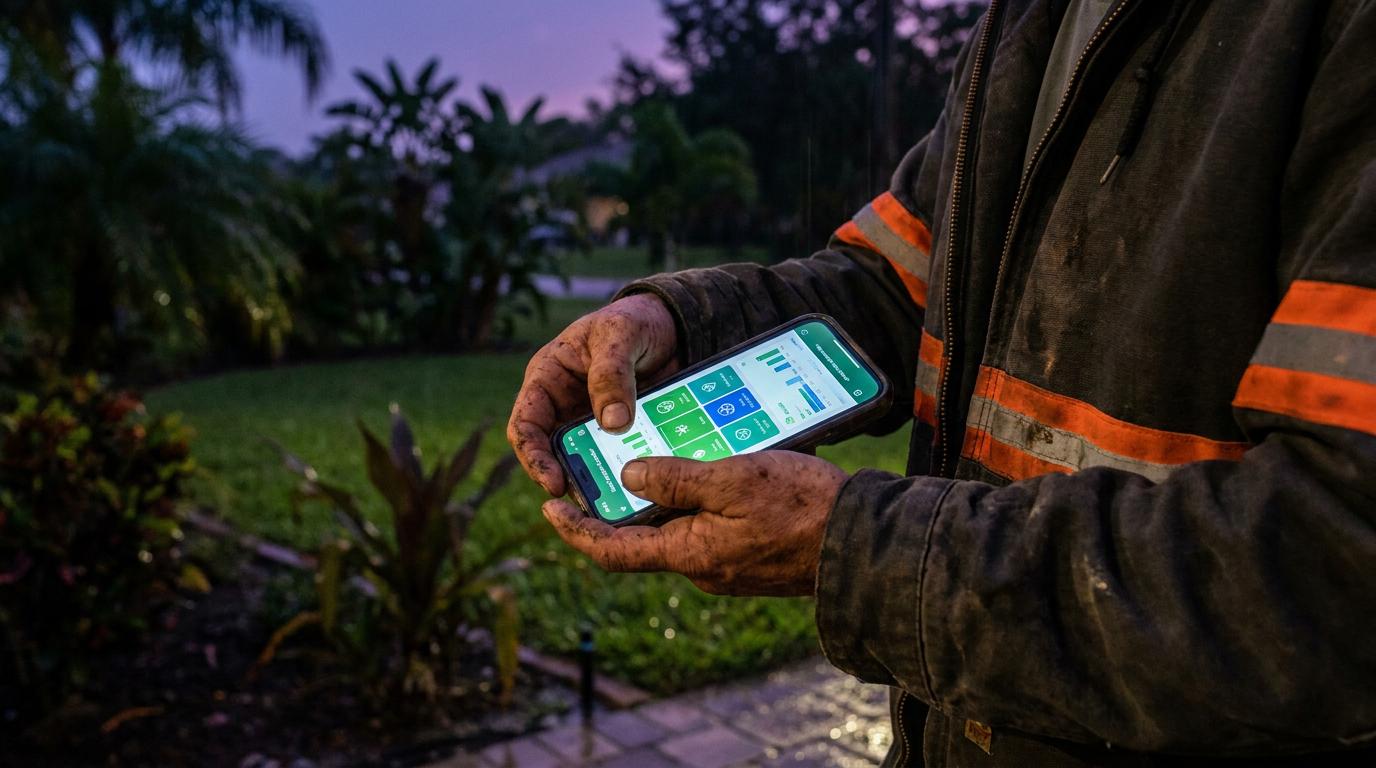
AI irrigation scheduling for Florida's rainy season uses smart controllers that pull real-time weather data. Instead of a fixed schedule, the system automatically skips watering cycles before, during, and after rain. This prevents overwatering, saves money on water bills, and keeps lawns healthy by avoiding root rot.
Don't Drown Your Lawns: Using AI for Irrigation During Florida's Rainy Season
Florida's rainy season is a blessing and a curse. From June to October, the afternoon downpours are so regular you can set your watch by them. For landscaping pros, this means a constant battle against overwatering. A sprinkler system on a fixed timer doesn't care if it just rained two inches. It just runs, drowning turf, promoting fungus, and wasting your client's money.
This is where the job gets smarter. AI-powered irrigation isn't some far-off tech. It's here now, and it's a game-changer for managing properties during the wet season. It turns a sprinkler system from a dumb timer into a responsive tool that saves water, protects plant health, and makes your business look sharp.
The Old Way vs. The AI Way
For years, irrigation was about setting timers and making manual adjustments. You'd set a schedule for a client's lawn and hope for the best. When the rainy season hit, you'd either have to drive to each property to turn the system off or teach clients how to use the rain delay function, which they often forgot.
This old method leads to big problems:
- Wasted Water: Watering a lawn that's already saturated is just pouring money down the drain. This can lead to high water bills and unhappy clients.
- Unhealthy Turf: Overwatering is one of the fastest ways to kill a Florida lawn. It suffocates the roots, leading to root rot and creating the perfect damp environment for fungal diseases like brown patch and gray leaf spot.
- Wasted Labor: Your time is valuable. Driving from site to site just to hit the 'off' button on a controller is not a good use of it.
The AI way is different. A smart irrigation controller, the brain of the system, connects to the internet. It doesn't just run on a simple clock; it uses data.
- It Checks the Weather: The system pulls hyper-local weather forecasts. If it sees a 90% chance of rain this afternoon, it automatically skips the morning watering cycle.
- It Reacts to Rain: Using data from weather stations, it knows if it rained yesterday or an hour ago. It adjusts the schedule based on actual rainfall, not just predictions.
- It Learns the Landscape: You input details like soil type, plant type (St. Augustine vs. Zoysia), sun exposure, and slope. The AI uses this to create a custom watering plan that's far more precise than any timer.
How AI Irrigation Actually Works
This isn't magic. It's just smart data management. The core of the system is a Wi-Fi-enabled controller that replaces the old, clunky timer box in your client's garage.
Here’s a simple breakdown of the process:
- Installation: You or your team swap out the old controller for a new smart one, like a Rachio, Hunter Hydrawise, or Rain Bird LNK2. The wiring is usually identical, making retrofits a straightforward job.
- Setup: Using a smartphone app, you connect the controller to the client's Wi-Fi. You then configure each zone, telling the AI what's planted there, the soil type, and how much sun it gets.
- Data In: The controller constantly pulls data from the internet. Its main source is a network of weather stations that provide real-time temperature, humidity, and rainfall data for that specific address.
- Smart Decisions: The AI, or what the industry calls 'Weather Intelligence,' processes this data. It calculates something called evapotranspiration (ET) – the amount of water lost from the soil and plants. It only waters when the calculated moisture level in the soil drops below a certain point.
- Automatic Skips: The best part for Florida's rainy season is the automatic rain skip. The system will pause watering based on past, present, and future rainfall, ensuring it never waters a soggy lawn.
This technology helps you deliver better results and build more trust with clients. When they see their lawn thriving and their water bill dropping, you become more than just the 'mow and blow' crew. You become a property manager, and that's how you get better job quotes and retain customers.
Getting Started with AI Irrigation
Adding AI irrigation to your service offerings is a powerful upgrade for your business. It shows you're on top of modern solutions and focused on providing real value.
First, you need to choose a system. Most pros stick to one or two brands to simplify training and inventory. Rachio, Hunter, and Rain Bird are the big players, and each has its pros and cons.
Act as a senior irrigation technician for a landscaping business in Southwest Florida. Compare the Rachio 3, Hunter Hydrawise Pro-HC, and the Rain Bird ESP-ME3 with LNK2 WiFi Module. Focus on three key factors for my business: ease of installation for retrofitting existing systems, user-friendliness of the pro app for managing multiple client properties, and the reliability of the predictive watering features during the unpredictable summer rainy season. Provide a recommendation on which system offers the best balance for a business looking to standardize its smart irrigation offerings.
Once you've chosen a platform, the next step is to introduce it to your clients. Don't just install it; explain the value. Show them how the app works and how they can see the water savings for themselves. This transparency builds massive trust.
For new clients, build the smart controller into your standard installation package. For existing clients, offer it as an upgrade. Frame it as an investment that will pay for itself in water savings and a healthier landscape.
I am the owner of a landscaping company in Florida. Write a short, clear email (under 200 words) to my existing clients. The goal is to introduce our new smart irrigation upgrade service before the summer rainy season. Explain how a smart controller upgrade will prevent overwatering, save them money on their water bill, and protect their lawn from fungus and root rot. Mention that it's a one-time upgrade that we can install quickly. Keep the tone professional but direct and easy to understand.
Troubleshooting with AI in Mind
Even with a smart system, you're still the expert. A client might call and say a part of their lawn looks dry or another looks too wet. The AI is a tool, but it relies on good setup and hardware.
When a problem comes up, the app is your first diagnostic tool. You can see the watering history for that specific zone. Did it run? For how long? Was it skipped due to rain?
If the system seems to be overwatering despite the AI, it's time to check the fundamentals. The AI can only control the valves; it can't see a broken sprinkler head or a clogged nozzle. Use a prompt to build a quick checklist for your techs.
Create a troubleshooting checklist for a landscaping technician investigating an overwatering complaint on a property with a smart irrigation system (like Rachio or Hydrawise). The system's app shows it is skipping cycles correctly for rain. The checklist should guide the tech to look for physical, on-site issues that could cause soggy spots, starting with the most common problems. Format it as a simple, step-by-step list they can follow on their phone.
By combining your hands-on expertise with the data from the AI system, you can solve problems faster and more accurately. It's about working smarter, not harder. Florida's rainy season is a challenge, but with the right tools, it's one you can easily manage, keeping lawns healthy and clients happy.
Frequently asked questions
37 copy-paste prompts that save tradespeople 5+ hours a week. Plus one short email every Friday — no fluff.
More for landscaping
AI for Landscaping Business Owners: Real ROI
AI for Landscaping Business Owners comes down to using AI to do the slow stuff — quoting, paperwork, marketing, and customer follow-up — so you can stay on

ChatGPT Prompts for Lawn Care Business (20 Tested)
ChatGPT Prompts for Lawn Care Business (20 Tested) comes down to using AI to do the slow stuff — quoting, paperwork, marketing, and customer follow-up — so