
AI Lawn Care Schedules for the Southeast: Beat Fungus & Heat
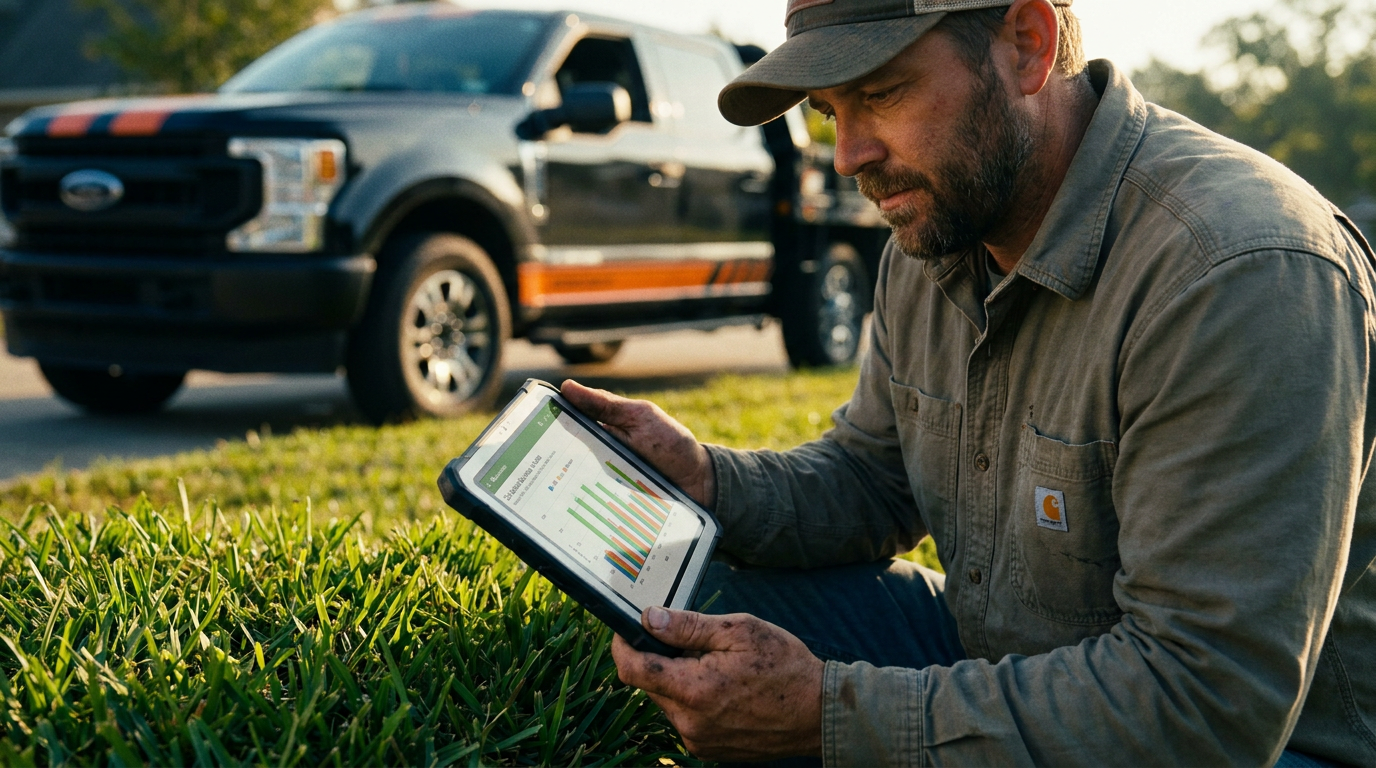
You can create AI lawn care treatment plans for the Southeast US by using AI tools to analyze local weather, soil type, and grass variety. This helps build precise schedules for fertilization, fungicide application, and watering, which is key for fighting regional issues like brown patch and high humidity.
Your New Secret Weapon for Tough Southern Lawns
Working a lawn in the Southeast is a different game. The thick air you can wear, the blazing sun, and the constant threat of fungus can turn a beautiful turf job into a brown, patchy mess. You know the drill: fighting brown patch on St. Augustine or dollar spot on Bermuda grass feels like a full-time job.
What if you had a new tool on your truck? One that could predict problems and build a treatment plan before the fungus even knows what hit it. That tool is Artificial Intelligence (AI). It’s not about robots mowing lawns. It’s about using data to make smarter decisions, save money on chemicals, and give your clients the best-looking lawn on the block.
Why the Southeast is a Different Beast
Anyone can grow grass in perfect weather. Down here, we deal with a unique set of challenges that can wreck a lawn fast.
- Humidity and Fungus: The combination of heat and moisture is a breeding ground for diseases like brown patch, dollar spot, and gray leaf spot. Being reactive is a losing battle. You need a proactive fungicide plan.
- Intense Heat and Sun: Summer heat stresses cool-season grasses and can even scorch tough warm-season varieties like Zoysia and Bermuda if they aren't watered correctly.
- Unpredictable Rain: We get droughts, and we get sudden afternoon downpours that can wash away fertilizer or create the perfect environment for disease.
- Compacted Clay Soil: Much of the Southeast has heavy clay soil. This makes it hard for roots to grow deep and leads to drainage problems, which fungus loves.
Trying to manage this with a one-size-fits-all calendar schedule is tough. What works in May might not work next May. That's where AI comes in.
How AI Changes the Game for Lawn Care Pros
AI, like ChatGPT or other large language models, is basically a super-smart assistant that has read everything on the internet. This includes thousands of articles from university extension programs like the University of Georgia or Clemson, chemical manufacturer guides, and landscaping forums.
Here’s how it helps you:
- Data Analysis: It can take your specific inputs—grass type, soil test results, square footage, local weather—and create a customized plan.
- Proactive Planning: Instead of waiting for brown patch to show up, you can ask AI to build a preventative fungicide schedule based on historical weather data and forecasts.
- Efficiency: AI helps you choose the right product at the right time. This means less wasted chemical, which saves you money and is better for the environment. It's a key part of improving your business operations.
Think of AI as the smartest apprentice you've ever had. It does the research so you can focus on the real work.
Building Your First AI-Powered Lawn Care Schedule
Ready to try it? It's easier than you think. Let's build a comprehensive plan from scratch.
Step 1: Gather Your Info Before you write your prompt, get your facts straight. The better your input, the better the AI's output.
- Location: City and state (e.g., Atlanta, Georgia).
- Grass Type: Be specific (e.g., 'TifTuf' Bermuda, 'Palisades' Zoysia, 'Floratam' St. Augustine).
- Lawn Details: Square footage, sun/shade exposure, and any known issues like poor drainage.
- Soil Test Results: If you have them, include key data like pH level.
Step 2: Write Your Prompt Now, you'll feed this information to the AI. Use a prompt that is clear and detailed. You can copy and paste this one to get started.
Act as a professional agronomist specializing in turfgrass management for the Southeast US. Create a comprehensive, year-round lawn care treatment plan for a residential property.

Property Details:
- Location: [City, State]
- Grass Type: [e.g., 'Floratam' St. Augustine]
- Total Turf Area: [e.g., 6,000 sq ft]
- Conditions: [e.g., Full sun, history of brown patch fungus in late summer]

Create a month-by-month schedule that includes:
1.  Fertilization: Type of fertilizer (including N-P-K ratio), application rate, and timing.
2.  Pre-emergent Herbicides: Timing for spring and fall applications to control crabgrass and poa annua.
3.  Post-emergent Herbicides: Recommendations for common broadleaf weeds.
4.  Fungicide: A preventative fungicide rotation schedule to manage brown patch. Specify chemical groups to rotate.
5.  Insect Control: Recommendations for pests like chinch bugs or grubs.
6.  Mowing and Watering: Best practices for height and frequency.

Provide all application rates in pounds per 1,000 sq ft. The plan should be proactive and customized for the hot and humid climate of the Southeast.
Step 3: Review and Refine The AI will give you a solid, detailed calendar. But it's a starting point. Your experience is what matters. If a heatwave is coming, you might delay a fertilizer application. If you see early signs of disease, you might move up a fungicide treatment. The AI provides the plan; you provide the professional judgment.
Prompting for Specific Problems: Fungus and Weeds
Sometimes you don't need a full-year plan. You just need to solve a specific problem. AI is great for this, too.
Fungus control is all about rotation. Using the same fungicide over and over can lead to resistance. You can ask an AI to build a rotation schedule for you.
I am a lawn care operator in central Florida. I need a preventative fungicide rotation plan for a 10,000 sq ft St. Augustine lawn with a history of severe brown patch (Rhizoctonia solani) and gray leaf spot (Pyricularia grisea).

Create a schedule from May through October. For each application, specify:
1. The month of application.
2. The target disease.
3. The recommended active ingredient (e.g., Azoxystrobin, Propiconazole, Fluoxastrobin).
4. The FRAC group for each chemical to ensure proper rotation and avoid resistance.
5. A common brand name for a product containing the active ingredient.
This kind of specific prompt gives you an actionable plan that helps you stay ahead of disease all season long.
The Future is on Your Truck
Using AI for your lawn care business isn't about being trendy. It's about being smarter and more efficient. It helps you get ahead of problems, use chemicals more effectively, and deliver better results for your customers.
It won't replace your knowledge or your hard work. It just makes them more powerful. By taking a few minutes to ask the right questions, you can build data-driven, professional-grade treatment plans that set you apart from the competition. Start today and see how it changes your workflow.
Frequently asked questions
37 copy-paste prompts that save tradespeople 5+ hours a week. Plus one short email every Friday — no fluff.
More for landscaping
AI for Landscaping Business Owners: Real ROI
AI for Landscaping Business Owners comes down to using AI to do the slow stuff — quoting, paperwork, marketing, and customer follow-up — so you can stay on

ChatGPT Prompts for Lawn Care Business (20 Tested)
ChatGPT Prompts for Lawn Care Business (20 Tested) comes down to using AI to do the slow stuff — quoting, paperwork, marketing, and customer follow-up — so