
AI for Managing Tool Rentals: Stop Paying Late Fees
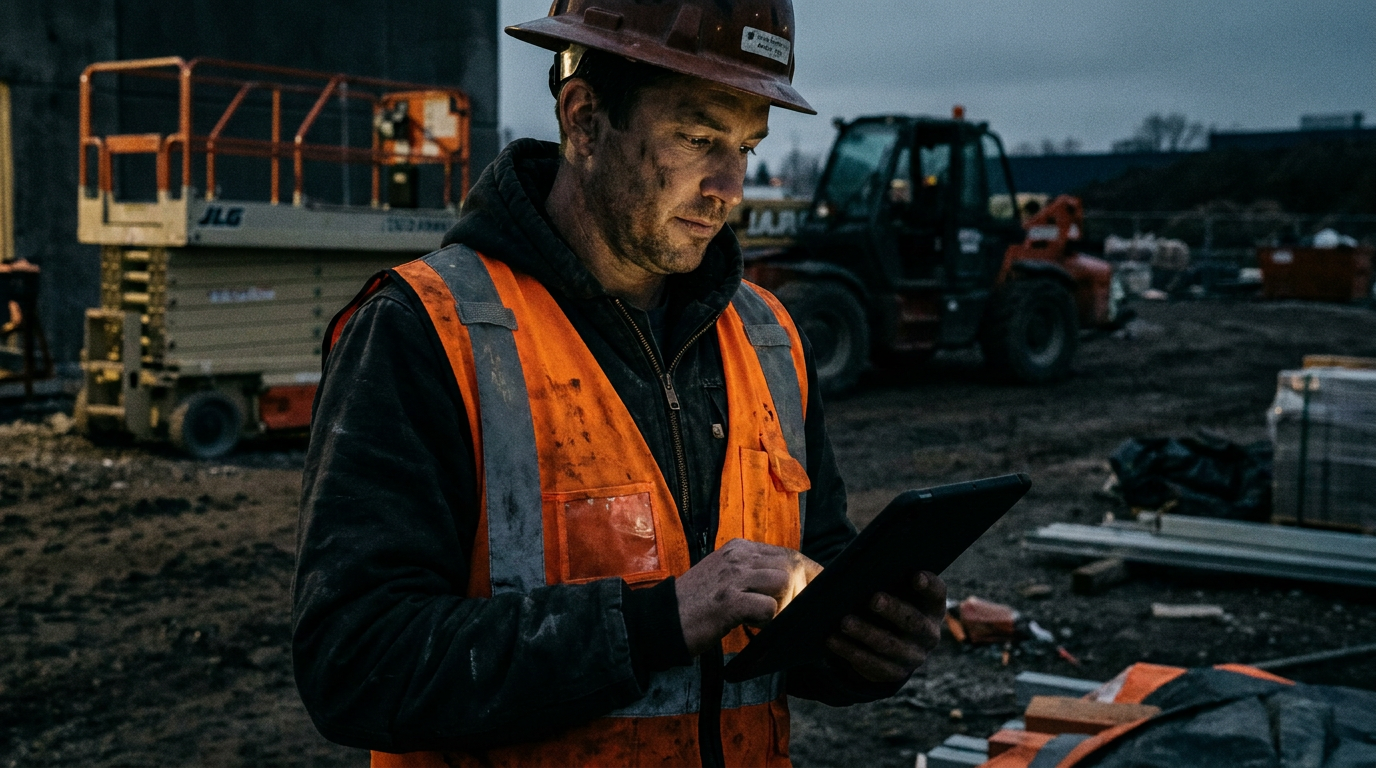
AI helps manage tool and equipment rentals by tracking assets, automating return reminders, and analyzing usage data. This prevents late fees, reduces tool loss, and helps you decide whether to rent or buy gear for future jobs. It saves you significant money and time by keeping your operations tight.
Never Pay a Late Fee Again
That sinking feeling hits you when the rental yard calls. The scissor lift was due back yesterday. That’s another day’s rental fee, plus a potential late charge. Or worse, a crew member leaves a rented plate compactor on site, and it walks away overnight. Now you’re on the hook for thousands of dollars.
Rental mismanagement bleeds cash from your business. It’s death by a thousand cuts: late fees, lost equipment charges, and wasted time tracking everything down. But you don't need a bigger office staff to solve it. You need a smarter system.
Using Artificial Intelligence (AI) is like having a dedicated logistics manager in your pocket. It can track every rental, flag every due date, and even help you decide if you should be renting in the first place. This isn't some far-off future tech. It's a practical tool you can use today to tighten up your ops and protect your bottom line.
The Real Cost of Rental Mismanagement
We all rent equipment. It’s a smart way to get access to expensive, specialized gear without the headache of ownership, maintenance, and storage. From a mini-excavator for a landscaping job to a commercial paint sprayer for a big interior, companies like Sunbelt Rentals, United Rentals, and even your local Home Depot make it possible.
But that convenience comes with risk. The true cost isn't just the daily rate. It's the hidden expenses that pile up when you don't have a solid system.
- Late Fees: This is the most obvious one. A $300/day rental returned two days late costs you an extra $600. It happens easily when you’re juggling multiple jobs.
- Lost/Damaged Equipment Charges: A lost rotary hammer might cost you $800. A damaged pressure washer could be a $500 repair bill. Rental companies will charge you full replacement or repair cost, with no discounts.
- Project Delays: If a tool isn't returned on time, it might not be available for the next crew that needs it. This causes downtime and throws project schedules off track.
- Wasted Admin Time: Someone on your team, or you, is spending hours calling rental yards, checking invoices, and trying to figure out who had what tool last. That’s time that could be spent on revenue-generating work.
When you add it all up, a sloppy rental process can cost a small contracting business thousands, or even tens of thousands, of dollars a year. That’s money that should be in your pocket.
How AI Tackles Tool Rental Chaos
AI isn't magic. It's a powerful data processor. You give it information, and it organizes, analyzes, and gives you back actionable insights. Here’s how you can apply it to your rental workflow.
Automated Tracking and Reminders
At its simplest, you can use an AI assistant like ChatGPT or Claude as a central brain for your rentals. Every time you rent a tool, you forward the email confirmation or text a picture of the rental agreement to your AI. It can learn to extract the key details:
- Tool/Equipment Name
- Rental Company
- Rental Start Date & Time
- Rental Due Date & Time
- Daily/Weekly/Monthly Rate
From this, the AI can build a master list or calendar. You can then ask it questions like, "What tools are due back this week?" or "Set a reminder for me 24 hours before the concrete saw is due." This simple step alone can eliminate late fees.
Cost Analysis: Rent vs. Buy
How do you know when to stop renting and start owning? Gut feeling works sometimes, but data is better. AI can provide that data.
By tracking your rental history over six or twelve months, an AI can tell you exactly how much you've spent renting a specific piece of equipment. For example, you might find you’ve spent $4,000 renting generators in the last year. When a new one costs $5,000, the decision to buy becomes a lot clearer. The AI can calculate the breakeven point, helping you make a financial decision, not an emotional one.
Optimizing Rental Periods
Sometimes a weekly rental is cheaper than paying for five individual days. A monthly rental can offer even bigger savings. But who has time to do that math on every single rental?
AI does. You can feed it the rental company's rate sheet and your project schedule. It can then recommend the most cost-effective rental duration. It might tell you, "Renting the lift for a full week is only $150 more than the four days you need it. Consider extending to have it available for the next phase of the project."
Prompts to Put AI to Work Today
Talk is cheap. Let's get to work. Here are three prompts you can copy, paste, and use with your preferred AI assistant right now. Just fill in your own details.
Act as my operations manager. I'm providing you with a list of my current tool and equipment rentals. Create a simple, clean table that includes: Tool Name, Rental Company, Rental Start Date, Due Date, and Daily Cost. Then, tell me which tool is due next and calculate the total daily rental cost for all items. Here is the list: [Paste your list of rentals, including dates and costs from emails or receipts.]
This next prompt helps you make smart financial decisions about the gear you use most often.
Act as a financial analyst for my construction business. I've rented a '20-foot scissor lift' for 45 days over the past 12 months at an average cost of $250 per day. The purchase price for a new one is $25,000, and a used one is $15,000. Considering maintenance, storage, and insurance costs might be around 10% of the purchase price annually, create a simple cost-benefit analysis. Advise me on whether I should continue renting or buy new or used. Show your math.
Finally, let's create a process to make sure your crew is on the same page. This prevents costly mistakes.
My crew sometimes forgets to return rental tools on time, costing us late fees. Write a simple Standard Operating Procedure (SOP) for my team to follow. The SOP should be a 5-step checklist for the end of any job that used rental equipment. It needs to cover who is responsible, how to check for damage, cleaning the tool, and confirming the return with the rental shop. Keep it simple and clear.
Moving Beyond Simple Prompts
Using prompts with a general AI is a great start. It builds the right habits. As your operation grows, you might look at more specialized solutions. Many construction management and asset tracking software platforms now have AI built in.
These platforms offer more advanced features:
- GPS Tracking: For large equipment like excavators or skid steers, GPS trackers can show you their exact location in real time.
- QR Code Systems: You can place QR code stickers on smaller tools. A crew member scans the code with their phone to check a tool in or out, creating a digital paper trail.
- Automated Maintenance Alerts: For your owned tools, the system can track usage hours and automatically schedule maintenance to prevent breakdowns.
These systems take the manual data entry out of the equation, but they build on the same principles. It's all about using technology to keep a close eye on your assets.
Stop letting rental fees and lost tools eat into your profits. Start using AI to build a smarter, tighter, and more profitable operation. It's one of the simplest ways to add a few extra percentage points to your margin on every job.
Frequently asked questions
37 copy-paste prompts that save tradespeople 5+ hours a week. Plus one short email every Friday — no fluff.
More for business ops

AI Voicemail for Electricians: Catch Every Lead
AI Voicemail for Electricians comes down to using AI to do the slow stuff — quoting, paperwork, marketing, and customer follow-up — so you can stay on the
AI Answering Service for Plumbers: Real Costs & Picks
AI Answering Service for Plumbers comes down to using AI to do the slow stuff — quoting, paperwork, marketing, and customer follow-up — so you can stay on
HVAC Maintenance Plan Template (AI-Built)
HVAC Maintenance Plan Template (AI-Built) comes down to using AI to do the slow stuff — quoting, paperwork, marketing, and customer follow-up — so you can