
Can AI Monitor Concrete Curing Temperature?
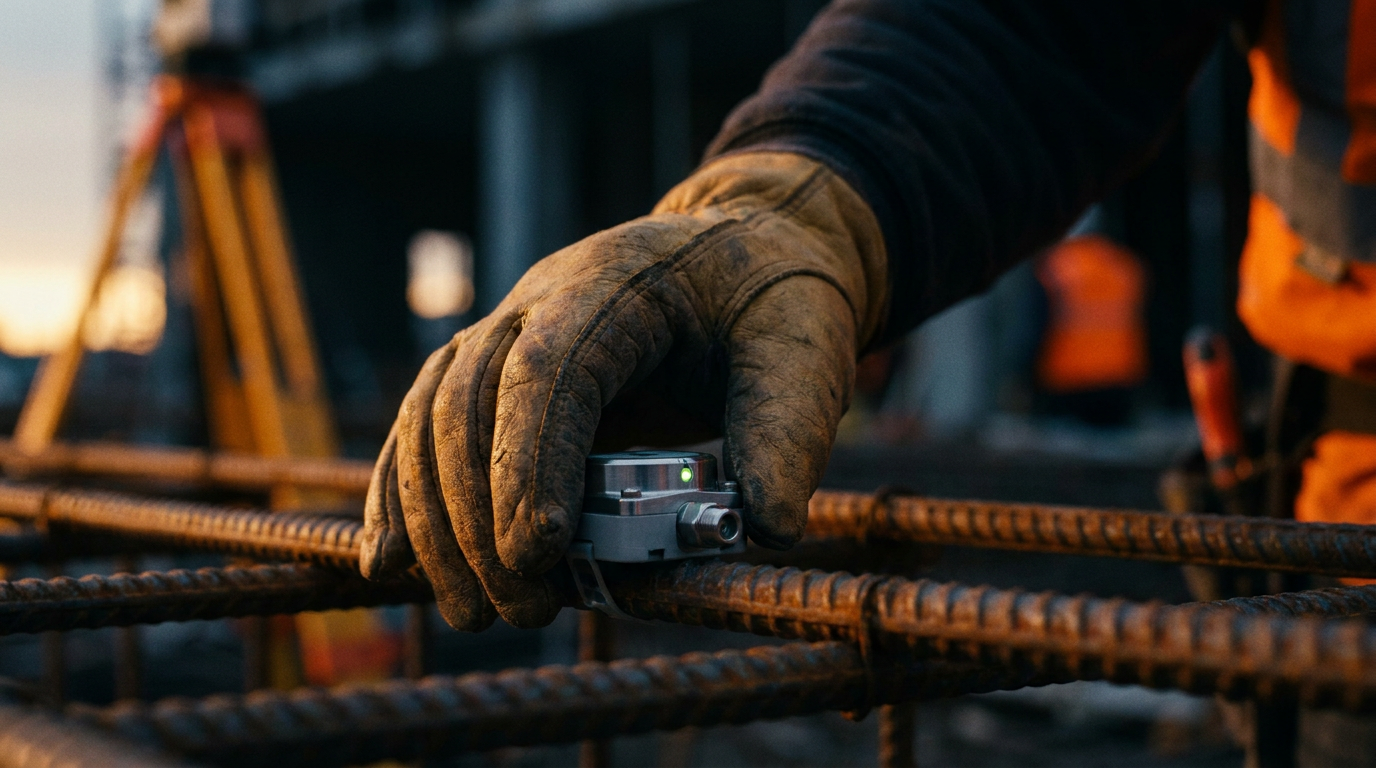
Yes, AI can monitor concrete curing temperature in real-time. By using smart sensors embedded in the concrete, AI platforms collect and analyze temperature and strength data. This allows contractors to make faster decisions, optimize schedules, and ensure the pour meets structural requirements without guesswork.
Pouring concrete has always been a waiting game. You pour it, you finish it, and then you wait. You take your best guess based on the weather. You send cylinders to a lab and wait some more. All that waiting costs money and adds risk to the job.
That old way of doing things is slow and full of blind spots. A test cylinder sitting in a lab doesn't know if a cold front moved in overnight on your jobsite. It doesn't tell you the real strength of the slab. But new tools are changing the game. AI-powered monitoring gives you eyes inside the concrete itself.
The Old Way Is Broken
For decades, the standard has been the cylinder break test. You cast a few cylinders of concrete from the truck, let them cure, and send them to a lab. A machine crushes them at 7, 14, and 28 days to see when they break. This tells you the strength.
But this method has serious problems:
- It's Reactive: You only learn the strength days after the fact. If there's a problem, you've already lost valuable time. Ripping out bad concrete is a nightmare for your schedule and your budget.
- It's Not Accurate: A cylinder cures differently than a massive slab or a thick column. The lab is temperature-controlled. Your jobsite is not. The strength of the cylinder is not the true strength of your structure.
- It's Slow: Waiting for break test results holds up the entire project. You can't strip forms, apply tension to post-tension cables, or open a slab to traffic until you have the numbers. Every day you wait is a day your crew could be working on the next phase.
This guesswork is especially dangerous in tough weather. ACI (American Concrete Institute) standards are clear about keeping concrete within a certain temperature range. If it gets too hot or too cold while curing, you can lose strength forever. The old way leaves you guessing if your heating blankets or cooling methods are actually working.
How AI Concrete Monitoring Works
This isn't sci-fi stuff. It's simple, rugged tech that's already being used on jobsites across the country. The system has a few basic parts:
- Wireless Sensors: These are small, tough devices. Before you pour, you zip-tie them directly to the rebar inside the formwork. You place them in the most important parts of the pour—the middle of a thick slab, or areas that need to gain strength quickly.
- Data Collection: Once the concrete is poured, the sensors wake up. They start measuring the internal temperature of the concrete every few minutes. They send this data wirelessly to a gateway on the jobsite or directly to the cloud.
- AI Analysis: Here's the smart part. A software platform takes all that temperature data. It uses a proven formula from ASTM C1074, known as the maturity method. This method uses the time and temperature history to calculate the concrete's strength in real-time. No more guessing.
- Real-Time Alerts: All this information shows up on an app on your phone, tablet, or laptop. You can see the current temperature and estimated strength of your slab right now. You can set alerts to get a text when the concrete hits a target strength, like 3,000 psi for stripping forms.
It turns a black box into an open book. You know exactly what’s happening inside your concrete, 24/7.
As a project manager for a 10-story commercial building, I need to evaluate the ROI of using an AI-powered concrete monitoring system instead of traditional cylinder break tests. Analyze these factors: our project schedule is 18 months, we have 25 major pours, and the location is Chicago, Illinois, with cold winters. Compare the costs, schedule impact, risk reduction, and quality assurance benefits. Provide a summary I can present to the project owner.
The Real-World Payoff: What's in It for You?
This tech sounds good, but what does it actually do for your bottom line? The benefits are simple and direct.
- Build Faster: This is the biggest win. Instead of waiting a week for a 7-day break test, you might find your concrete hits the required strength in 3 or 4 days. That means you can strip forms and move on to the next floor days earlier. On a multi-story building, that can save weeks or even months off the total schedule.
- Improve Quality: You have a complete, second-by-second record of the concrete's temperature and strength gain. This is powerful proof for engineers and inspectors that the job was done right. It eliminates arguments and proves you met the spec. In hot or cold weather, you can prove your heating or cooling measures worked, protecting you from liability.
- Save Money: Faster schedules mean lower overhead costs. But the savings go further. You reduce the risk of a bad pour, which can cost tens or hundreds of thousands of dollars to fix. You can also optimize your use of heating fuel in the winter because you know exactly how long you need to run the blankets. You also need fewer cylinder tests, saving on lab fees and labor.
Knowing exactly when your concrete is ready for the next step, like post-tensioning, is critical. With real-time data from AI monitoring, you remove the risk and the wait. You can learn more about other jobsite technologies that save you time and money.
Getting Started: It's Not Rocket Science
Adopting this technology is straightforward. You don't need to be a tech wizard to make it work.
First, talk to your ready-mix concrete supplier. Many of them are already partnered with AI monitoring companies and can offer it as part of their service. They can help you choose the right system and get your crew trained.
Next, pick a good pilot project. Start with a non-critical slab or a single floor of a larger building. This lets your team get comfortable with placing the sensors and using the software without a lot of pressure.
There are different systems out there. Some use fully wireless sensors that are left in the concrete. Others might use probes that can be reused. For most jobs, the embedded wireless sensors are the easiest and most reliable. They give you the most accurate data about what's happening deep inside the pour.
Once you see the time you can save on just one pour, you'll see how it can change the way you manage every concrete job.
Draft a short, clear email for a non-technical client explaining why we are using a real-time AI concrete monitoring system on their project. Focus on three key benefits: 1) ensuring the highest quality and long-term durability, 2) potentially accelerating the project schedule by removing guesswork, and 3) providing a complete digital record for compliance and peace of mind. Keep the tone professional and confident, avoiding overly technical jargon.
It's a shift from being reactive to being proactive. You're no longer waiting for bad news from a lab. You're in control of the job, making smart decisions based on solid data from the pour itself. This is how modern construction gets done: safer, faster, and smarter.
Frequently asked questions
37 copy-paste prompts that save tradespeople 5+ hours a week. Plus one short email every Friday — no fluff.
More for jobsite ai

How Plumbers Use ChatGPT on the Jobsite (5 Ways)
How Plumbers Use ChatGPT on the Jobsite (5 Ways) comes down to using AI to do the slow stuff — quoting, paperwork, marketing, and customer follow-up — so y

How to Use ChatGPT on the Jobsite (Practical Guide)
How to Use ChatGPT on the Jobsite (Practical Guide) comes down to using AI to do the slow stuff — quoting, paperwork, marketing, and customer follow-up — s

AI Voice Notes to Job Report in 60 Seconds
AI Voice Notes to Job Report in 60 Seconds comes down to using AI to do the slow stuff — quoting, paperwork, marketing, and customer follow-up — so you can