Can AI Monitor Jobsite Materials and Stop Theft?
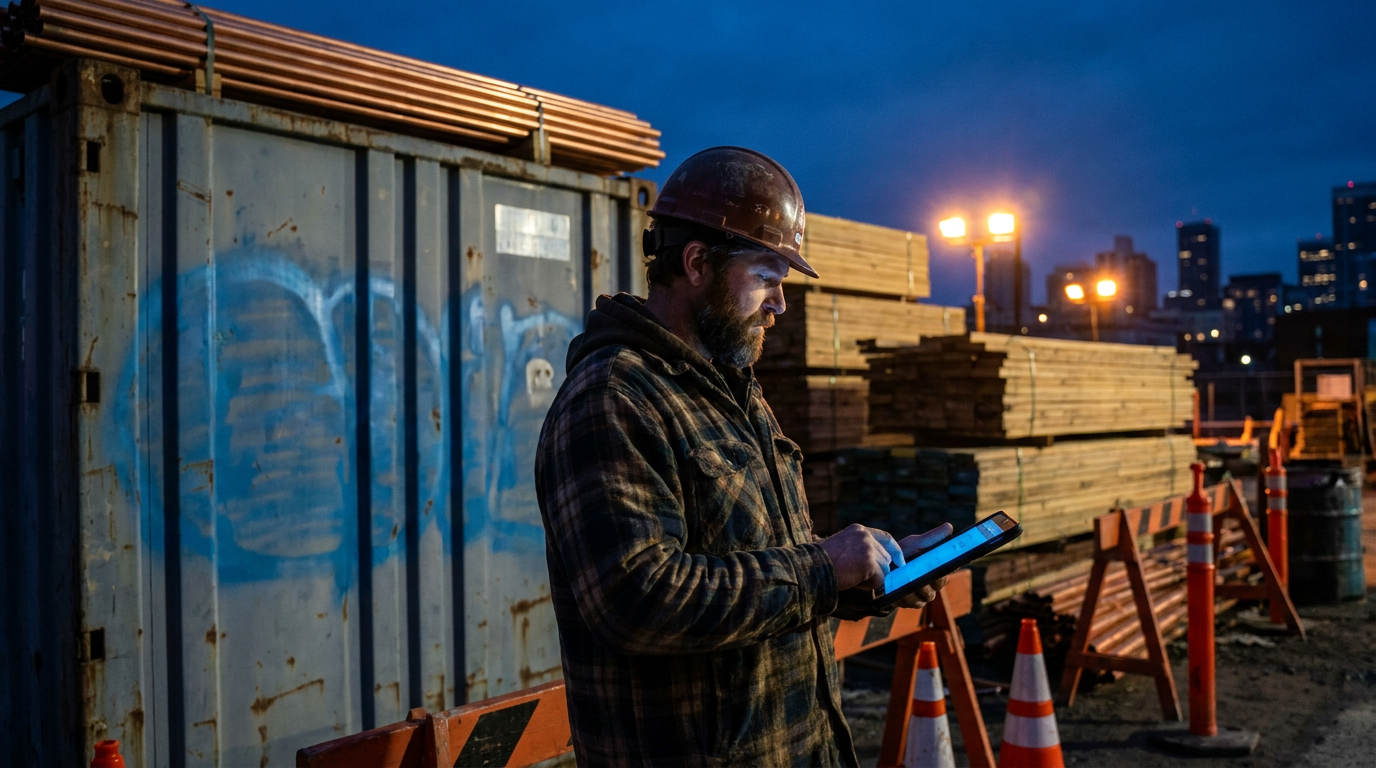
Yes, AI can monitor jobsite material inventory. Using smart cameras, drones, and inventory management software, AI systems can automatically track materials, count stock, and flag discrepancies. This helps cut down on theft, waste, and ordering mistakes, saving your business real money and time.
Can AI Stop Materials from Walking Off Your Jobsite?
Losing materials on a jobsite is more than an annoyance. It’s a direct hit to your bottom line. Whether it’s outright theft, accidental waste, or just poor tracking, that missing lumber, copper pipe, or box of fixtures costs you real money. The National Insurance Crime Bureau reports that jobsite theft is a billion-dollar problem each year. For a small to medium-sized contractor, even a few thousand dollars in lost material can erase the profit from a job.
You run a tight ship. You trust your crew. But sites are chaotic, and things go missing. For years, the only answer was more locks, higher fences, or hiring a security guard. Now, there’s a new tool in the belt: artificial intelligence.
But when you hear “AI,” you might picture a robot in a hard hat. The reality is much simpler and more useful. Let's cut through the hype and look at how this tech actually works on a real jobsite.
What Does 'AI' Even Mean Here?
First, let's get one thing straight. AI on the jobsite isn't about conscious robots making decisions. Think of it as smart software that can see, count, and learn patterns. It’s a force multiplier for your own expertise.
The main technologies at play are:
- Computer Vision: This is the big one. It’s software that lets a camera “see” and identify objects. It can tell the difference between a stack of drywall and a stack of plywood, or recognize a person walking into a storage container after hours.
- Machine Learning: This is the “brain.” The software learns from data. After seeing thousands of images, it gets better at identifying materials. It can also learn the normal rhythm of your jobsite and flag anything out of the ordinary.
Together, these tools give you a set of digital eyes that never sleep.
How AI Tracks Your Materials: The Nuts and Bolts
So how does this software actually watch your stuff? It’s not one single thing, but a system of tools working together. You can start with one piece and build from there.
AI-Powered Cameras
This is the most common starting point. You’re probably already using security cameras, but standard cameras just record. You still need someone to watch the footage. AI cameras do the watching for you.
You can set up rules, or “geofences,” around your material laydown areas or storage containers. The AI knows what’s supposed to be there. If a person enters that zone after 6 PM, or if a pallet of material is moved without being checked out, the system can send an instant alert to your phone with a video clip.
Some systems can even perform automated counts. The camera looks at a designated area and counts the number of pipes, buckets, or boxes. It’s not perfect yet for every little item, but for bulk materials, it’s getting impressively accurate.
Drones for Big-Picture Views
For larger commercial sites or developments, a drone can do in 30 minutes what would take a person a full day. A pre-programmed drone can fly a grid pattern over your site, taking hundreds or thousands of high-resolution photos.
AI software then stitches these images together. It can measure the volume of a gravel pile to see how much you’ve used, count pallets of roofing shingles, or create a complete, up-to-the-minute map of your entire site. This helps you see the big picture and spot discrepancies fast.
Smart Tags and Software
AI also supercharges older tech like QR codes or RFID tags. When you combine simple tagging with an AI-powered inventory platform, you get a powerful system. A crew member scans a bundle of copper wire when they take it from the container. The software logs who took it, when they took it, and for what job task.
The AI part comes in when the system analyzes this data. It can show you your true “burn rate” for materials on a specific type of job. This historical data makes your future bids and quotes much more accurate. It can also predict when you’ll need to reorder, preventing last-minute runs to the supply house that kill your crew's momentum.
Here’s a prompt you can use with an AI assistant to start building a basic policy for your crew.
Create a simple Standard Operating Procedure (SOP) for checking materials in and out of our main jobsite storage container. Our goal is to reduce loss and improve tracking. The crew includes electricians and plumbers. High-value items are copper wire, PEX tubing, fixtures, and power tools. The SOP should be easy to follow and take less than 2 minutes per person.
The Payoff: More Than Just Stopping Theft
Catching thieves is great, but the real value of AI inventory monitoring goes much deeper. It makes your entire operation more efficient and profitable.
- Reduced Waste: When you know exactly what you have and how fast you're using it, you stop over-ordering. Less material sits on site getting damaged by weather, run over by a skid steer, or simply expiring.
- Improved Scheduling: Nothing burns daylight like a crew standing around waiting for a delivery. Predictive ordering means the materials are there when you need them. The project stays on schedule, and your labor costs go down.
- Better Accountability: When everyone knows materials are being tracked, things tend to get treated with more care. It creates a culture of ownership. It also helps you see which crews are most efficient with their materials, which can inform future job assignments.
Getting your crew on board is key. This isn't about spying on them; it's about making their jobs easier. Use a prompt like this to draft a memo explaining the new system.
Draft a short, direct memo for my construction crew explaining that we are starting a new digital check-out system for materials and tools. Explain that the goal is to prevent delays from missing items and to make sure we have what we need. Keep the tone straightforward and focused on teamwork, not punishment. Mention that training will be provided.
Getting Started Without Breaking the Bank
You don't need to spend tens of thousands of dollars to get started. The key is to find the biggest leak in your bucket and plug that first.
- Identify Your High-Value Items: What do you lose most often? Copper, tools, and high-end fixtures are common targets. Focus your initial efforts there.
- Start with One Smart Camera: Place a single AI-powered camera on your main storage container or laydown area. The cost for a single commercial-grade AI camera and subscription can be a few hundred dollars to start—less than the cost of one stolen coil of wire.
- Talk to Your Suppliers: Many building material suppliers are adopting their own tech. Ask if their ordering portal has any inventory management or predictive ordering features you can use.
- Use the AI You Already Have: Before you buy any new software, use an AI assistant like ChatGPT to help you streamline your processes. Have it create inventory checklists, draft policies, or compare software options for you.
I'm a general contractor looking for software to help track materials on my jobsites. Create a comparison table for me to evaluate potential options. The columns should be: Software Name, Key AI Feature (e.g., computer vision, predictive ordering), Best For (e.g., large commercial, residential remodel), and Estimated Cost (e.g., per user/month, flat fee). Give me 3 hypothetical examples.
Ultimately, AI is just another tool. A hammer can't build a house on its own, and AI can't run your jobsite. But in the hands of a smart contractor, it can help you stop guessing and start knowing. It gives you the hard data you need to protect your assets, sharpen your bids, and put more money back in your pocket.
Frequently asked questions
37 copy-paste prompts that save tradespeople 5+ hours a week. Plus one short email every Friday — no fluff.
More for jobsite ai

How Plumbers Use ChatGPT on the Jobsite (5 Ways)
How Plumbers Use ChatGPT on the Jobsite (5 Ways) comes down to using AI to do the slow stuff — quoting, paperwork, marketing, and customer follow-up — so y
How to Use ChatGPT on the Jobsite (Practical Guide)
How to Use ChatGPT on the Jobsite (Practical Guide) comes down to using AI to do the slow stuff — quoting, paperwork, marketing, and customer follow-up — s
AI Voice Notes to Job Report in 60 Seconds
AI Voice Notes to Job Report in 60 Seconds comes down to using AI to do the slow stuff — quoting, paperwork, marketing, and customer follow-up — so you can