Can AI Monitor Structural Integrity on Your Jobsite?
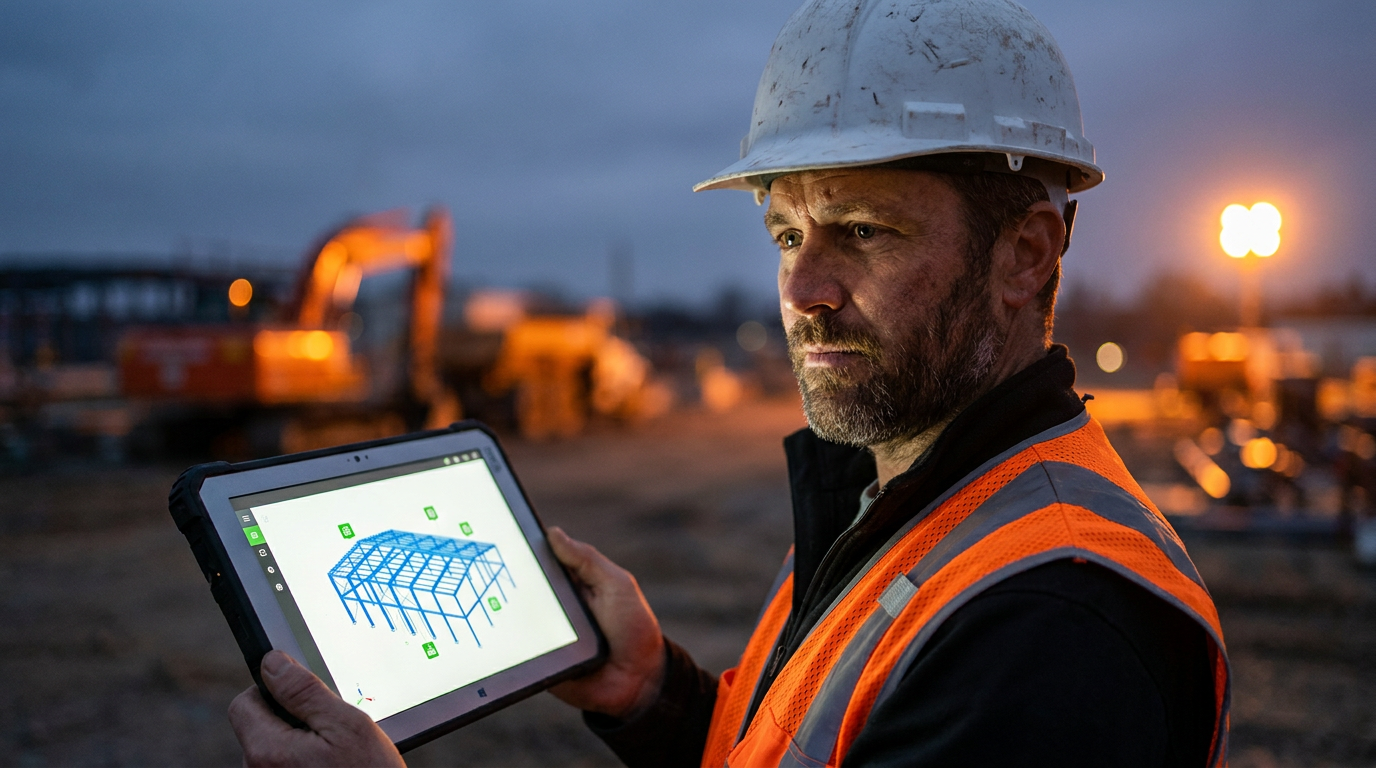
Yes, AI can monitor structural integrity during construction. It uses data from sensors, drones, and 3D models to track changes in real-time. This helps crews spot potential stress, cracks, or shifts in materials early, preventing costly rework and improving safety on the jobsite.
Can AI Monitor Structural Integrity While You Build?
On any jobsite, structural integrity is everything. It’s the foundation of a safe, durable building and the core of your reputation. Traditionally, we’ve relied on experienced eyes, manual measurements, and spot checks to ensure everything is built to spec. But jobs are getting more complex, schedules are tighter, and there’s no room for error.
This is where Artificial Intelligence comes in. It’s not about replacing your crew’s expertise. It’s about giving them a new set of tools—a digital watchdog that never sleeps and can see things the human eye might miss. AI offers a way to keep a constant, data-driven eye on the health of your structure as it goes up.
How AI Keeps an Eye on Your Build
AI doesn’t have a magic crystal ball. It works by processing huge amounts of data from different sources on the jobsite. Think of it as combining the senses of sight, touch, and even hearing into one smart system.
Here’s how it breaks down:
Computer Vision: Drones and strategically placed cameras capture thousands of high-resolution images and videos of the jobsite every day. AI software then analyzes these visuals. It compares the as-built structure against the Building Information Model (BIM) or digital blueprints. It can automatically flag deviations, identify misaligned components, and even detect surface-level cracks long before they become visible to a person walking the site.
Sensor Data Analysis: Modern construction uses a network of Internet of Things (IoT) sensors. These small devices can be embedded in concrete or attached to steel beams. They measure things like:
- Strain and Stress: Gauges on structural steel can tell you if a beam is under more load than it should be.
- Vibration: Accelerometers can monitor vibrations from nearby heavy equipment or environmental factors that might affect the structure.
- Temperature and Humidity: Sensors in a concrete pour can track curing conditions, ensuring the slab reaches its designed strength without flaws.
AI takes this constant stream of data and looks for patterns. It can alert you if a sensor reading goes outside of safe limits or if it detects a trend that points to a future problem.
- Predictive Analytics: This is where AI gets really smart. By combining current data with historical project data, weather forecasts, and material specifications, AI can build predictive models. For example, it could predict the likelihood of a concrete pour developing cracks based on the mix, the day's temperature, and the curing data it's collecting. This allows you to act before a problem even happens.
The Tools You Can Actually Use Today
This isn't science fiction. These tools are being deployed on major construction projects right now. The technology is becoming more accessible for GCs of all sizes.
Drone and Photogrammetry Platforms: Companies like DroneDeploy or SiteAware offer services where drones fly automated routes over your site. The images are stitched together to create a perfect 3D model, or "digital twin," of your project. AI software then does the heavy lifting, comparing today’s model to yesterday’s and flagging any issues. It’s one of the easiest entry points into AI monitoring.
Integrated Sensor Systems: Platforms from companies like Hilti or other specialized tech firms provide the hardware and software to manage sensor data. You get a dashboard that shows the real-time health of your structure. These systems are more involved to set up but provide incredibly detailed insights, especially for complex concrete and steel work.
BIM Integration Software: The real power comes when you connect these monitoring tools directly to your BIM. This creates a closed loop where the digital plan is constantly checked against the physical reality. Software from Autodesk, Procore, and others are building integrations to make this connection smoother.
Ready to see what a vendor can offer? Use this prompt to get the ball rolling.
Draft a direct, professional email to a construction technology vendor. My company is a general contractor specializing in mid-size commercial projects.

I am interested in your AI-powered structural monitoring solutions. Please provide information on the following:

1.  **Core Functionality:** How does your system monitor structural integrity (e.g., computer vision, sensors)?
2.  **Integration:** How does it integrate with our existing workflow and software, specifically Autodesk Build?
3.  **Pilot Program:** Do you offer a pilot program for a single project? What are the costs and requirements?
4.  **Case Studies:** Provide one or two case studies from projects similar in scale to ours.

Keep the response concise and focused on practical application.
The Real-World Payoff
Implementing AI for structural monitoring isn't just about cool tech. It has a direct impact on your bottom line and your ability to deliver a quality product.
Enhanced Safety: This is the number one benefit. Catching a potential structural issue early can prevent a catastrophic failure. It’s about protecting your crew and the public. This level of oversight is a game-changer for improving jobsite safety.
Improved Quality Control: AI provides objective, data-backed proof that the structure was built to spec. It reduces arguments and finger-pointing. When you hand over the building, you have a complete digital record of its construction, which is a huge asset for liability and facility management.
Reduced Rework: Catching a misplaced anchor bolt or a poorly cured section of concrete on day 3 is a simple fix. Catching it on day 30 is a nightmare of demolition and delays. AI-driven monitoring turns expensive rework into minor adjustments.
Increased Efficiency: Automated monitoring frees up your skilled superintendents and engineers from tedious manual checks. They can focus their time on solving complex problems and managing the crew, rather than walking the site with a tape measure and clipboard.
If you're managing a team, you need to translate the data into action. Use this prompt to turn a technical report into a clear plan.
I have a daily report from our AI structural monitoring system. The report includes sensor data charts, image analysis flags, and BIM deviation alerts.

Analyze this report and summarize it for a site foreman. Create a bulleted list of the top 3-5 most urgent action items for tomorrow's toolbox talk. For each item, state the issue, the exact location (e.g., "Column C4, 2nd floor"), and the required action (e.g., "Visually inspect for cracking," "Verify rebar placement before pour").
Getting Started Without Breaking the Bank
Worried about the cost? You don't have to wire up your entire site on day one. Start small and prove the value.
- Run a Pilot Project: Pick one critical element of your next build—maybe a complex concrete pour or the erection of the primary steel frame. Use an AI monitoring service just for that phase.
- Start with Drones: Drone photogrammetry is often the most cost-effective entry point. The hardware is common, and many companies offer the scanning and analysis as a service.
- Focus on the ROI: Track the time saved on inspections and the cost of any rework that was avoided. Use this data to make the case for expanding the program on future projects.
Want to plan that pilot project? Here's a prompt to get you started.
Generate a step-by-step checklist for a project manager to implement a pilot program for AI structural monitoring on a new construction project. The pilot will focus on the concrete foundation and slab-on-grade. The checklist should cover these phases:

1.  **Vendor Selection:** Key questions to ask.
2.  **Pre-Construction:** Defining goals, identifying sensor locations, and training the team.
3.  **Execution:** Daily tasks for the site team.
4.  **Post-Analysis:** How to evaluate the pilot's success and calculate ROI.
AI is a powerful ally for any builder who is serious about quality and safety. It gives you the data you need to build with more confidence, catching small problems before they become big headaches. It’s not about replacing your gut instinct; it’s about backing it up with hard evidence.
Frequently asked questions
37 copy-paste prompts that save tradespeople 5+ hours a week. Plus one short email every Friday — no fluff.
More for jobsite ai

How Plumbers Use ChatGPT on the Jobsite (5 Ways)
How Plumbers Use ChatGPT on the Jobsite (5 Ways) comes down to using AI to do the slow stuff — quoting, paperwork, marketing, and customer follow-up — so y

How to Use ChatGPT on the Jobsite (Practical Guide)
How to Use ChatGPT on the Jobsite (Practical Guide) comes down to using AI to do the slow stuff — quoting, paperwork, marketing, and customer follow-up — s
AI Voice Notes to Job Report in 60 Seconds
AI Voice Notes to Job Report in 60 Seconds comes down to using AI to do the slow stuff — quoting, paperwork, marketing, and customer follow-up — so you can