Ask ToolbeltAI: Can AI Optimize Drain Line Routing?
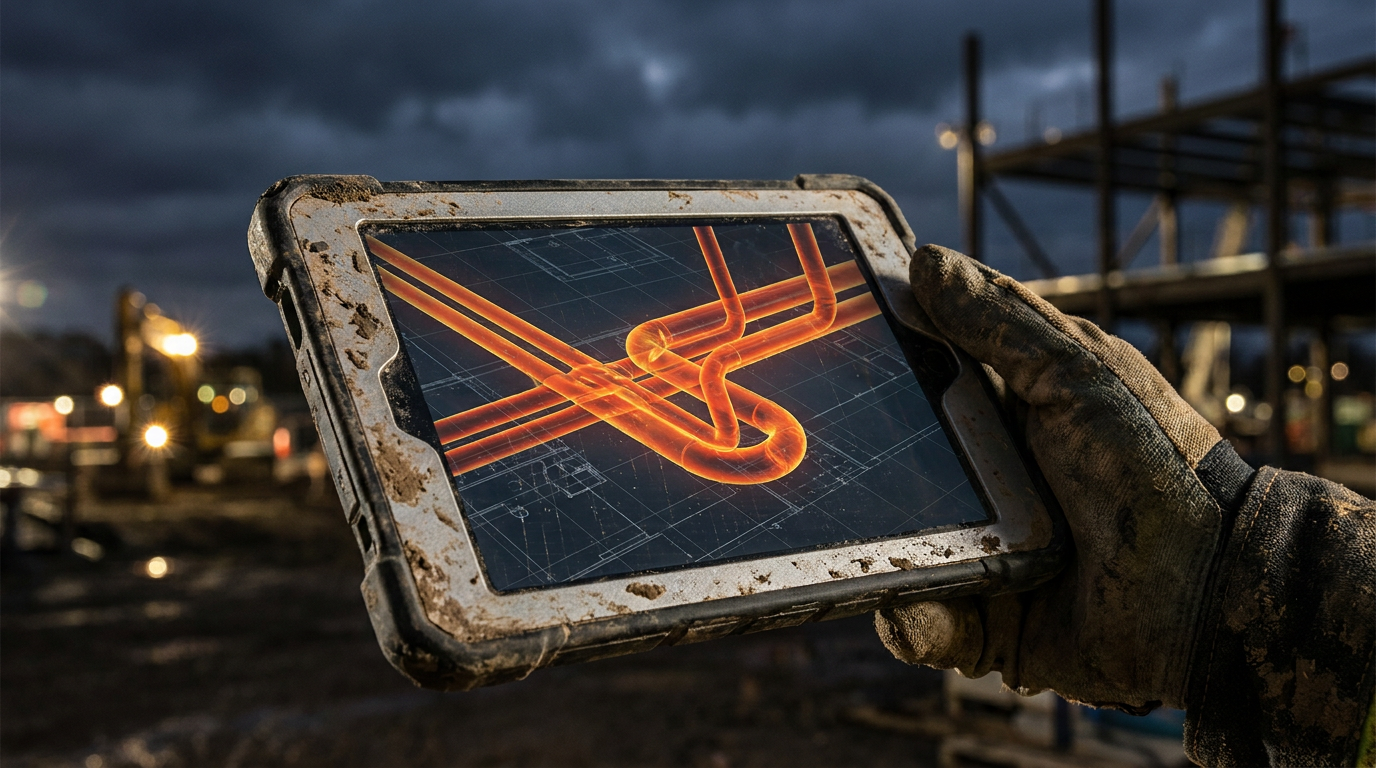
Yes, AI can optimize drain line routing. Current AI models analyze building plans, plumbing codes, and material specs. This helps plumbers find the most efficient, code-compliant routes for new drain lines, saving time on planning and reducing material waste on the job site.
Can AI Map Out the Best Route for a New Drain Line?
You’ve been there. Staring into a floor packed with joists, wires, and ductwork, trying to map a 3-inch drain line in your head. You rely on experience, a tape measure, and a bit of guesswork to get the slope right and avoid a structural nightmare. It works because you’re a pro. But it takes time.
What if a tool could do the heavy mental lifting? Not replace your skill, but give you a solid starting point. That's where Artificial Intelligence comes in. AI is getting good enough to look at the same mess of obstacles and suggest the cleanest, most efficient routes for your DWV system. Think of it as a super-smart apprentice who can read blueprints and code books instantly.
This isn't about robots taking over the trade. It's about using smarter tools to make your job faster and more profitable. Let's cut through the hype and look at what AI can actually do for a plumber on the ground.
How AI Tackles Drain Routing
AI doesn't just guess. It works by analyzing a pile of information you give it. The better your input, the better its output. It's a classic case of garbage in, garbage out. So, what does an AI need to plan a drain line?
- Building Plans: You can upload digital blueprints, like CAD files or even a clear PDF. The AI scans them to understand walls, structural beams, and room layouts.
- Site Photos & Videos: Modern AI can analyze images. You can feed it photos of the actual job site, showing it the real-world chaos of existing pipes, wires, and framing.
- Plumbing Codes: You can tell the AI which code to follow, like the Uniform Plumbing Code (UPC) or International Plumbing Code (IPC). You can even give it specific text for local amendments. It will use this to ensure proper slope, cleanout access, and fixture unit counts.
- Obstacle Data: You can specify keep-out zones. Tell it to avoid a specific HVAC trunk line or to stay three inches away from all electrical conduits.
Once it has the data, the AI runs through thousands of possible paths in seconds. It then presents you with the best options, based on your goals.
The AI can deliver:
- Multiple Route Options: It might show you the shortest route, the route with the fewest fittings, and the route that's easiest to install. Each option will have pros and cons listed.
- Clash Detection: It will flag any spot where your proposed drain line runs into another utility or a structural element. This alone can save you from cutting into something you shouldn't.
- Material Lists: For each suggested route, the AI can generate a complete bill of materials, from the length of PVC pipe down to the number of 90-degree elbows and sanitary tees. This makes quoting much faster and more accurate.
Prompts That Work Today
You don't need a million-dollar software suite to start using AI for this. A powerful tool like ChatGPT-4o can analyze images and files. The key is writing a clear, detailed prompt. Here are a few you can copy and paste.
Act as a master plumber specializing in DWV system design. I am installing a new basement bathroom. I have uploaded a blueprint PDF and three photos of the joist bay where the drain will run. Your task is to propose three code-compliant routes for a 3-inch main drain line connecting the toilet flange to the existing stack shown in the photos. All routes must maintain a 1/4-inch per foot slope. For each route, list the pros, cons, and a rough count of required fittings (long-sweep 90s, wyes, etc.). Follow the International Plumbing Code.
This kind of prompt gives the AI a role, a clear task, all the necessary information, and the constraints it needs to follow. The more specific you are, the better the result.
Here's another for a tight spot.
I've uploaded a photo of a wall cavity. I need to run a 2-inch drain for a vanity sink vertically through this space. Analyze the photo to identify existing electrical wires and supply lines. Propose the safest and most direct path for the drain line. Specify the minimum clearances I need to maintain from the electrical wires according to standard US building practices. What's the best fitting to use at the bottom to turn into the floor joist space?
The Limits of AI and What's Next
Let's be real. An AI has never had its knuckles busted trying to tighten a fitting in a narrow joist bay. It can't feel the sag in an old floor or hear the creak of a compromised beam. Your experience is still the most important tool in your truck.
AI is only as good as the information it gets. If your photo is blurry or your blueprint is out of date, the AI's suggestion could be wrong. You are the final inspector. You must always check the AI's work against reality before you make a single cut.
The real power of this technology is how it improves your jobsite ops. It turns hours of planning and head-scratching into minutes of review. It helps you avoid simple mistakes that lead to costly rework.
Looking ahead, this tech will only get better. Imagine wearing augmented reality glasses that overlay the AI-designed route right onto your view of the job site. Or an AI that connects directly to your supplier's inventory to generate a quote based on real-time material prices. That future is not far off. For now, using AI for planning is a solid first step that can give you an edge.
Frequently asked questions
37 copy-paste prompts that save tradespeople 5+ hours a week. Plus one short email every Friday — no fluff.
More for plumbers
AI for Plumbers: The Practical Field Guide
AI for Plumbers comes down to using AI to do the slow stuff — quoting, paperwork, marketing, and customer follow-up — so you can stay on the tools. Below i

25 ChatGPT Prompts for Your Plumbing Business
25 ChatGPT Prompts for Your Plumbing Business comes down to using AI to do the slow stuff — quoting, paperwork, marketing, and customer follow-up — so you

AI Plumbing Diagnosis Apps: What Actually Works
AI Plumbing Diagnosis Apps comes down to using AI to do the slow stuff — quoting, paperwork, marketing, and customer follow-up — so you can stay on the too