AI Pest ID: Your New Landscaping Field Guide
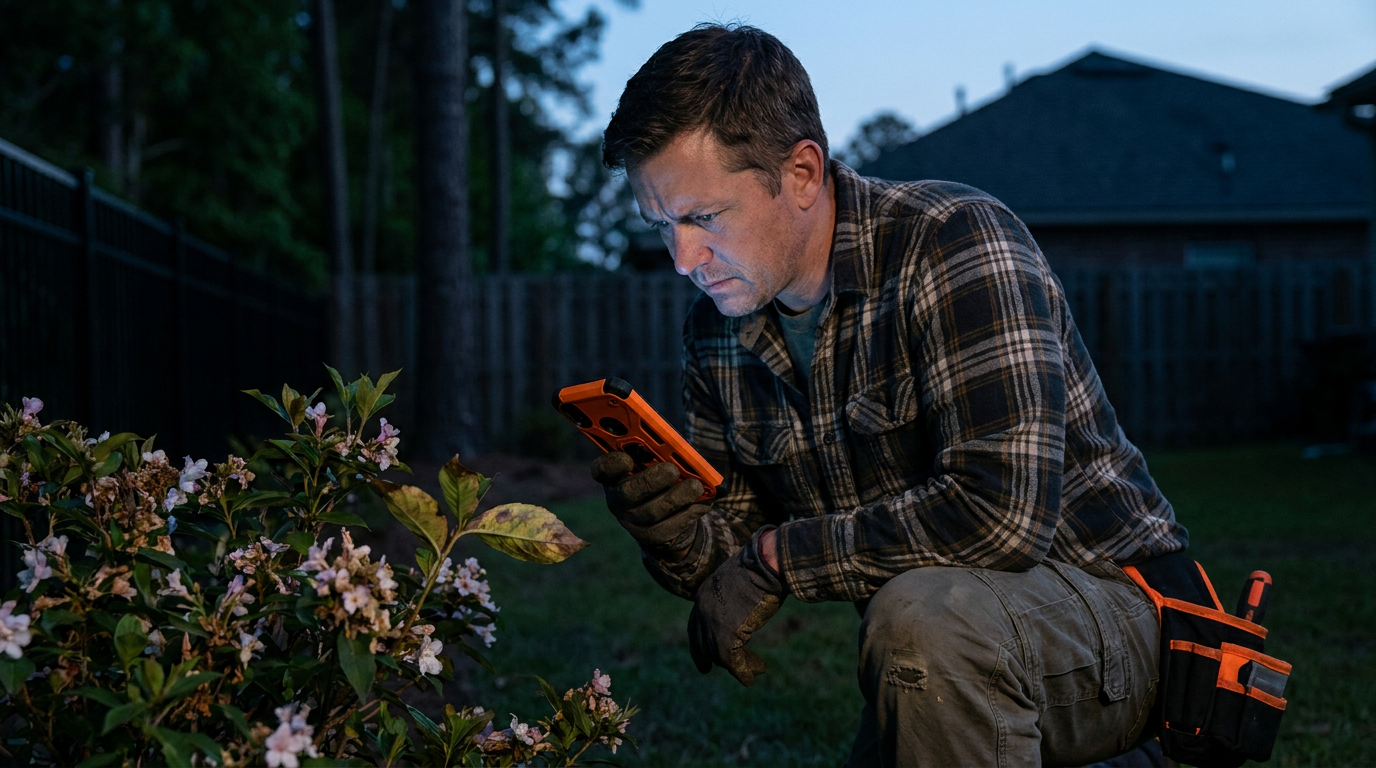
AI pest identification for landscapers uses your phone's camera and specialized apps to instantly identify insects, diseases, and weeds. By uploading a photo, the AI analyzes it against a huge database, giving you a diagnosis and treatment options right in the field. This saves time and costly guesswork.
Your New Field Guide: Using AI to ID and Fight Landscape Pests
You’re on a client's property. You see it. That weird spotting on the boxwoods, the strange webs on the maples, or the mystery bug chewing up the prize-winning roses. In the old days, you’d snap a blurry photo, text it to a buddy, or worse, head back to the truck to flip through a beat-up field guide.
Those days are over. Your smartphone is now the most powerful field guide you've ever owned. Using AI pest identification, you can get answers in seconds, not hours. This isn't some tech fantasy. It's a real tool that pro landscapers are using right now to work smarter, look more professional, and make more money.
This guide cuts through the noise. We'll show you how this tech works, how to use it on the job, and what to look for in a good AI tool. It's time to put an expert in your pocket.
Why Bother with AI for Pest ID?
Time is money. Wasting it trying to identify a common aphid is leaving cash on the table. AI tools bring big advantages to your daily work.
- Speed: Get an identification in seconds. No more waiting for a call back from the local extension office or guessing from a Google search. You can diagnose the problem and recommend a solution on the spot.
- Accuracy: These tools are trained on millions of images. While not perfect, their accuracy for common pests, diseases, and weeds is impressive. They can tell you the difference between a Japanese beetle and a June bug instantly.
- Professionalism: Imagine showing a client a detailed report on their phone, complete with the pest's name, life cycle, and recommended treatment. It builds trust and shows you know your stuff. This turns a simple ID into a professional service you can charge for, a key part of your landscaping marketing strategy.
- Upsell Opportunities: A quick ID can lead to a profitable treatment plan. Spotting early signs of scale on a holly bush can lead to a contract for dormant oil application. Identifying crabgrass lets you sell a pre-emergent service for next season. It turns problems into profit.
How AI Pest Identification Works
It’s simpler than you think. You don't need to understand the code, just how to use the tool.
- Snap a Clear Photo: Get a well-lit, in-focus picture of the bug, the damaged leaf, or the weed.
- Upload to an App: Use a dedicated plant ID app or a general AI tool like ChatGPT or Gemini with photo capabilities.
- Get an Analysis: The AI compares your photo to its massive database of images. It looks for key features, patterns, and shapes.
- Receive a Report: In seconds, you get a report with the most likely identification, information about the pest or disease, and often, suggested organic and chemical treatments.
It’s the same process you’d use, but supercharged. The AI is like an army of agronomists and entomologists ready to help, 24/7.
Act as a master gardener and entomologist. I've uploaded a photo of a pest found on a client's rose bushes in USDA Zone 7a. Identify the pest. Provide its common and scientific name. Describe its life cycle and the specific damage it causes to roses. Then, list three treatment options: one organic/non-chemical method, one common chemical control, and one Integrated Pest Management (IPM) strategy to prevent future infestations.
More Than Just Bugs
This technology isn't just for insects. The best AI tools can identify a huge range of jobsite problems.
- Plant Diseases: Is it powdery mildew or downy mildew? Is that black spot on the leaves a fungus or a bacterial infection? A good photo can help the AI tell you what you're dealing with and how to treat it before it spreads.
- Weeds: Knowing exactly what weed you're fighting is critical for choosing the right herbicide. AI can instantly tell dallisgrass from crabgrass, or henbit from purple deadnettle. This precision saves you from applying the wrong product, which wastes time and money.
- Nutrient Deficiencies: Some advanced apps can even help diagnose nutrient deficiencies. Yellowing leaves (chlorosis) can be caused by a lack of iron, manganese, or nitrogen. By analyzing the pattern of yellowing, AI can suggest what soil amendments might be needed.
I've identified [Pest/Disease Name] on my client's property using an AI tool. Now, create a simple, professional summary I can text or email to the client. The client is named Mrs. Gable. Explain the problem in plain language, state the risk if left untreated, and briefly outline my proposed solution. Keep the tone confident and reassuring. The property is located in Austin, Texas.
Choosing the Right AI Tool
You have a few options when it comes to AI pest identification. There's no single 'best' tool, only the best tool for you and your business.
- Dedicated Apps: Apps like PictureThis, PlantNet, and iNaturalist are built for this. They often have huge, specialized databases and user-friendly interfaces. Many operate on a 'freemium' model, with basic ID for free and advanced features like treatment guides behind a subscription.
- General AI Chatbots: Tools like ChatGPT-4, Google Gemini, and Microsoft Copilot now have powerful image analysis features. You can upload a photo and ask questions in plain English. This is great for getting detailed, conversational answers and creating client-facing text, but they might lack the specialized focus of a dedicated app.
- Supplier Apps: Some of your landscape supply houses (like SiteOne or Ewing) have their own apps with built-in identification resources. These are worth checking out, as they can directly link you to products available in-store.
Start with a free version. See if it works for your common jobs. If you find yourself using it every day, a paid subscription might be a worthwhile business expense.
The Limits: AI is a Tool, Not a Guru
AI is powerful, but it's not magic. It's important to know its limits.
- Photo Quality Matters: A blurry, dark, or out-of-focus picture will give you a garbage result. Good lighting and a steady hand are essential.
- It Can Be Wrong: AI gives you the most probable answer, not a guaranteed one. For very unusual pests or complex disease issues, it can get confused. If the AI's suggestion seems way off, trust your own experience.
- Experience Still Rules: AI can't see the whole picture. It doesn't know the soil history, recent weather, or watering schedule. Your experience as a landscaper provides the context that AI lacks. Use AI to inform your decisions, not make them for you.
Think of AI as your new apprentice. It's fast and has access to a ton of information, but it still needs a pro to guide it and make the final call. When you combine your hard-won field experience with the speed of AI, you become faster, smarter, and more valuable to your clients.
Frequently asked questions
37 copy-paste prompts that save tradespeople 5+ hours a week. Plus one short email every Friday — no fluff.
More for landscaping
AI for Landscaping Business Owners: Real ROI
AI for Landscaping Business Owners comes down to using AI to do the slow stuff — quoting, paperwork, marketing, and customer follow-up — so you can stay on

ChatGPT Prompts for Lawn Care Business (20 Tested)
ChatGPT Prompts for Lawn Care Business (20 Tested) comes down to using AI to do the slow stuff — quoting, paperwork, marketing, and customer follow-up — so