AI Photo Estimating for Painters: How Accurate Is It?
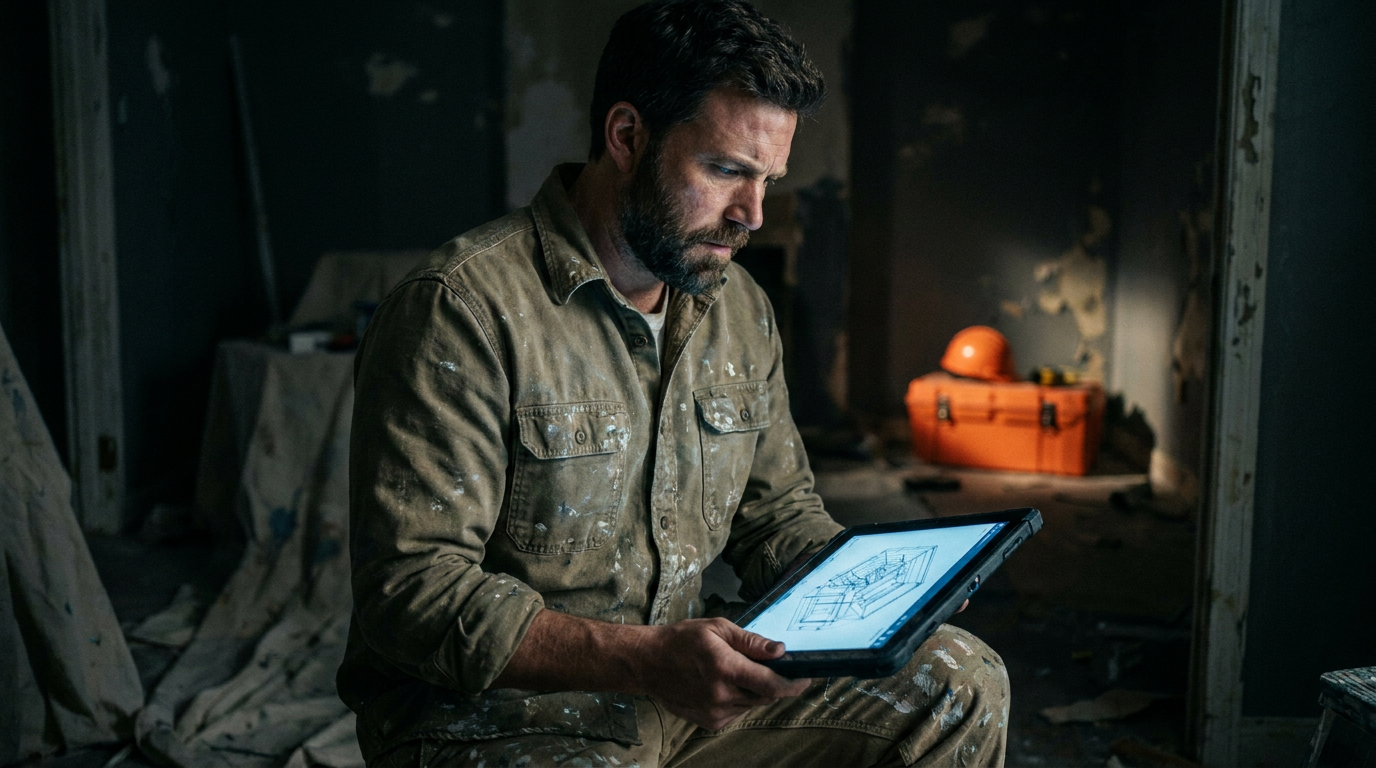
Yes, AI can help you estimate a painting job from photos by analyzing images to calculate surface areas and identify features. However, it is not a complete replacement for an on-site visit. AI struggles with texture, prep work, and hidden damage, making it a good starting point but not the final word.
You’re busy. A customer emails you some photos of a living room and asks for a quote. Driving across town for a 15-minute walkthrough feels like a waste if the customer is just a tire-kicker. You wonder, can I just use AI to figure this out?
The short answer is yes, but you can’t trust it completely. AI photo estimating is a powerful new tool in your digital toolbelt. It can give you a fast, ballpark number to see if a client is serious. But it’s not smart enough to replace your eyes and your experience. Let's cut through the hype and see where this tech works and where it fails.
How AI Photo Estimating Works
When you upload a photo to an AI tool, it’s not just looking at a picture. It’s using something called computer vision to analyze every pixel. Here’s the simple version of what happens:
- Object Recognition: The AI identifies the basic parts of the room. It sees walls, ceilings, doors, windows, and trim. It separates what needs paint from what doesn’t.
- Scale Reference: It needs a known object to understand the room's size. You might tell it, “This door is 80 inches tall.” The AI uses that door as its measuring stick to calculate the dimensions of everything else.
- Measurement Calculation: Using the scale reference, the AI measures the height and width of the walls. It then calculates the total square footage. More advanced tools can even measure linear feet for trim and baseboards.
- Exclusion: The AI subtracts the areas you won’t be painting, like windows and doors, to give you a more accurate paintable surface area.
The result is a quick breakdown of the room’s dimensions, all from a few photos. It sounds like magic, and sometimes, it feels like it.
The Good: Where AI Gets It Right
Don't get me wrong, this technology is useful. It's not just a gimmick. When used correctly, AI photo estimating can make your life easier.
- Speed for Initial Quotes: This is the biggest win. You can generate a ballpark estimate in minutes, not hours. It helps you qualify leads fast. Send a potential customer a rough estimate and see how they react. If they ghost you, you only lost a few minutes of your time.
- Measuring Difficult Areas: Got a two-story foyer with vaulted ceilings? Instead of wrestling with a giant ladder or a laser measure, a good photo can give the AI enough information to make a solid guess on the square footage.
- Consistency: AI provides a consistent baseline. If multiple people on your team are creating estimates, AI ensures they all start with the same basic measurements. This reduces “thumb in the air” guesstimates.
- Digital Record: The photos and the AI analysis create a digital record of the job before you start. This can be useful for planning and for resolving any disputes later on. It's a solid part of a modern quoting process.
The Bad: Where AI Falls Short
Now for the reality check. An AI has never scraped peeling paint or patched nail pops. It lives in a perfect digital world, and job sites are anything but perfect. Here’s where relying too heavily on AI will cost you money.
- Prep Work is Invisible: This is the number one problem. AI cannot see the hours of prep work a room needs. It can't tell you that the previous owner used cheap, glossy paint that needs to be scuffed and primed. It won't spot the hairline cracks in the plaster or the shoddy drywall patches that need to be redone.
- Texture and Surface Condition: An AI analyzes a 2D image. It has no idea if a wall is smooth drywall, heavy knockdown texture, or old horsehair plaster. Each surface takes paint differently and requires a different amount of labor and material. The AI's square footage calculation is the same for all of them.
- Lighting and Photo Quality: Bad photos equal bad estimates. Shadows can trick the AI into thinking a wall is smaller than it is. A weird camera angle can distort the room's proportions. A blurry photo is useless. You are completely dependent on the customer's ability to take a good, well-lit picture.
- Context is Everything: The AI doesn't know the story behind the job. It doesn’t know the homeowners have three kids and a big dog, so you should recommend a durable, scrubbable paint. It doesn't know they want you to paint the detailed crown molding three different colors. Your experience and conversation with the client fill in these critical gaps.
Putting AI to Work: Prompts You Can Use
You don't need expensive software to start. You can use the image analysis features in general AI tools like ChatGPT or Gemini. The key is to give the AI clear instructions and a frame of reference.
Here are a few prompts you can copy and paste.
Analyze this photo of a room. Assume the standard door height is 80 inches. Based on that reference, calculate the estimated length and height of the main wall shown. Identify all paintable surfaces, including walls, trim, and ceiling if visible. List any non-paintable surfaces to exclude, like windows or outlets. Provide the total estimated square footage for the paintable wall surface only.
Examine this set of photos from a potential interior painting job. I need a preliminary assessment of potential prep work. Look for visible signs of wall damage, like cracks, holes, water stains, or peeling paint. List each potential issue you see and the photo it is in. Note: This is for a rough idea only; a final on-site inspection is required. I'm looking for anything that would require more than a simple scuff-and-paint.
From the attached photos of a living room, create a preliminary scope of work for a standard repaint job. Use the door as a scale reference (80 inches tall). List the tasks in logical order. Include: 1. Estimated square footage of walls. 2. Estimated linear feet of baseboard trim. 3. Items to be masked or covered (floors, a window, a fireplace). 4. A count of doors and windows to be painted around. This is a preliminary scope of work for discussion purposes only.
The Bottom Line: It's a Tool, Not a Replacement
Think of AI photo estimating like a stud finder. It’s a great tool that gets you in the right area, but you still tap the wall to be sure before you start drilling.
Use AI to create fast, preliminary estimates. Use it to weed out clients who aren't a good fit. Use it to get a head start on your measurements before you even arrive on site.
But never, ever send a final, binding contract based on an AI estimate alone. Your professional reputation is built on accuracy and trust. The final bid requires your eyes, your hands, and your brain. The tech is there to help you work smarter, not to do the work for you.
Frequently asked questions
37 copy-paste prompts that save tradespeople 5+ hours a week. Plus one short email every Friday — no fluff.
More for other trades
AI for Painting Contractors: Quoting to Marketing
AI for Painting Contractors comes down to using AI to do the slow stuff — quoting, paperwork, marketing, and customer follow-up — so you can stay on the to
AI for Fence Companies: 9 Practical Plays
AI for Fence Companies comes down to using AI to do the slow stuff — quoting, paperwork, marketing, and customer follow-up — so you can stay on the tools.
AI for Handyman Business: The Solo Operator Stack
AI for Handyman Business comes down to using AI to do the slow stuff — quoting, paperwork, marketing, and customer follow-up — so you can stay on the tools