Can AI Help Plan Your Kitchen Remodel Wiring?
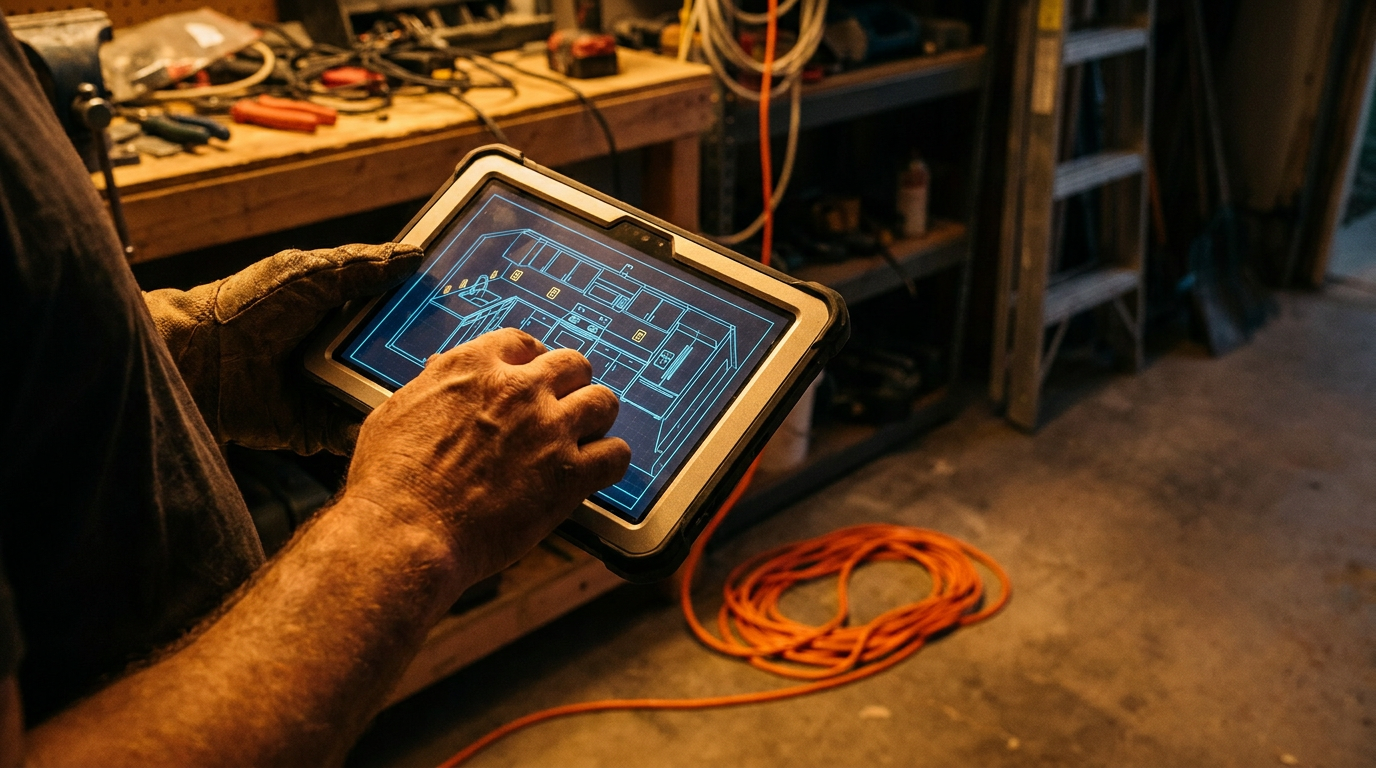
Yes, AI can help plan electrical for a kitchen remodel by speeding up initial tasks. It's useful for creating appliance lists, calculating loads, and drafting basic layouts. However, it cannot replace a licensed electrician's knowledge of local codes, site-specific challenges, and safety requirements. AI is a planning assistant, not a replacement.
Can AI Help You Plan the Wiring for a Kitchen Remodel?
A kitchen remodel is one of the most complex jobs you can walk into. It's a web of plumbing, framing, and, most importantly, electricity. Homeowners want islands with pop-up outlets, under-cabinet lighting, and enough power for an air fryer and a fancy espresso machine. The load calculations alone are a headache.
So, can a smart computer program, an AI, help you map it all out? The short answer is yes, but not in the way you might think. AI is not a digital master electrician. It's more like a green apprentice who can handle the grunt work, freeing you up to do the real thinking.
Think of AI as a new tool in your bag. It can't replace your experience, your license, or your ability to solve problems on the fly. But it can make the paperwork and planning stages a lot faster.
What AI Can Actually Do for Your Electrical Plan
AI is good at processing huge amounts of information and spitting it back out in an organized way. For a kitchen remodel, this is a huge time-saver. Forget spending an hour on Google looking up appliance specs. Let the AI do it.
Here’s where it earns its keep:
- Brainstorming Layouts: You can describe the kitchen layout and the homeowner's wishes, and an AI can suggest where to place outlets, switches, and lights. It’s a great starting point for a visual plan.
- Load Calculations: Feed it a list of appliances, and it can give you the estimated wattage for each one. This is a solid first step for determining how many circuits you'll need and whether the main panel can handle the new load.
- Generating Checklists: AI can create detailed checklists based on the National Electrical Code (NEC). Ask for a list of all NEC requirements for kitchen GFCI protection, and you'll get a solid document to review. This helps ensure you don't miss a step before the inspector shows up.
- Material Lists: Once you have a rough plan, you can ask the AI to generate a bill of materials. It can list the breakers, wire gauges, box types, and devices you'll need, which can streamline your trip to the supply house.
- Client Communication: Homeowners don't always understand why a 20-amp dedicated circuit is necessary for a microwave. AI can draft a simple, non-technical explanation that you can text or email to your client, saving you time and helping them understand the value of your work.
Where AI Falls Short (And You Shine)
This is the most important part. Knowing what a tool can't do is just as critical as knowing what it can. AI has serious blind spots, and if you rely on it too much, you're putting your license and your client's safety at risk.
AI doesn't know local codes. It might know the NEC inside and out, but it has no idea that your specific county requires tamper-resistant outlets everywhere, or that the local inspector has a particular way they want to see wires stapled. The Authority Having Jurisdiction (AHJ) is the law of the land, and AI has never met them.
AI can't see the job site. It doesn't know there's a plumbing stack right where the homeowner wants an outlet. It can't see the old, brittle wiring in the walls or the undersized service panel in the basement. Your eyes and your experience are what make a plan workable and safe. An AI-generated plan is just a fantasy until you've walked the site.
AI has no liability. When something goes wrong, the AI isn't going to show up in court. Your name is on the permit. Your insurance is on the line. You are the professional who is legally and financially responsible for the job. Never forget that. An AI's suggestion is just that: a suggestion. The final decision is always yours.
AI can't pull wire. At the end of the day, this is skilled labor. AI can't fish a wire through a crowded wall, make a solid, lasting connection, or troubleshoot a circuit that keeps tripping. That's the craft, and no computer program can replicate it.
Putting AI to Work: Practical Prompts for Electricians
Theory is fine, but let's get practical. You can use tools like ChatGPT, Claude, or Gemini today to speed up your workflow. Here are a few copy-paste prompts to get you started. Tweak them for your specific job.
I am a licensed electrician planning a kitchen remodel. Based on NEC 2023, create a preliminary circuit plan for a modern kitchen. The client wants a refrigerator, dishwasher, garbage disposal, microwave, electric range, and a countertop coffee maker and toaster. List the required dedicated circuits, including amperage and wire gauge. Also, list the small appliance branch circuits required. Present this as a simple table.
This prompt gets you a solid starting document for your circuit plan. It saves you the time of listing everything from scratch. From there, you can adjust it based on the actual appliance specs and site conditions.
Write a simple, clear explanation for a homeowner. The topic is why their kitchen remodel, with a new electric oven and an island with outlets, requires a subpanel upgrade. Explain it in terms of safety and capacity. Avoid technical jargon. Keep the tone professional but easy to understand. The goal is to justify the added cost and work.
This is perfect for improving your client communication and building trust. It helps you look professional and makes the customer feel informed, which is key to a smooth project and good for your quoting process.
Act as a master electrician. Create a pre-inspection checklist for a residential kitchen electrical rough-in. Base it on general NEC 2023 requirements. Include items for receptacle placement and spacing (including island and peninsula rules), GFCI protection, AFCI requirements, lighting circuits, appliance circuits, box fill, and wire support. This is for my personal use to double-check my work before the inspector arrives.
Use this to create a custom checklist for quality control. It’s a great way to make sure you've covered all your bases before you call for that rough-in inspection.
The Real-World Workflow: AI as Your Assistant
So what does this look like on a real job? It's a simple, two-part process.
The Office Work: Use AI at your desk or in the truck. Feed it the project details and use it to generate your first-draft layout, circuit plan, and material list. This is the 80% solution that gets you started.
The Site Work: Print out your AI-generated documents and take them to the job site. This is where you apply your expertise. You'll mark up the plans, moving an outlet here, changing a circuit there, and noting the real-world obstacles. You'll correct the material list and finalize the plan based on reality.
AI helps with the prep. You do the real work. It's a tool that helps you think, not a tool that thinks for you. It handles the tedious parts of the job so you can focus on the skilled labor that actually gets the lights on.
Frequently asked questions
37 copy-paste prompts that save tradespeople 5+ hours a week. Plus one short email every Friday — no fluff.
More for electricians
AI for Electricians: A Field-Tested Guide
AI for Electricians comes down to using AI to do the slow stuff — quoting, paperwork, marketing, and customer follow-up — so you can stay on the tools. Bel
27 ChatGPT Prompts for Electricians (Copy & Paste)
27 ChatGPT Prompts for Electricians (Copy & Paste) comes down to using AI to do the slow stuff — quoting, paperwork, marketing, and customer follow-up — so

AI Electrical Load Calculator: How It Works & Free Prompt
AI Electrical Load Calculator comes down to using AI to do the slow stuff — quoting, paperwork, marketing, and customer follow-up — so you can stay on the