AI for Plumbing: Create a Materials List From a Photo?
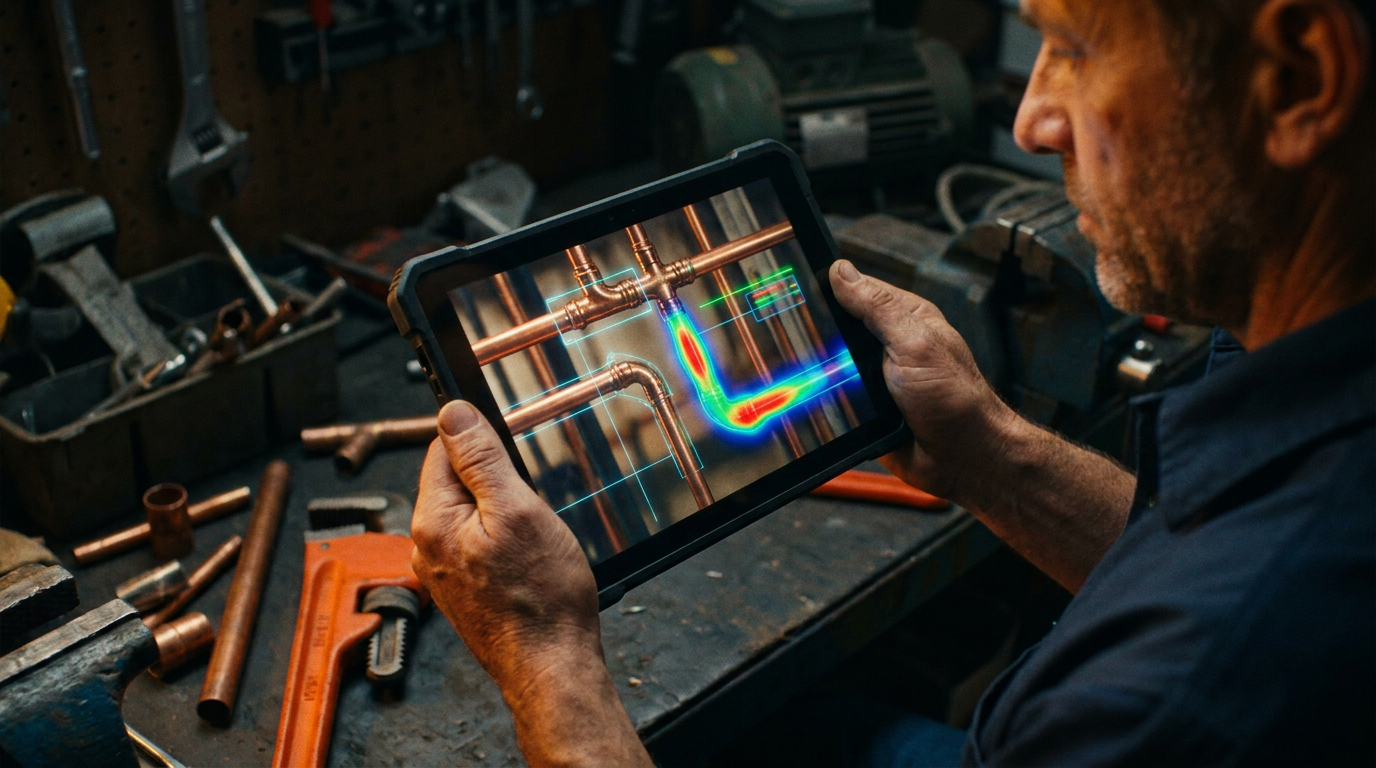
Yes, AI can create a plumbing materials list from a photo. By using AI tools with vision capabilities, you can upload a picture of a rough-in or repair area. The AI analyzes the image, identifies visible pipes, fittings, and valves, and generates a preliminary parts list for your review.
Can AI Really See What’s in Your Photo?
Let's get straight to it. You’re on a job, maybe a messy repipe or a bathroom rough-in. You snap a quick photo to remember what you need. The question is, can your phone actually tell you what to buy? The short answer is yes. AI with 'vision' can look at that photo and spit out a materials list. It’s not science fiction anymore.
This tech works by recognizing shapes and patterns. The AI has been trained on millions of images, including tons of plumbing parts. It sees a 90-degree bend and knows it's an elbow. It sees threads and a hex nut and identifies a specific type of fitting. It's like having an apprentice who has seen every part in the Ferguson catalog, but without the bad attitude.
But here's the catch: it’s not a master plumber. It’s a tool. A powerful one, but it's on you to use it right. It can save you a trip to the supply house, but it can also send you there for the wrong part if you're not careful.
How to Get AI to Build Your List
Getting a good list from a photo comes down to two things: a clear picture and a good prompt. Don't send it a blurry, dark photo and expect miracles. Get good light on the assembly. Take a few pictures from different angles if it's complicated.
Then, you have to tell the AI what you want. Don't just say 'what's in this picture?' Be specific. You’re the boss, so give clear instructions. The more detail you give the AI, the better your list will be. Start simple and add more instructions as you get the hang of it.
Here are some prompts you can copy and paste today. Use them with an AI that can see images, like the latest versions of ChatGPT, Claude, or Gemini.
Act as a senior plumber creating a materials list for a supply house run. Analyze the attached photo of a plumbing assembly. Identify every visible pipe, fitting, valve, and piece of hardware. Provide a simple bulleted list of the components you see.
That first prompt is your starting point. It gives you a basic inventory. Once you see what it can do, you can get more detailed. For a more useful, organized list, try giving the AI more specific formatting instructions.
Act as a plumbing supply expert. I am a plumber sending you a photo of a jobsite. Based on this image, create a detailed materials list in a table format with three columns: 'Quantity', 'Item Description', and 'Potential Material' (e.g., Copper, PEX, PVC, Brass). Estimate the quantity for each item. I know you can't be perfect, but give your best professional guess.
The Reality Check: Where AI Fails
This technology is impressive, but let's not get ahead of ourselves. An AI has never sweated a joint or wrestled with a corroded nipple in a crawlspace. It has limits.
Hidden Parts: AI can only identify what it can see. It has no idea what’s behind that drywall or if there's another fitting just out of frame. It can't account for the unexpected.
Sizing Issues: This is the big one. An AI can guess that you need a 3/4" copper elbow, but it's just a guess based on proportions in the photo. Without a reference object (like a tape measure) in the shot, it can easily be wrong. Never trust the AI on sizing without verifying it yourself.
Weird or Old Parts: AI is great with standard, off-the-shelf PEX, PVC, and copper fittings. But that weird, sand-cast brass fitting from a 1950s boiler? It will probably get confused and call it something else. It only knows what it has been trained on.
Think of AI as a 'pre-flight checklist.' It helps you organize your thoughts and build a draft list. It’s a fantastic tool for quoting a job quickly or for double-checking your work before you pack up. But the final call always belongs to the licensed professional on site—you.
Making It Part of Your Daily Workflow
So how do you actually use this without messing up? Here are a few ideas:
- Quick Estimates: A client sends you a photo of a leaky water heater setup. Run it through the AI to get a fast, preliminary parts list. It helps you build a more accurate quote in minutes, not hours.
- Apprentice Training: Have a green helper? Ask them to make a parts list from a photo. Then, run the same photo through the AI. Compare the lists. It's a great way to teach part identification and see where the apprentice—and the AI—needs help.
- The End-of-Day Check: Before you leave the jobsite, snap a photo of the day's progress. Use the AI to create a list for tomorrow's work. It's a good way to make sure you didn't forget that one specific reducer you'll need first thing in the morning.
This isn't about replacing your skills. It's about adding a new, powerful tool to your jobsite toolkit. The plumber who learns how to use AI to work faster and smarter is the one who will be ahead of the competition in the years to come.
For more complex jobs, you can even ask the AI to suggest a sequence for assembly or what tools you might need. The possibilities are huge, as long as you remember who's in charge.
I've attached a photo of a complex boiler manifold I need to replicate. Act as my virtual mentor. First, generate a detailed materials list. Second, suggest a logical order of operations for assembling this manifold. Third, list the essential tools required for this specific job, assuming copper pipe and sweat fittings.
Ultimately, AI is just another tool. Like a good pipe wrench or a trusty torch, it's useless until a skilled professional picks it up. Learn how it works, understand its limits, and put it to work for you.
Frequently asked questions
37 copy-paste prompts that save tradespeople 5+ hours a week. Plus one short email every Friday — no fluff.
More for plumbers
AI for Plumbers: The Practical Field Guide
AI for Plumbers comes down to using AI to do the slow stuff — quoting, paperwork, marketing, and customer follow-up — so you can stay on the tools. Below i

25 ChatGPT Prompts for Your Plumbing Business
25 ChatGPT Prompts for Your Plumbing Business comes down to using AI to do the slow stuff — quoting, paperwork, marketing, and customer follow-up — so you

AI Plumbing Diagnosis Apps: What Actually Works
AI Plumbing Diagnosis Apps comes down to using AI to do the slow stuff — quoting, paperwork, marketing, and customer follow-up — so you can stay on the too