Can AI Predict HVAC Failure? Hype vs. a Real Tool
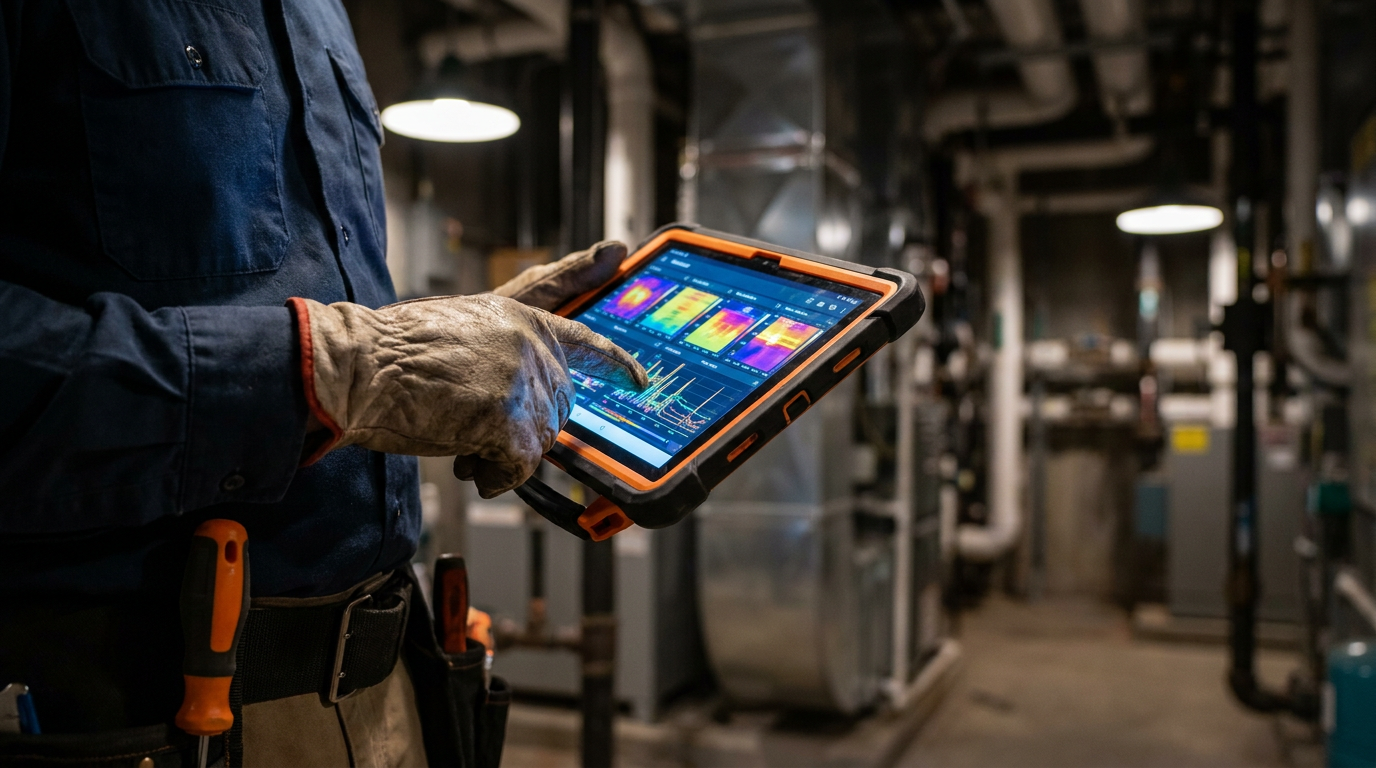
Yes, AI can predict HVAC equipment failure. It works by using sensors to collect real-time data on things like vibration, temperature, and pressure. AI algorithms analyze this data against historical patterns to spot signs of trouble. This lets you fix small issues before they cause a major breakdown.
Can AI Predict HVAC Failure? Hype vs. a Real Tool
Unexpected equipment failure is the enemy. It means a frantic customer, a blown schedule, and a late night for one of your techs. For years, we’ve relied on preventative maintenance schedules. But what if you could know a compressor was going to fail before it actually did? That’s the promise of AI.
Some folks hear “AI” and think it’s just marketing hype. But the truth is, the technology is here and it works. It’s changing how we manage HVAC systems, moving from a reactive model to a proactive one. This isn't about robots taking your job. It's about giving you a new tool to work smarter.
What is Predictive Maintenance?
Let’s get the terms straight. Most of us do two kinds of maintenance:
- Reactive Maintenance: Something breaks, you fix it. This is the most expensive and disruptive way to work.
- Preventative Maintenance: You service equipment on a set schedule, like changing filters every three months or inspecting a unit once a year. It’s better, but you might be servicing a perfectly good unit or missing one that’s about to fail.
Predictive Maintenance (PdM) is different. It uses real-time data to predict when a piece of equipment is likely to fail. Instead of a calendar, you use data to decide when to perform maintenance. It’s like a doctor using a heart monitor instead of just scheduling a check-up once a year. You get an alert when things start looking bad, not after the patient has a heart attack.
How AI Makes the Prediction
AI-powered predictive maintenance isn't magic. It's a system with a few key parts.
Sensors: These are the eyes and ears. Small, rugged sensors are attached to key components like motors, compressors, and fans. They constantly measure things like vibration, temperature, acoustic levels, and electrical current.
Data Collection: The sensor data is sent to a central system, usually through a wireless network. This is often part of an existing Building Management System (BMS) or a standalone IoT (Internet of Things) platform.
AI Analysis: This is the brain. A machine learning model analyzes the constant stream of data. It has been trained on what “normal” operation looks like. When it detects patterns that are known to lead to failure—like a tiny increase in motor vibration over several weeks—it flags the issue.
Alerts & Reports: The system doesn’t just find problems. It tells you about them. You get a specific alert, like “Rooftop Unit 3: Compressor motor vibration is 15% above baseline, indicating potential bearing wear. Failure predicted in 4-6 weeks.” Now you can schedule a repair during regular hours, order the right part, and prevent a shutdown.
Hype vs. Reality: Where We Are Today
Is every residential AC unit going to have this tomorrow? No. Right now, AI-powered PdM is most common in large commercial and industrial settings. Think data centers, hospitals, and manufacturing plants where an HVAC failure can cost millions.
According to the U.S. Department of Energy, a functioning predictive maintenance program can deliver a 10x return on investment and reduce maintenance costs by 25-30%. Those numbers are real.
But the technology is getting cheaper and easier to use. It's starting to show up in high-end commercial buildings and will eventually move into the residential market. The key is that the tools are becoming more accessible for small and mid-sized HVAC businesses. You don't need a team of data scientists anymore.
Here are some tools you can start using to get your head in the game.
Explain predictive maintenance for an HVAC system to a homeowner. Use a car analogy. Keep it simple, under 100 words.
The Benefits for Your HVAC Business
Adopting this tech isn't just about fixing things before they break. It's about running a better business.
- Fewer Emergency Calls: Less overtime pay and less stress on your team. You can plan your work instead of reacting to it.
- Better Parts Management: You know what parts you'll need ahead of time. No more scrambling to find a specific motor or paying for rush shipping.
- New Revenue Streams: Predictive maintenance is a premium service. You can sell it as part of a higher-tier service contract. This creates a steady, predictable income stream for your business operations.
- Happier Customers: Customers love avoiding downtime. When you prevent a failure, you look like a hero. This builds loyalty and gets you great reviews.
- Improved Technician Efficiency: Your techs go to jobs with the right information and the right parts. They fix the problem on the first visit, making them more productive.
Draft a short, professional email to a commercial property manager. Introduce the concept of upgrading their current HVAC service contract to include AI-powered predictive maintenance. Focus on the benefits of preventing downtime and reducing long-term costs.
How to Get Started
You don't have to become an AI expert overnight. Here’s a simple path to get started.
Educate Yourself: Read articles like this one. Watch demos from software companies. Understand the basic concepts so you can talk intelligently with suppliers and customers.
Talk to Your Suppliers: Ask your primary equipment and parts distributors what they offer. Major manufacturers like Johnson Controls, Siemens, and Honeywell all have solutions. See what integrates with the equipment you already install.
Start Small: Pick one trusted commercial client and offer to run a pilot program on one or two of their most critical units. Use this project to learn the ropes without committing your whole business.
Train Your Team: This is the most important step. Your techs need to understand how the system works and trust the data it provides. If they see it as a tool to help them, they’ll embrace it. If they see it as a threat, they’ll ignore it.
I'm an HVAC contractor. Compare the top 3 types of sensors used for predictive maintenance on a commercial rooftop unit. For each sensor type (vibration, thermal, acoustic), explain what it detects and what kind of failure it helps predict.
The move toward predictive maintenance is happening. It's a real tool, not just hype. The companies that learn how to use it will have a serious advantage. They'll run more efficiently, have happier customers, and be more profitable. The time to start learning is now.
Frequently asked questions
37 copy-paste prompts that save tradespeople 5+ hours a week. Plus one short email every Friday — no fluff.
More for hvac

AI for HVAC Contractors: Everything You Need to Know
AI for HVAC Contractors comes down to using AI to do the slow stuff — quoting, paperwork, marketing, and customer follow-up — so you can stay on the tools.

ChatGPT for HVAC Technicians: 20 Real Use Cases
ChatGPT for HVAC Technicians comes down to using AI to do the slow stuff — quoting, paperwork, marketing, and customer follow-up — so you can stay on the t
AI HVAC Load Calculation: Manual J in Minutes
AI HVAC Load Calculation comes down to using AI to do the slow stuff — quoting, paperwork, marketing, and customer follow-up — so you can stay on the tools