Can AI Tell You How to Prep a Wall for Paint?

Yes, AI can recommend paint prep from a photo by analyzing the image for issues like cracks, peeling paint, or stains. Using an AI tool with vision capabilities, you can get a detailed list of steps, from scraping and sanding to priming, saving you time on initial assessments.
Can AI Tell You How to Prep a Wall for Paint?
Yes, it can. Modern AI with vision can look at a picture of a wall and give you a solid starting point for your prep work. Think of it as a second set of eyes that has seen millions of wall problems. It can spot peeling paint, hairline cracks, water stains, and nail pops, then give you a checklist to tackle them. It’s not about replacing your gut instinct; it’s about making your initial assessment faster and more thorough.
This isn't science fiction. It's a practical tool you can use on your phone today. By uploading a clear photo, you can get a breakdown of potential issues and the steps needed to fix them before a drop of paint hits the surface. This helps you build more accurate quotes and standardize your process, especially when training new crew members.
How AI Vision Works for Paint Prep
AI vision tools work by recognizing patterns. These systems are trained on massive datasets of images. They've seen more examples of efflorescence, alligatoring, and blistering paint than any human ever could. When you show it a photo of a client's wall, the AI compares the patterns in your image to the ones it has stored in its memory.
It’s not thinking like a human. It's performing a high-speed matching game. The AI identifies pixels that form patterns it recognizes as 'crack,' 'water stain,' or 'peeling paint.' Based on that identification, it pulls from another dataset that links specific problems to standard prep solutions.
For example:
- It sees: A web of fine, interconnected cracks.
- It recognizes: Alligatoring, likely caused by a hard topcoat over a soft primer.
- It recommends: Scrape off loose paint, sand the surface smooth, apply a high-quality primer, then repaint.
The key is that the AI provides a logical, textbook answer. It gives you the by-the-book procedure for the problem it thinks it sees. This is a huge advantage for creating consistent, high-quality results across all your jobs.
Putting AI to Work: The Right Prompts
The AI is a tool, and like any tool, you need to know how to use it. The quality of its recommendation depends entirely on the quality of your instructions, or 'prompt.' Just uploading a photo with the question "How to fix?" will get you a generic answer. You need to provide context.
Good prompts tell the AI what it's looking at, what your role is, and what kind of answer you need. Be specific. The more detail you give, the more useful the output will be.
Here are a few prompts you can copy and paste to get started.
You are a master painter with 30 years of experience. Look at this photo of an interior residential wall. Identify all visible defects and create a detailed materials list and a step-by-step prep plan for a premium latex paint finish.
This prompt gives the AI a role (master painter), context (interior residential wall), and a clear task (identify defects, create a materials list, and build a prep plan). This is much more effective than a simple question.
Analyze this photo of an exterior wood siding. Based on the image, what are the three most likely causes for this type of paint failure? Provide a detailed prep process to fix the issue and prevent it from happening again. List the necessary tools and materials.
For more complex jobs, you can ask the AI to diagnose the root cause. This helps you not only fix the problem but also explain to the homeowner why the extra prep work is necessary. It adds a layer of professionalism to your quote and your work.
The Limits: Where Your Experience Still Rules
Let's be clear: AI is an assistant, not a replacement for a skilled tradesperson. It has major limitations you need to respect.
An AI cannot:
- Feel the Wall: It can't tell if a surface is chalky, greasy, or damp. Your hand is a better sensor.
- Test for Lead: Never trust an AI to identify lead paint. This requires an EPA-recognized test kit. Period.
- See What's Hidden: It can't know if there's a slow plumbing leak behind the drywall causing that stain or if the plaster is fundamentally unsound.
- Understand Jobsite Conditions: The AI doesn't know if the room is poorly ventilated, if the homeowner has pets, or if you only have a two-day window to get the job done.
AI might mistake a shadow for a stain or fail to notice subtle blistering that your trained eye would catch immediately. The AI's recommendation is a starting point. Your professional judgment is the final word. Always trust your own assessment after an in-person inspection. This is a critical part of running a smart business, which you can learn more about in our guides to jobsite operations.
Integrating AI into Your Workflow
So, how can you use this tool without letting it take over? The goal is to work smarter, not harder.
Initial Quoting: Use photo analysis for preliminary estimates. A client can send you photos, and you can run them through an AI to get a rough idea of the prep work involved. This lets you give a more informed ballpark figure before you even drive to the site. It can save you from wasting time on jobs that are a bad fit.
Training New Hires: AI is an excellent training tool. Have your new painters take photos of problem areas and use the AI to generate a prep plan. Then, you can review the AI's plan with them, pointing out where it's right and where it's wrong. It teaches them what to look for and standardizes your company's methods.
Documenting Work: Before you start a job, take photos and run an analysis. Save the report. This creates a 'before' record of the wall's condition. If a client later claims a crack was caused by your work, you have dated evidence of pre-existing conditions. It's a simple way to cover your bases.
Ultimately, using AI for paint prep analysis is about adding a powerful tool to your digital toolbelt. It won't replace your experience, but it will make that experience more efficient and easier to scale.
Frequently asked questions
37 copy-paste prompts that save tradespeople 5+ hours a week. Plus one short email every Friday — no fluff.
More for other trades
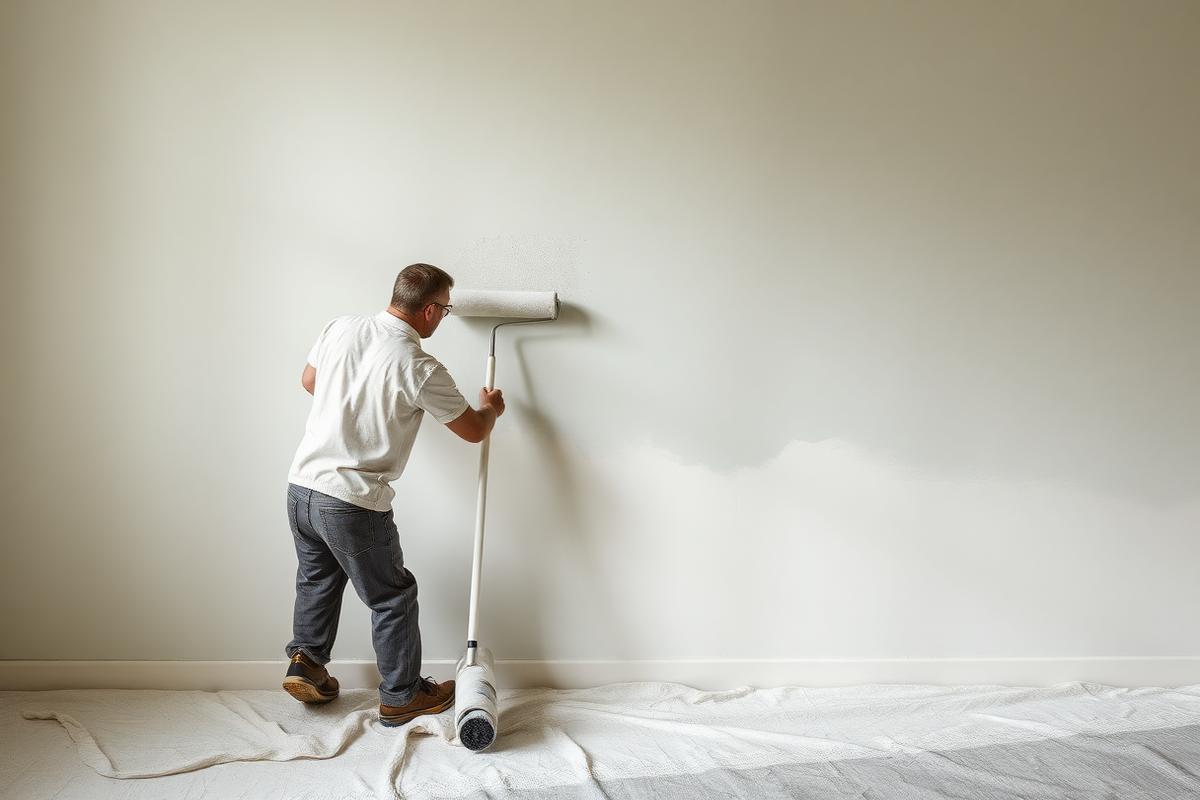
AI for Painting Contractors: Quoting to Marketing
AI for Painting Contractors comes down to using AI to do the slow stuff — quoting, paperwork, marketing, and customer follow-up — so you can stay on the to
AI for Fence Companies: 9 Practical Plays
AI for Fence Companies comes down to using AI to do the slow stuff — quoting, paperwork, marketing, and customer follow-up — so you can stay on the tools.

AI for Handyman Business: The Solo Operator Stack
AI for Handyman Business comes down to using AI to do the slow stuff — quoting, paperwork, marketing, and customer follow-up — so you can stay on the tools