Can AI Sequence Jobsite Tasks for a Remodel?
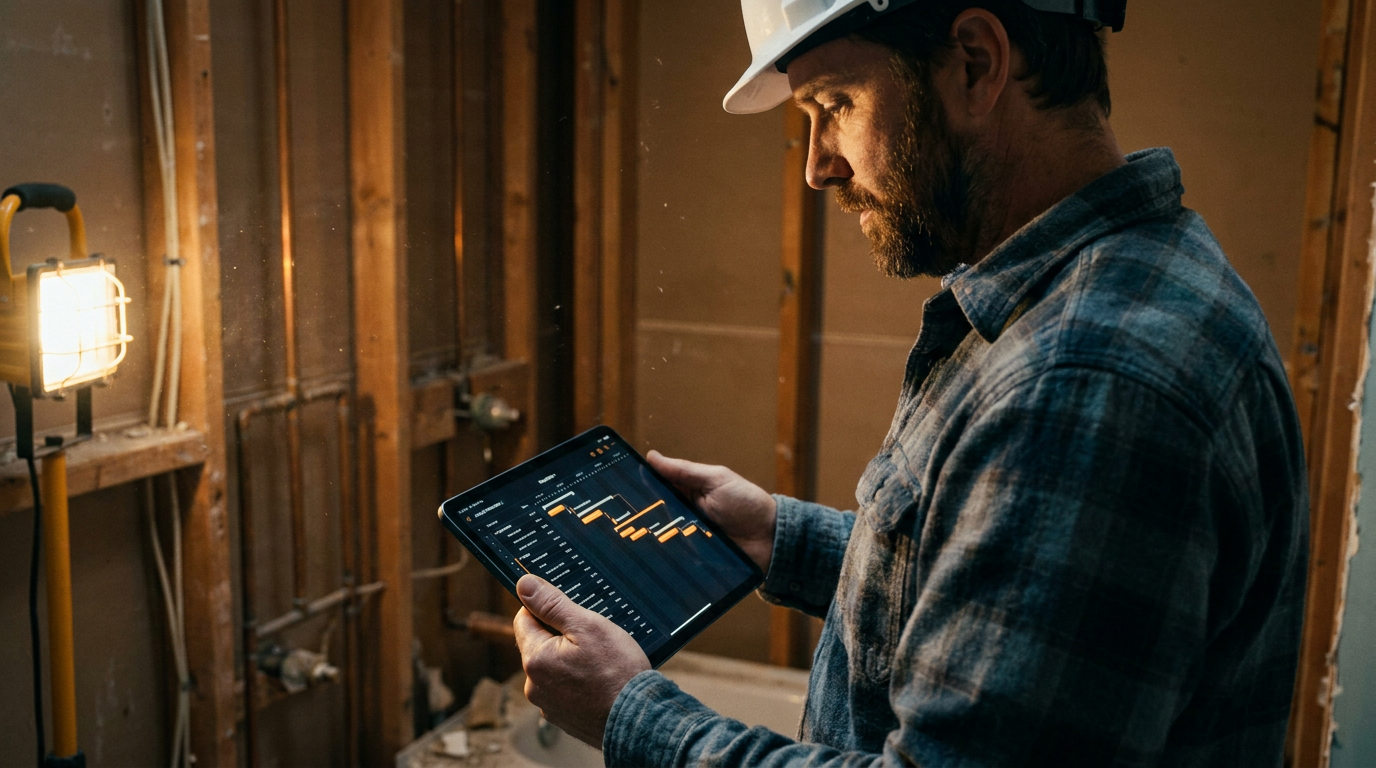
Yes, AI can help you sequence jobsite tasks. By feeding it your project scope, materials, and constraints, AI tools can generate a detailed, logical schedule. This helps you identify dependencies between trades, optimize workflow, and prevent common delays on jobs like a bathroom remodel.
Can AI Sequence My Jobsite Tasks for a Bathroom Remodel?
A project schedule is more than a list of dates. It’s the playbook for your jobsite. Get the sequence wrong on a bathroom remodel, and you’re burning money. You have tile guys showing up before the plumber finished the rough-in, or drywall mud going up before the electrical inspection is passed. It’s a mess that costs you time, profit, and your reputation.
You’re used to running this sequence in your head, on a whiteboard, or a spreadsheet. But what if you had an assistant who has seen millions of projects and can map out the most logical path in seconds? That’s what AI can do. It’s not here to take your job. It’s here to make your job easier by building a solid plan you can execute.
What a Bad Sequence Costs You
Let's get real about the cost of a busted schedule. It’s not just about being a few days late. Every mistake in the order of operations has a ripple effect.
- Rework: Tiling a shower floor before the flood test is a rookie move, but it happens. A bad sequence means tearing out perfectly good work to fix something that should have been done first. That’s double the labor and double the material cost.
- Wasted Crew Time: If your electrician is on-site but can't work because the framing isn't ready, you’re paying for them to stand around. Or worse, you lose your spot in their schedule and have to wait another two weeks.
- Material Pile-Up: Ordering everything at once clogs up a small jobsite. A toilet and vanity sitting in the middle of the room while you’re trying to mud and tape is a formula for damage and inefficiency.
- Client Frustration: Nothing sours a client relationship faster than unnecessary delays. When you have to explain why the project is stalled because of a planning mistake, you lose credibility.
A solid sequence avoids all of this. It creates a smooth workflow where one trade hands off a completed stage to the next. This is where AI becomes a powerful tool for your jobsite operations.
How AI Tackles Project Sequencing
Think of a large language model (LLM) like ChatGPT or Google Gemini as a hyper-intelligent apprentice. It doesn't know how to sweat a pipe, but it can read every construction manual ever written and understand the logical flow of tasks.
When you ask it to sequence a job, you’re not just getting a simple to-do list. The AI analyzes the tasks and identifies dependencies. It knows that a plumbing rough-in must happen before insulation and drywall. It understands that you can’t set a toilet until the finished floor is in. It processes these relationships and builds a step-by-step plan.
The real power is in the details you provide. The more specific you are, the better the output. You can tell it the room size, the specific fixtures, the type of tile, and even your crew's availability. The AI uses this information to build a custom schedule, not a generic template.
Here’s how to get a basic project schedule for a bathroom remodel.
Act as an experienced general contractor specializing in residential remodels. Create a detailed, step-by-step project sequence for a full gut remodel of a 5-foot by 8-foot bathroom.

The scope includes:
- Demolition of all existing fixtures, tile, and drywall.
- Replacing a tub with a walk-in shower with a tile surround and a glass door.
- Installing a new toilet, a 48-inch vanity with a single sink, and a new exhaust fan.
- All plumbing and electrical will be updated within the existing locations, including new GFCI outlets.
- The finished floor will be luxury vinyl plank.

Organize the sequence by major phases, listing the individual tasks within each phase. Identify critical path tasks and note where inspections are typically required.
From Demo to Punch List: An AI-Powered Plan
Using a prompt like the one above, the AI will generate a plan that looks something like this. It breaks the entire job down into manageable phases.
Phase 1: Planning and Demolition
This is where you protect the site and tear out the old. The AI will remind you of steps like shutting off water and power, setting up dust barriers, and renting a dumpster. It will list the order of removal: fixtures first, then tile, then drywall and insulation.
Phase 2: Rough-In and Framing
Once you’re down to the studs, the heavy lifting begins. The AI will sequence any framing modifications for the new shower pan, followed by the plumbing and electrical rough-ins. This is a critical stage for coordination. The AI can even help you draft communications to your subs to make sure everyone is on the same page.
Phase 3: Inspections and Close-Up
This is a major bottleneck if you get it wrong. The AI will flag that you need rough-in inspections (plumbing and electrical) before you can close the walls. After passing inspection, the sequence continues with insulation, installing the shower pan, and hanging moisture-resistant drywall.
Phase 4: Finishing Work
Now the room starts to take shape. The AI will map out the finishing sequence: waterproofing the shower walls, taping and mudding the drywall, priming, and painting. Then comes the tile work, followed by grouting and sealing. After that, the finished flooring can go in.
Phase 5: Fixture Set and Finals
This is the home stretch. The AI will sequence the installation of the vanity, countertop, and toilet. Then comes the trim work, followed by the plumber and electrician returning for the final fixture connections (faucet, showerhead, light fixtures, switches). Finally, the shower door is installed, followed by a final cleanup and the client punch list.
Handling Curveballs with AI
No project plan survives contact with reality. Materials get delayed, clients make changes, or you uncover unexpected rot. This is where AI can be a huge asset. Instead of spending hours reworking your schedule on a whiteboard, you can update the AI and get a new plan in minutes.
Let's say your custom vanity arrives damaged. The replacement is three weeks out. What can you do in the meantime? You can ask the AI.
I am in the middle of a bathroom remodel. We are on schedule, but the custom vanity just arrived with a cracked top. The replacement will not arrive for 3 weeks. We have just finished painting.

My original remaining sequence was:
1. Install LVP flooring
2. Install vanity and top
3. Install baseboard trim
4. Plumber sets toilet and connects sink
5. Electrician installs light fixtures and switches
6. Install shower door
7. Final punch list

Re-sequence the remaining tasks to keep the project moving as much as possible while we wait for the new vanity. What can my crew work on to minimize the downtime?
The AI will analyze the remaining tasks and suggest a new workflow. It might advise you to install the flooring, set the toilet, install the shower door, and complete most of the electrical work. It separates the tasks that depend on the vanity from those that don't, helping you save weeks of dead time.
The Limits: AI is a Tool, Not the Boss
AI is powerful, but it's not a magic wand. It only knows what you tell it. It won't know that your local inspector is a stickler for nail plates or that the supply house is running low on PEX fittings.
Your experience on the ground is irreplaceable. You are the expert who can look at an AI-generated schedule and say, "That’s a good starting point, but I need to build in an extra day for drying time here," or "I'm going to swap these two tasks because I know my plumber is faster than my electrician."
Use AI as your first drafter. It does the heavy lifting of organizing the chaos, giving you a solid, logical plan. It's your job to refine it with your hard-won knowledge and expertise. The combination is what makes you faster, smarter, and more profitable.
Frequently asked questions
37 copy-paste prompts that save tradespeople 5+ hours a week. Plus one short email every Friday — no fluff.
More for jobsite ai

How Plumbers Use ChatGPT on the Jobsite (5 Ways)
How Plumbers Use ChatGPT on the Jobsite (5 Ways) comes down to using AI to do the slow stuff — quoting, paperwork, marketing, and customer follow-up — so y

How to Use ChatGPT on the Jobsite (Practical Guide)
How to Use ChatGPT on the Jobsite (Practical Guide) comes down to using AI to do the slow stuff — quoting, paperwork, marketing, and customer follow-up — s
AI Voice Notes to Job Report in 60 Seconds
AI Voice Notes to Job Report in 60 Seconds comes down to using AI to do the slow stuff — quoting, paperwork, marketing, and customer follow-up — so you can