
AI Soil Analysis Tools for PNW Landscapers
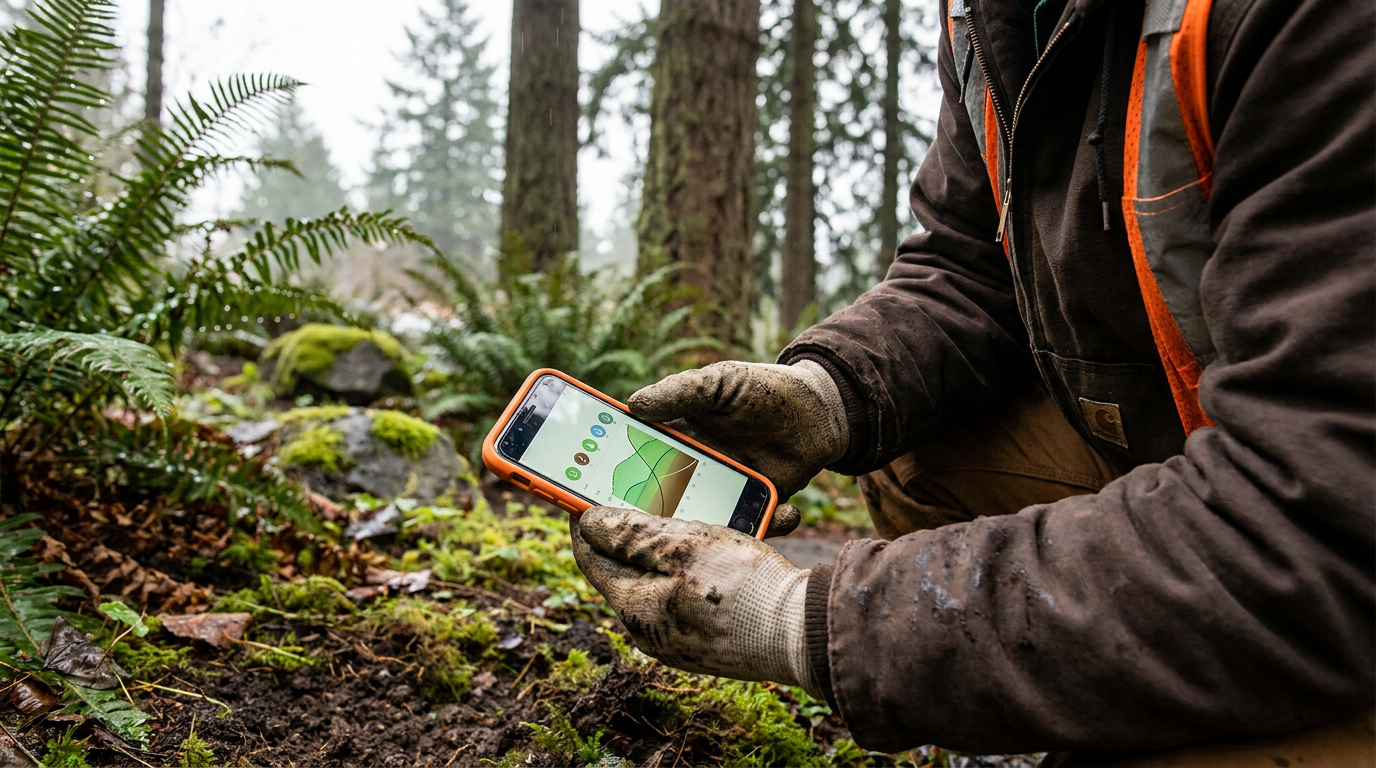
AI soil analysis tools for Pacific Northwest landscapers include apps like Ag-Analytics and general-purpose AIs like ChatGPT. These use phone cameras and data analysis to identify soil composition, nutrient levels, and moisture. They give you instant data on-site, helping you make faster decisions about amendments without waiting for lab results.
PNW Landscapers: Ditch the Lab with AI Soil Analysis
Working in the Pacific Northwest means dealing with some unique dirt. From the heavy clay around Portland to the glacial till near Seattle, our soil is a challenge. For years, the only way to really know what you were working with was to bag up a sample and send it to a lab. That meant waiting days, sometimes weeks, for results. Your project sat on hold.
Now, the phone in your pocket can give you answers in minutes. AI soil analysis tools are changing the game for landscapers. They use your phone's camera and powerful software to give you a solid read on soil type, moisture, and potential nutrient issues. It’s not about replacing your expertise. It’s about adding a powerful, fast tool to your belt.
This guide breaks down how these AI tools work, which ones to consider, and how to use them to get better results for your clients in the PNW.
Why PNW Soil is a Different Beast
The ground here isn't like anywhere else in the country. We've got a mix of volcanic ash, heavy rainfall that makes soil acidic, and large areas of dense, rocky glacial till often called 'Cascade concrete.'
- Acidic pH: Constant rain leaches alkaline elements like calcium from the soil, dropping the pH. This is great for acid-loving plants like rhododendrons, azaleas, and firs, but tough for lawns and vegetable gardens that prefer a more neutral pH.
- Heavy Clay: Many areas, especially in the Willamette Valley, are rich in clay. It holds water well but also compacts easily, choking out plant roots. In summer, it can bake into a brick.
- Glacial Till: A mix of clay, sand, gravel, and boulders left behind by ancient glaciers. It’s tough to dig in, drains poorly, and often lacks organic matter.
Knowing exactly which of these you're up against on a given job site is the first step to a successful landscape installation. Guessing leads to failed plantings and unhappy customers.
How AI Soil Analysis Works on the Jobsite
AI soil analysis sounds complicated, but the process is simple. Most tools work in a similar way:
- Capture Data: You either take a clear, well-lit picture of a soil sample with your phone or use a specialized probe that connects to an app.
- AI Analysis: The app uploads the data. The AI compares your sample's color, texture, and other visual cues against a massive database of hundreds of thousands of soil samples. It looks for patterns that correspond to specific soil types, nutrient deficiencies, and moisture levels.
- Get Results: Within seconds or minutes, the app provides a report. It might identify the soil as 'silty clay,' estimate the organic matter content, and flag a potential nitrogen deficiency based on coloring.
This isn't magic. It's data analysis. Think of it like a seasoned expert who has seen every type of soil imaginable and can spot the differences instantly.
Top AI Tools for Your Truck
You don't need a degree in computer science to use these. Most are designed for people in the field. Here are a few types of tools to look at.
Specialized AgTech Apps
Apps like Ag-Analytics and Taranis are built for large-scale agriculture but their features are powerful for landscapers managing large properties. They can analyze aerial drone imagery to spot problem areas across a multi-acre estate or commercial property. For a landscaper, this can help you identify drainage issues or areas where the turf is struggling before it's visible to the naked eye. This can lead to new business opportunities, like offering targeted amendment services.
General AI Chatbots
This is the most accessible and often cheapest starting point. Using an AI chatbot like ChatGPT or Gemini on your phone is surprisingly effective. The key is giving it a good prompt and a good photo. You can get a quick analysis that is often 80% of the way there, helping you make immediate decisions on the job. This is perfect for improving your job quoting process by showing the client you have a data-backed plan.
Here’s a prompt you can use right now.
Act as a soil scientist specializing in Pacific Northwest soils. I've uploaded an image of a soil sample from a client's property in Tacoma, WA. Based on the image, analyze the following:

1.  **Texture:** Describe the likely texture (e.g., sandy loam, clay, silt).
2.  **Color:** What does the color (e.g., dark brown, reddish, light gray) indicate about its composition, specifically organic matter and mineral content?
3.  **Structure:** Can you infer anything about the soil structure (e.g., granular, blocky, compacted)?
4.  **Initial Assessment:** Provide a brief, actionable assessment for a landscaper. What are the immediate challenges this soil might present for planting a new lawn?
Hardware-Assisted Tools
Some companies offer physical probes that you stick in the ground. These measure things like pH, moisture, and salinity directly. The probe then syncs with an app on your phone, where AI helps interpret the data and keep a record for each client property. This is a step up from photo-only analysis and gets you closer to lab-grade accuracy without the wait.
From Data to Dirt: Putting AI Insights to Work
An AI report is useless if you don't know what to do with it. The real value is turning that data into action.
If AI says: High clay content and acidic pH.
- Your action: Recommend aerating the soil and amending with both compost to break up the clay and lime to raise the pH.
If AI says: Low organic matter and light color.
- Your action: Plan to add a significant amount of dark compost or aged manure to enrich the soil and improve water retention.
If AI says: Signs of compaction and poor drainage.
- Your action: Suggest installing a French drain or building raised beds for sensitive plants instead of planting directly in the ground.
This is how you show value. You are not just planting things; you are solving the underlying problems of the property. Using AI gives you the data to back up your recommendations.
Here's another prompt to turn your analysis into a plan.
I have a soil analysis for a residential property in Eugene, Oregon. The results are: pH 5.5, high clay content, low in nitrogen (N) and phosphorus (P). The client wants to plant a vegetable garden.

Create a soil amendment plan. List:
1.  Three organic amendments to use.
2.  The purpose of each amendment (e.g., 'raises pH', 'improves drainage').
3.  Application advice for a 10x20 foot garden bed.
Frequently asked questions
37 copy-paste prompts that save tradespeople 5+ hours a week. Plus one short email every Friday — no fluff.
More for landscaping
AI for Landscaping Business Owners: Real ROI
AI for Landscaping Business Owners comes down to using AI to do the slow stuff — quoting, paperwork, marketing, and customer follow-up — so you can stay on

ChatGPT Prompts for Lawn Care Business (20 Tested)
ChatGPT Prompts for Lawn Care Business (20 Tested) comes down to using AI to do the slow stuff — quoting, paperwork, marketing, and customer follow-up — so