
AI for Washington's Stormwater Regs: A Guide for Landscapers
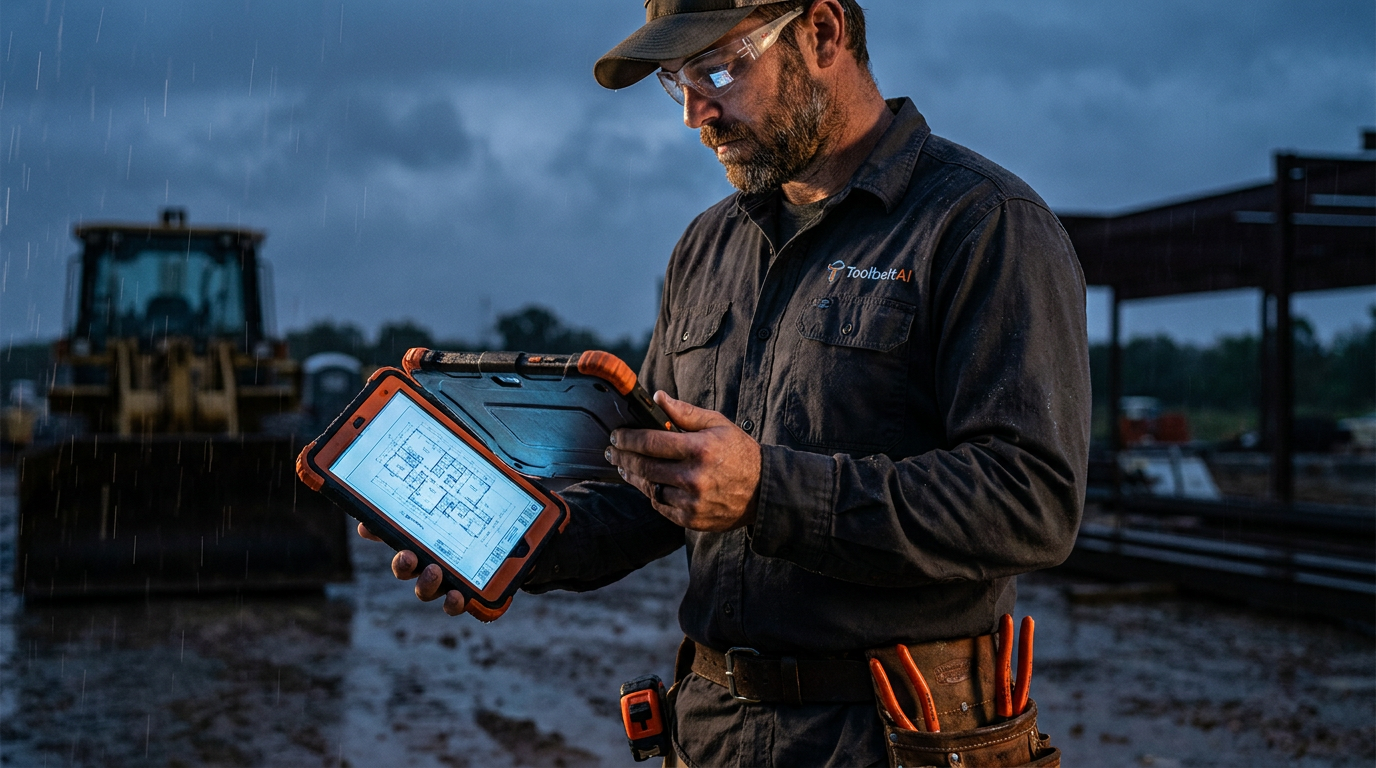
AI helps Washington landscapers by analyzing complex state stormwater regulations, such as the Stormwater Management Manuals (SWMM). You can use AI tools to summarize permit requirements, generate compliance checklists, and draft initial plans, saving significant time and reducing the risk of errors on your projects.
Washington Stormwater Regs Are No Joke
If you're a landscaper in Washington, you know the deal. The rain is a constant, and so are the rules about where it goes. The Washington State Department of Ecology has some of the toughest stormwater regulations in the country. Keeping up with the Stormwater Management Manuals (SWMM) for Western and Eastern Washington is a full-time job.
These documents are hundreds of pages long, dense, and critical to your projects. A mistake doesn't just mean a muddy site. It can mean fines, stop-work orders, and a trashed reputation. For years, the only way to handle it was to read every page or pay a consultant a pile of cash. Now, there's another tool for your belt: Artificial Intelligence.
AI isn't here to take your job. It's here to make the worst part of your job—paperwork and rule-checking—a lot faster. Think of it as a super-smart assistant who has already read the entire manual and is ready for your questions.
How AI Helps with Stormwater Compliance
AI, especially Large Language Models (LLMs) like ChatGPT or Claude, are great at reading and understanding huge amounts of text. The state's SWMMs are just big text files. You can use AI to slice through the jargon and get to the answers you need for your specific job site.
Here's how you can put it to work:
- Document Analysis: Instead of spending hours searching for a specific rule, you can ask the AI. For example, you can ask, "What are the requirements for silt fence installation on a residential site with a 15% slope in King County?" The AI can scan the manual and give you a direct answer with sources.
- Permit Application Assistance: Drafting parts of a National Pollutant Discharge Elimination System (NPDES) permit or a local clearing and grading permit is tedious. You can feed your project details to an AI and ask it to generate a first draft of the narrative sections. You still need to check it, but it saves hours of typing.
- Best Management Practice (BMP) Selection: Describe your site conditions. "I have a 1.5-acre commercial project in Spokane with clay soil. Construction is happening in April. What are the top 3 required erosion and sediment control BMPs I should consider?" AI can give you a starting list based on the Eastern Washington SWMM.
- Client Communication: Explaining complex regulations to a homeowner can be tough. Use AI to draft a simple, clear explanation of why a certain rain garden or permeable paver system is necessary for their project to be compliant. This helps justify costs and manage expectations. More info on running your business can be found in our ops section.
Prompts You Can Use Today
Don't just read about it. Go to an AI tool, copy these prompts, and paste them in. Change the details to match your current project. This is the best way to see how it works.
Act as a compliance assistant for a Washington State landscaping contractor. I am working on a 2-acre residential development in Pierce County. Using the 2019 Stormwater Management Manual for Western Washington, create a checklist of key erosion control measures required before breaking ground. Focus on Source Control BMPs and Construction Stormwater BMPs. List at least 5 critical items I must have in place for my initial site inspection.
I need to explain to a homeowner why we need to install a bioretention swale as part of their backyard renovation in Bellevue, WA. The project adds over 750 sq ft of new hard surfaces. Write a simple, 150-word email explaining the local stormwater requirements in plain language. Avoid technical jargon. Mention that it helps protect local streams and is required by the city, based on state guidelines. Focus on the benefits, not just the rules.
The Limits: AI is a Tool, Not an Engineer
This is important, so pay attention. AI is not a licensed professional. It cannot replace a civil engineer or a Certified Erosion and Sediment Control Lead (CESCL).
- AI Can Be Wrong: AI models can "hallucinate" or make up information. They can misinterpret a rule or pull from an outdated source. You are still the expert responsible for the work.
- Always Double-Check: Use the AI's answers as a starting point. Always verify its claims by checking the referenced section in the official SWMM document. The buck stops with you.
- No Legal Authority: An AI-generated plan has zero legal standing. It cannot be submitted for a permit as-is. It's a tool for research and drafting, not for final engineering.
Think of AI like a powerful new calculator. It does the math fast, but you still need to know which numbers to punch in and whether the answer makes sense. Your field experience is what makes the tool valuable. For more on tools that can help your landscaping business, we've got you covered.
Getting Started is Easy
You don't need a computer science degree. Here's how to start in the next 10 minutes.
- Find the Source: Go to the Washington State Department of Ecology website. Search for "Stormwater Management Manuals." Download the PDF for your region (Western or Eastern Washington).
- Pick Your Tool: Use an AI that can read documents. Recent versions of ChatGPT (Plus), Claude, and Google's Gemini can all analyze PDFs.
- Start Small: Upload the SWMM PDF to the AI tool. Ask a simple question you already know the answer to. This helps you test its accuracy.
- Get Specific: The more detail you provide in your prompt, the better the answer will be. Include the county, project size, soil type, and slope.
Using AI for stormwater regs isn't about cutting corners. It's about working smarter. It lets you spend less time buried in paperwork and more time on the job site, building great landscapes that are built to last and built to code.
Frequently asked questions
37 copy-paste prompts that save tradespeople 5+ hours a week. Plus one short email every Friday — no fluff.
More for landscaping

AI for Landscaping Business Owners: Real ROI
AI for Landscaping Business Owners comes down to using AI to do the slow stuff — quoting, paperwork, marketing, and customer follow-up — so you can stay on
ChatGPT Prompts for Lawn Care Business (20 Tested)
ChatGPT Prompts for Lawn Care Business (20 Tested) comes down to using AI to do the slow stuff — quoting, paperwork, marketing, and customer follow-up — so