
Can AI Help With Your SWPPP Compliance and Reporting?
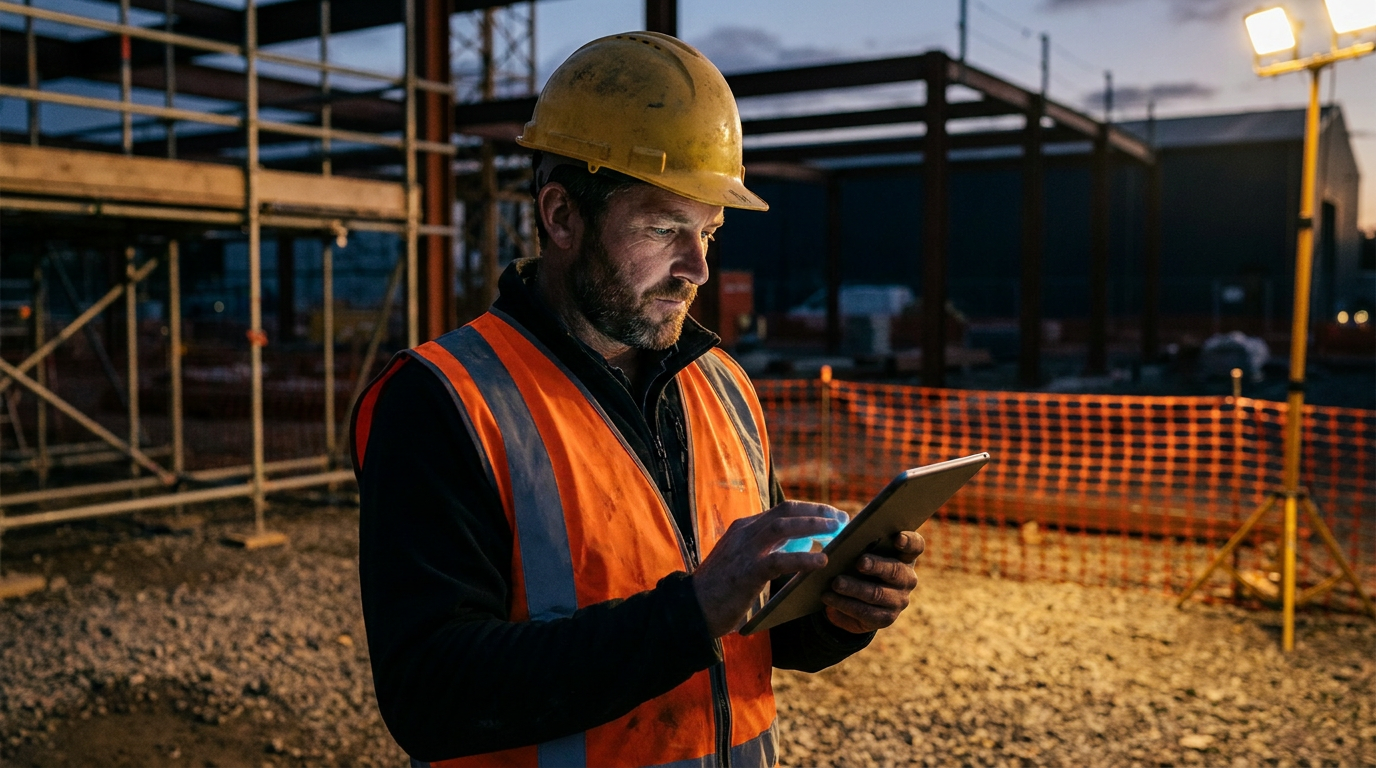
Yes, AI can help with SWPPP compliance. It works by automating tedious paperwork, analyzing site photos to spot potential violations like sediment runoff, and helping you track your Best Management Practices (BMPs). This saves time, reduces human error, and helps you stay ahead of issues before they become costly fines.
The SWPPP Headache Every GC Knows
If you're a general contractor, you know the drill. Before you even break ground, you have a mountain of paperwork, and a big piece of it is the Stormwater Pollution Prevention Plan, or SWPPP. It’s a necessary part of the job, required by the EPA's Construction General Permit (CGP). It’s also a constant source of stress.
Your SWPPP is your roadmap for controlling pollutants, mainly sediment and erosion, on your jobsite. It’s a living document that needs constant attention. Missed inspections, sloppy paperwork, or a silt fence that fails during a storm can lead to serious fines. We're talking tens of thousands of dollars per day, per violation. The EPA doesn't mess around.
For years, managing this has been a manual job for your superintendent or environmental compliance officer. It means walking the site, taking notes on a clipboard, taking photos, and then spending hours back in the trailer filling out forms. It’s slow, tedious, and easy to miss things. But now, AI is changing the game.
Where AI Fits Into Your SWPPP Workflow
Artificial intelligence isn't about robots taking over your jobsite. Think of it as a smart assistant that handles the most repetitive and time-consuming parts of SWPPP compliance. It's a tool that helps your team be more effective, not a replacement for them.
Here’s how AI can make a real difference:
Automated Reporting: This is the biggest win. AI can take your team's daily logs, photos, and local weather data and automatically generate the required inspection reports. Rain event reports that used to take an hour can be drafted in minutes. It ensures consistency and frees up your super to manage the actual work.
Smart Photo Analysis: Your team is already taking photos for daily logs. With AI, those photos become a proactive tool. AI-powered software can analyze images to spot potential problems. It can flag things like sediment tracked onto the street, an uncovered stockpile before a rainstorm, or a silt fence that's about to fail. It’s like having an extra set of expert eyes on your site 24/7.
Predictive Risk Alerts: AI can look at weather forecasts and tell you when your site is at high risk for a stormwater event. It can send an alert to your superintendent's phone that says, "Heavy rain expected in 24 hours. Double-check all storm drain inlet protection and perimeter controls." This allows you to be proactive instead of reactive.
Document Management: A SWPPP binder can get thick. AI can help you digitize and organize all your permits, inspection records, corrective action logs, and training documents. Instead of flipping through hundreds of pages, you can simply ask the AI, "Show me all corrective actions for the west silt fence in May." This kind of instant access is critical during an audit.
Improving your processes for SWPPP is just one part of improving your overall jobsite management. When you use tools to handle the paperwork, your team can focus on building.
Prompts You Can Use Today
You don't need expensive software to start seeing how AI can help. You can use general AI tools with the right prompts to organize your thoughts and draft documents. Here are a couple of examples you can copy and paste.
Act as a construction compliance manager. I need to prepare my jobsite for a forecasted heavy rain event happening in 48 hours. Based on standard SWPPP requirements, generate a detailed pre-rain event inspection checklist. The checklist should be organized by site area and include specific items to verify for:

1.  Perimeter Controls (silt fences, berms)
2.  Site Entrances/Exits (track-out)
3.  Stockpiles (soil, materials)
4.  Storm Drain Inlets
5.  Waste Management (dumpsters, concrete washout)
6.  Good Housekeeping
This prompt gives you a solid, actionable checklist your team can use immediately. Here is another one for when you spot an issue.
Act as an environmental compliance specialist. I have identified a SWPPP issue on my site and need to document it for a corrective action log.

**Issue:** During a site walk, I observed that the silt fence along the northern perimeter has been knocked down in a 20-foot section by equipment. There is evidence of sediment leaving the site in this area.

**Task:** Based on this information, draft a formal corrective action report entry. Include the date of discovery, a detailed description of the deficiency, the specific SWPPP requirement violated, the corrective action needed, the person responsible for the repair, and a deadline for completion.
The Limits: AI is a Tool, Not a Pro
It's easy to get excited about the potential, but you need to be realistic. AI is a powerful tool, but it has limits.
First, AI is not a certified professional. It can't sign your inspection reports, and it can't officially determine if you're in compliance. The legal responsibility for your SWPPP still rests on you, the operator. An AI's output is for your information only. It helps you find and fix problems. The proof for an inspector is the fixed problem, not the AI report that found it.
Second, the AI is only as good as the data you give it. If your team takes blurry photos or writes vague inspection notes, the AI's analysis will be useless. This is the classic "garbage in, garbage out" problem. Your team still needs to be trained on what to look for and how to document it properly.
Finally, don't trust it blindly. AI can make mistakes. It might flag something that isn't a problem or, worse, miss something that is. Human oversight is non-negotiable. Always have a qualified person on your team review the AI's suggestions and make the final call.
Think of AI as a force multiplier for your best people. It handles the grunt work so they can use their expertise where it matters most: on the ground, preventing pollution and keeping your project moving forward.
Frequently asked questions
37 copy-paste prompts that save tradespeople 5+ hours a week. Plus one short email every Friday — no fluff.
More for general contractors
AI for General Contractors: A Builder's Playbook
AI for General Contractors comes down to using AI to do the slow stuff — quoting, paperwork, marketing, and customer follow-up — so you can stay on the too

How to Use AI for Construction Project Management
How to Use AI for Construction Project Management comes down to using AI to do the slow stuff — quoting, paperwork, marketing, and customer follow-up — so