Stop Losing Tools: AI for Equipment Tracking
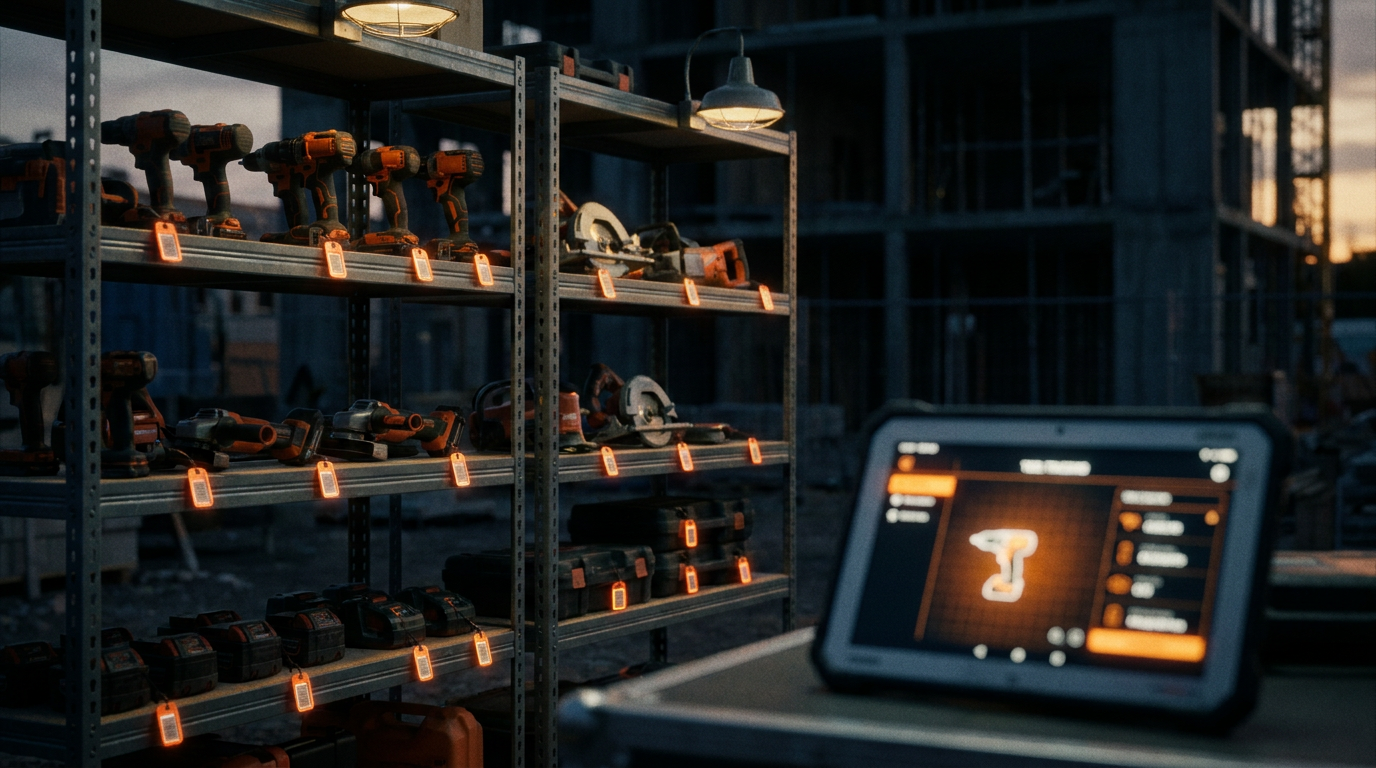
Using AI for tool and equipment tracking involves systems that combine GPS, RFID, or QR codes with smart software. This AI analyzes data to automate check-ins, alert you if a tool leaves a job site, and even predict maintenance needs. It turns your inventory list into a smart, active system.
Your Tools Are Your Livelihood. Stop Losing Them.
That feeling in your gut when a $1,500 rotary hammer is missing from the truck? We’ve all been there. Lost and stolen tools cost the construction industry up to $1 billion a year, according to the National Equipment Register. For a small to medium-sized business, a few missing pieces of key equipment can turn a profitable job into a loss.
For years, we've relied on sign-out sheets, spreadsheets, or just plain memory. These methods are cheap but ineffective. They depend on everyone doing the right thing, every single time. It's a system built to fail.
AI-powered tool tracking is changing the game. It’s not science fiction. It's a practical solution that uses technology you already own—your smartphone—to keep tabs on your most valuable assets. This isn't about micromanaging your crew; it's about protecting your bottom line.
What's Wrong with Old-School Tracking?
Let's be honest, the clipboard screwed to the wall of the tool cage is a joke. It’s a system based on hope.
- Human Error: People forget to sign tools in or out. Handwriting is unreadable. The sheet gets lost or damaged.
- No Real-Time Info: You don't know a tool is missing until you need it. By then, it could be anywhere. You waste hours of expensive labor searching for it or driving to a supply house for a replacement.
- No Accountability: When a tool disappears, it's nearly impossible to figure out what happened. It creates tension and suspicion on the crew.
- Wasted Admin Time: Someone has to manually enter data from those sheets into a spreadsheet, if you're even that organized. It's time that could be spent on billable work.
These outdated methods create constant friction and drain your profits slowly, day by day.
How AI Tool Tracking Actually Works
AI tool tracking isn't one single thing. It's a system with two main parts: the hardware that attaches to the tool and the software that does the thinking.
The Hardware: Tags and Trackers
This is the physical piece you connect to your equipment. You have a few choices, each with its own job.
- QR Codes: The simplest and cheapest option. These are just durable stickers you put on a tool. An employee scans the code with their phone to check the tool in or out. It's a digital version of the sign-out sheet, but faster and more accurate.
- Bluetooth Low Energy (BLE) Tags: These small tags constantly broadcast a signal. When a phone with the tracking app comes within range (usually up to 300 feet), it logs the tool's location. This is great for making sure all tools are back in the van at the end of the day or finding a misplaced item on a large job site.
- GPS Trackers: The heavy hitters. These are for your most expensive assets—vehicles, trailers, excavators, and generators. They use satellite signals to give you a real-time location anywhere in the country. They are more expensive and require a data plan, but for a $50,000 piece of equipment, it's cheap insurance.
The Software: The Brains of the Operation
This is where the "AI" part comes in. The software platform collects all the data from the tags and turns it into useful information.
- Automated Inventory: The system knows what you have and where it is, automatically. No more manual counts.
- Geofencing: You can set up a virtual boundary around a job site. If a tool with a GPS tracker leaves that area, you get an instant alert on your phone.
- Usage Data: The AI can track how often a tool is used, by whom, and for how long. This helps with accurate job costing and tells you which tools are your real workhorses.
- Predictive Maintenance: By tracking hours of use, the AI can alert you when a tool is due for service before it breaks down on the job. This minimizes downtime and extends the life of your equipment.
This isn't just about finding lost tools. It's about running a smarter, more efficient operations side of your business.
I'm a [your trade, e.g., commercial plumber] with a crew of 15. My main concerns are tracking high-value items like pro-press tools across multiple job sites and ensuring smaller hand tools return to the van. Compare the use of GPS trackers, Bluetooth (BLE) tags, and QR code systems for my business. List the pros and cons of each for a company my size and suggest the top 3 features I should look for in a software platform.
Real-World Benefits for Your Business
Switching to an AI-powered system delivers real, measurable results.
- Reduced Theft and Loss: When tools are tracked and crews know it, items are less likely to "walk away." Geofencing and instant alerts help you recover stolen equipment quickly.
- Less Downtime: No more searching for a tool you need right now. The app tells you exactly where it is—in which truck, on which site, or with which crew member. No more wasted trips to buy a replacement.
- Smarter Maintenance: Predictive maintenance alerts mean you service tools on your schedule, not when they fail in the middle of a critical task. This extends tool life and improves safety.
- Accurate Job Costing: You can assign tools to specific jobs and know exactly how much that equipment costs you in terms of usage and depreciation. This leads to more accurate bids and better profitability analysis. Good data makes for better quoting.
- Improved Accountability: The system creates a clear, digital record of who had what, and when. It removes arguments and encourages everyone to take better care of company property.
Getting Started with AI Tool Tracking
Ready to make the switch? Here’s a simple plan.
Step 1: Audit Your Inventory. You can't track what you don't know you have. Do a full physical inventory. Get serial numbers, model numbers, and take photos. This is a pain, but you only have to do it once.
Step 2: Choose Your Tech Mix. You probably don't need GPS on every screwdriver. A hybrid approach is best:
- QR Codes: For low-cost hand tools and items that stay in the shop.
- Bluetooth Tags: For mid-to-high-value power tools that move between sites.
- GPS Trackers: For vehicles, trailers, and heavy equipment.
Step 3: Pick a Platform. Major manufacturers like Milwaukee (ONE-KEY), DeWalt (Tool Connect), and Hilti (ON!Track) have their own integrated systems. There are also great third-party platforms that work with any brand of tool. Do your research, get demos, and choose one that feels right for your crew.
Step 4: Tag Everything and Train Your Crew. This is the most labor-intensive part. Set aside a day to attach all the tags and enter the tools into the software. Then, hold a mandatory training session. Show your crew how the system works and, most importantly, how it makes their job easier. Focus on the time saved finding tools, not the "big brother" aspect.
I have exported usage data from my tool tracking system. The columns are: 'Tool ID', 'Tool Type', 'Last User', 'Last Location', 'Total Hours Used This Month', and 'Maintenance Alerts Triggered'. Analyze this data to identify:
1. The top 3 tools with the most usage hours.
2. The tool with the highest number of maintenance alerts.
3. Any users associated with tools that are frequently not returned to the shop.
Present this as a simple report for a weekly team meeting.
It’s More Than Just Tracking
An AI tool system is a powerful business intelligence tool. Once you have a few months of data, you can start asking it questions. Which brand of impact driver is lasting the longest? Is one crew burning through Sawzall blades faster than another? Are we buying enough of one tool or too many of another?
This data allows you to make purchasing and management decisions based on hard facts, not guesswork. It's a tool for building a stronger, more resilient business.
Frequently asked questions
37 copy-paste prompts that save tradespeople 5+ hours a week. Plus one short email every Friday — no fluff.
More for business ops
AI Voicemail for Electricians: Catch Every Lead
AI Voicemail for Electricians comes down to using AI to do the slow stuff — quoting, paperwork, marketing, and customer follow-up — so you can stay on the

AI Answering Service for Plumbers: Real Costs & Picks
AI Answering Service for Plumbers comes down to using AI to do the slow stuff — quoting, paperwork, marketing, and customer follow-up — so you can stay on
HVAC Maintenance Plan Template (AI-Built)
HVAC Maintenance Plan Template (AI-Built) comes down to using AI to do the slow stuff — quoting, paperwork, marketing, and customer follow-up — so you can