
AI Tools for Florida Roofing Code Compliance
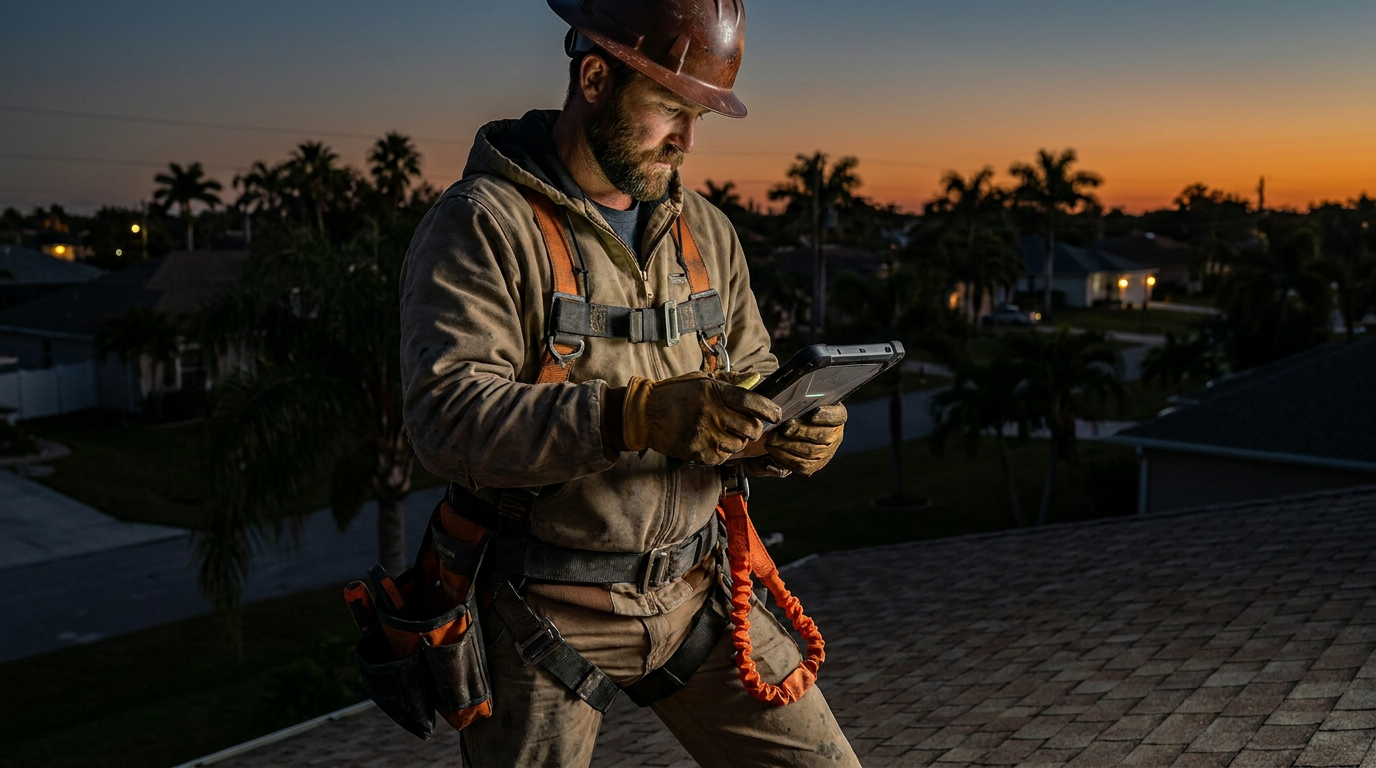
AI tools for Florida building code roofing compliance help contractors by quickly analyzing the massive Florida Building Code document. Large language models can interpret specific sections, cross-reference material specs with requirements for High-Velocity Hurricane Zones (HVHZ), and help draft permit paperwork, saving you time and reducing errors on the job.
Staying Compliant: AI Tools for Florida's Tough Roofing Codes
Florida's roofing code is no joke. Between the constant updates and the special rules for High-Velocity Hurricane Zones (HVHZ), staying compliant is a full-time job. One mistake can mean failed inspections, costly rework, and a bad reputation. The code book is thick, and finding the one rule you need can feel like a wild goose chase.
This is where Artificial Intelligence (AI) can be a powerful tool in your truck. Think of it as a super-smart assistant who has read the entire Florida Building Code (FBC) and can recall any part of it instantly. Using AI won't replace your experience, but it will make you faster, smarter, and more accurate.
Why Florida Roofing Codes Are So Tough
If you work in Florida, you know the drill. The weather here isn't messing around, and the building codes reflect that. The main reason for the strict rules is hurricanes. After Hurricane Andrew in 1992, the state completely overhauled its construction standards, creating some of the toughest codes in the nation.
The Florida Building Code, currently in its 8th Edition (2023), is a living document. It gets updated every three years, with supplements and emergency rules that can pop up anytime. For roofers, the key sections are in FBC, Building Chapter 15 and FBC, Residential Chapter 9. And if you're in Miami-Dade or Broward county, you're in the HVHZ, which has its own set of even stricter rules.
Keeping up with these changes across different counties is a major headache. AI can help you cut through the noise and get straight to the information that matters for your current job.
Where AI Fits In Your Workflow
AI isn't about robots installing shingles. It's about using smart software to handle the information side of your business. Here’s how it can help you stay on top of code compliance:
Fast Code Lookup: Instead of manually searching a 1,000-page PDF, you can ask an AI a plain English question. For example, "What are the underlayment requirements for a tile roof in Collier County?" The AI can scan the relevant documents and give you a direct answer with the code section number.
Permit Application Help: Drafting the technical parts of a permit application can be tedious. You can use AI to write descriptions of the work being performed, list the materials being used, and cite the specific FBC codes you are following. This makes your application stronger and can lead to faster approvals.
Material and Spec Checks: Does that new synthetic underlayment meet the HVHZ requirements? You can feed the manufacturer's spec sheet and the relevant FBC chapter to an AI and ask it to cross-reference them. It can flag any potential conflicts before you order a pallet of the wrong material.
Inspection Prep: Create custom pre-inspection checklists for your crew. Based on the job's scope and location, AI can generate a list of every single code requirement that an inspector will be looking for, from nail patterns to flashing details. This is also a great way to improve your quoting process by making sure you account for all necessary labor and materials.
Prompts to Get You Started
You don't need to be a computer genius to use AI. If you can send a text, you can use these tools. The key is giving the AI a clear, detailed prompt. Here are a few you can copy and paste today. For best results, upload the relevant chapter of the FBC as a document for the AI to reference.
I am a roofing contractor in Palm Beach County, Florida, which is in the High-Velocity Hurricane Zone (HVHZ). I need to understand the specific requirements for attaching asphalt shingles on a new construction single-family home with a 5:12 roof slope. Based on the Florida Building Code, 8th Edition (2023), Chapter 15, please create a summary of the requirements covering:

1.  Number and placement of fasteners per shingle.
2.  Type and size of approved fasteners.
3.  Any specific requirements for the starter course and hip/ridge caps.

Please cite the exact code sections for each point.
Generate a pre-dry-in inspection checklist for a residential re-roofing project in a non-HVHZ area of Orange County, Florida. The roof is a steep slope (7:12) gable roof getting architectural shingles. The checklist should be based on the FBC, 8th Edition, Residential, Chapter 9. Include specific items to verify for:

*   Deck preparation and renailing
*   Drip edge installation
*   Underlayment type and attachment
*   Flashing details (valley, chimney, wall)

Format this as a simple list my foreman can use on-site.
Draft a short, professional email to a homeowner. Explain why we must use peel-and-stick secondary water barrier (self-adhering modified bitumen) on their entire roof deck instead of standard felt paper. Mention that this is a requirement of the updated Florida Building Code for their specific roof slope and location to prevent water intrusion during a hurricane. Keep the tone clear and confident, focusing on safety and compliance.
The Limits and Risks: AI is a Tool, Not a Pro
This is important: AI is a powerful assistant, but it is not a licensed professional. It doesn't have a contractor's license, and it can't take legal responsibility for your work.
AI Can Be Wrong: AI models can "hallucinate," which means they can make up information that sounds correct but is totally wrong. You MUST double-check the AI's answers against the actual code book or official sources.
It's Not a Substitute for Judgment: AI can't see the job site. It doesn't know about the weird framing you discovered after tear-off or the specific instructions from the local building inspector. Your experience and professional judgment always come first.
Always Verify: Use AI to find the path, but walk it yourself. If the AI gives you a code section, open the FBC and read that section. Before you make a critical decision, confirm the information with the source document or call your local building department. Think of AI as a search engine on steroids, not a final authority.
Using AI for code compliance is about working smarter, not cutting corners. It can save you hours of research and help you avoid simple mistakes. By combining this technology with your hard-earned expertise, you can run a tighter ship and build roofs that are truly Florida-strong.
Frequently asked questions
37 copy-paste prompts that save tradespeople 5+ hours a week. Plus one short email every Friday — no fluff.
More for roofing

AI for Roofing Contractors: The Complete Guide
AI for Roofing Contractors comes down to using AI to do the slow stuff — quoting, paperwork, marketing, and customer follow-up — so you can stay on the too
AI Roof Measurement From a Photo: Apps That Work
AI Roof Measurement From a Photo comes down to using AI to do the slow stuff — quoting, paperwork, marketing, and customer follow-up — so you can stay on t