
Nailing Florida Wind Load Calcs with AI Tools
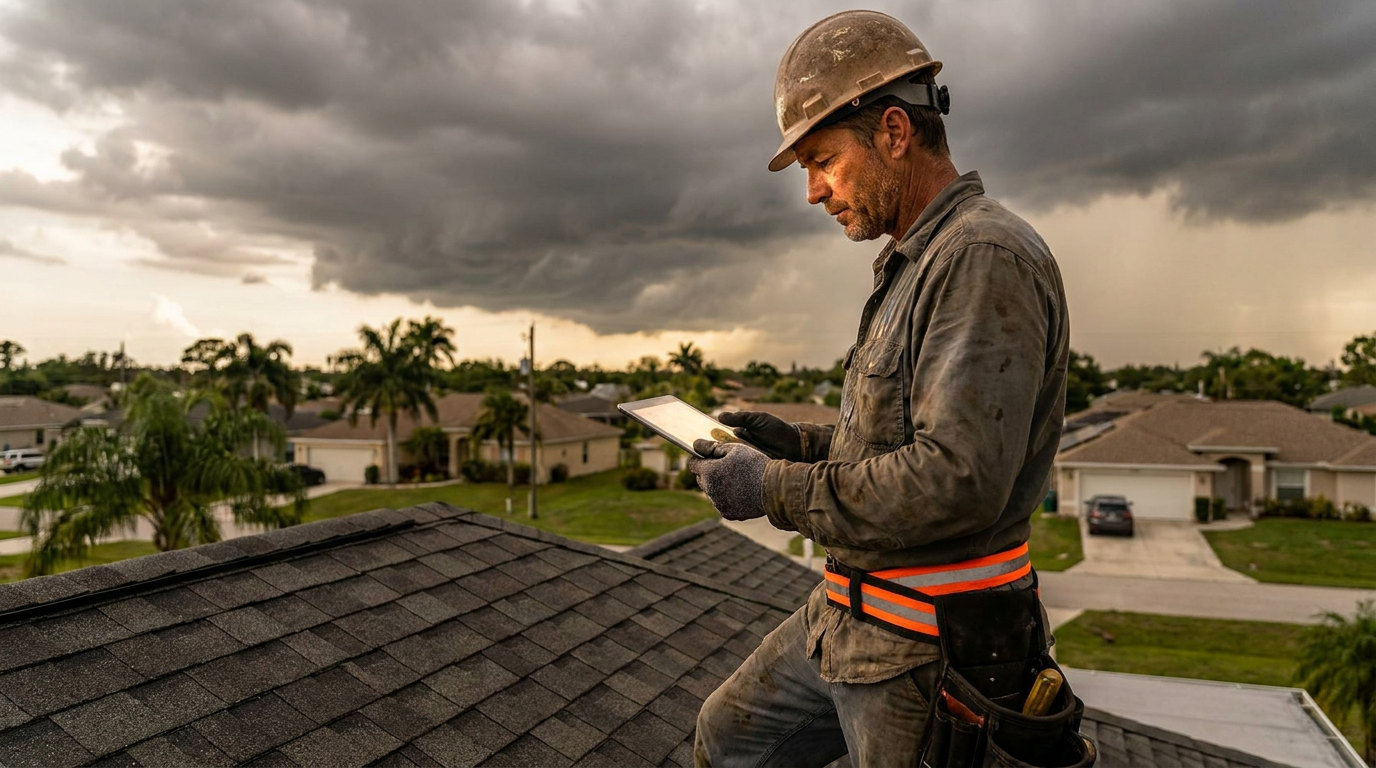
The best AI tools for Florida Building Code wind load calculations are large language models like ChatGPT-4 or Claude 3. While they cannot replace certified engineering software for final calculations, they excel at interpreting complex code, drafting preliminary reports, and cross-referencing material specs with FBC requirements to speed up your workflow.
Nailing Florida Wind Load Calcs with AI Tools
Working in Florida means your number one enemy isn't the competition. It's the wind. The Florida Building Code (FBC) has some of the toughest wind load requirements in the country for good reason. Getting these calculations wrong isn't just a headache. It's a failed inspection, a lost permit, and a major liability.
For years, this meant burying your head in code books and complex engineering software. It's slow and tedious work. Now, Artificial Intelligence (AI) offers a new way. It's not a magic button, but it's a powerful assistant that can help you work smarter and faster, without cutting corners.
Why Florida Wind Codes Are No Joke
After Hurricane Andrew tore through South Florida in 1992, the state got serious about building codes. The result was the FBC, with special attention paid to High-Velocity Hurricane Zones (HVHZ), which include Miami-Dade and Broward counties. These areas have the most stringent construction standards in the United States.
For a roofer, this means you need to calculate things like:
- Design Wind Speed: Based on the building's location and risk category.
- Wind Pressure: The force the wind exerts on different parts of the roof (corners, edges, and field).
- Uplift Resistance: Ensuring your roofing assembly, from the deck up, can withstand the calculated upward pull.
Failing to account for every detail can lead to catastrophic roof failure during a storm. The code is dense and unforgiving. That's where a smart assistant comes in handy.
Where AI Fits In (And Where It Doesn't)
Let's be clear. AI is not a licensed Professional Engineer. It cannot stamp your drawings or replace certified software like ASCE 7-16 calculators or proprietary tools from manufacturers like GAF and CertainTeed. The final sign-off and legal responsibility are still yours.
Think of AI as the sharpest apprentice you've ever had. It can:
- Translate Code: Turn dense, legalistic code sections into plain English.
- Draft Documents: Create preliminary reports, client emails, and material lists based on your inputs.
- Check Your Work: Cross-reference your calculations against code tables and manufacturer specifications.
- Brainstorm Solutions: Suggest different material assemblies that meet specific wind uplift requirements.
Your job is to be the expert supervisor. You give the AI a clear task, review its work for accuracy, and make the final call. For more on streamlining your business, check out our guides on operations.
Practical Prompts for Florida Roofers
Using AI is all about giving it the right instructions. A good prompt is specific, provides context, and tells the AI what role to play. Here are some prompts you can use today with models like ChatGPT, Claude, or Google Gemini.
Prompt 1: Understanding a Code Section
When you're staring at a wall of text in the FBC, have the AI break it down for you.
Act as a building code expert specializing in the Florida Building Code (FBC), 8th Edition (2023). I am a roofing contractor. Explain section 1504.3.2, 'Wind resistance of asphalt shingles,' in simple terms. Focus on the key requirements for testing and classification. List the ASTM standards mentioned and what they are for. Format the output as a simple bulleted list.
This prompt tells the AI its role, specifies the exact code and edition, and asks for a clear, simple output. It saves you from having to read and re-read the section yourself.
Prompt 2: Drafting a Preliminary Report
Speed up your paperwork by having AI create a template. You just need to plug in the final numbers from your engineering software.
Act as a Florida roofing contractor. Create a template for a 'Preliminary Wind Load Summary' for a residential client. The property is a single-family home in Tampa, Florida (not HVHZ). The roof is a hip roof with a 4:12 slope. Use placeholders like [CLIENT_NAME], [ADDRESS], [DESIGN_WIND_SPEED], [UPLIFT_PRESSURE_ZONE_1], and [FASTENER_SCHEDULE]. The tone should be professional and easy for a homeowner to understand. Include a brief explanation of what wind uplift is.
This turns a 20-minute task into a 2-minute one. You get a clean, client-facing document ready for your specific project data.
Prompt 3: Creating a Jobsite Checklist
Use AI to make sure your crew is following procedures that align with code requirements, especially in high-risk zones.
I am a roofing project manager preparing for a roof replacement on a commercial building in a High-Velocity Hurricane Zone (HVHZ) in Miami-Dade County. Based on the FBC, 8th Edition (2023), create a jobsite checklist for my crew. The checklist should focus on steps to ensure compliance with wind load fastening requirements for a mechanically attached single-ply roofing system. Include items for deck inspection, fastener selection, fastener spacing in different zones (field, perimeter, corners), and quality control checks.
The Limits and Risks of Using AI
AI is a tool, and like any tool, it can be misused. Keep these things in mind:
- Verification is Mandatory: AI models can "hallucinate," meaning they can confidently state incorrect information. Always double-check any code interpretation, calculation, or standard against the official FBC documents and your engineering software.
- Liability is Yours: If the AI gives you bad information and a roof fails, the building inspector and the courts will not care that you "used AI." The licensed contractor is always the responsible party.
- Use the Latest Code: Building codes are updated regularly. Always specify the correct edition of the FBC in your prompts, which is currently the 8th Edition (2023).
AI won't replace the skill and judgment of an experienced roofer. But it can handle the grunt work, freeing you up to focus on quality installation, customer service, and growing your business. It's a powerful tool for navigating the storm of regulations in Florida. Use it wisely.
Frequently asked questions
37 copy-paste prompts that save tradespeople 5+ hours a week. Plus one short email every Friday — no fluff.
More for roofing

AI for Roofing Contractors: The Complete Guide
AI for Roofing Contractors comes down to using AI to do the slow stuff — quoting, paperwork, marketing, and customer follow-up — so you can stay on the too
AI Roof Measurement From a Photo: Apps That Work
AI Roof Measurement From a Photo comes down to using AI to do the slow stuff — quoting, paperwork, marketing, and customer follow-up — so you can stay on t