
Best AI Tools for Florida Wind Mitigation Inspections
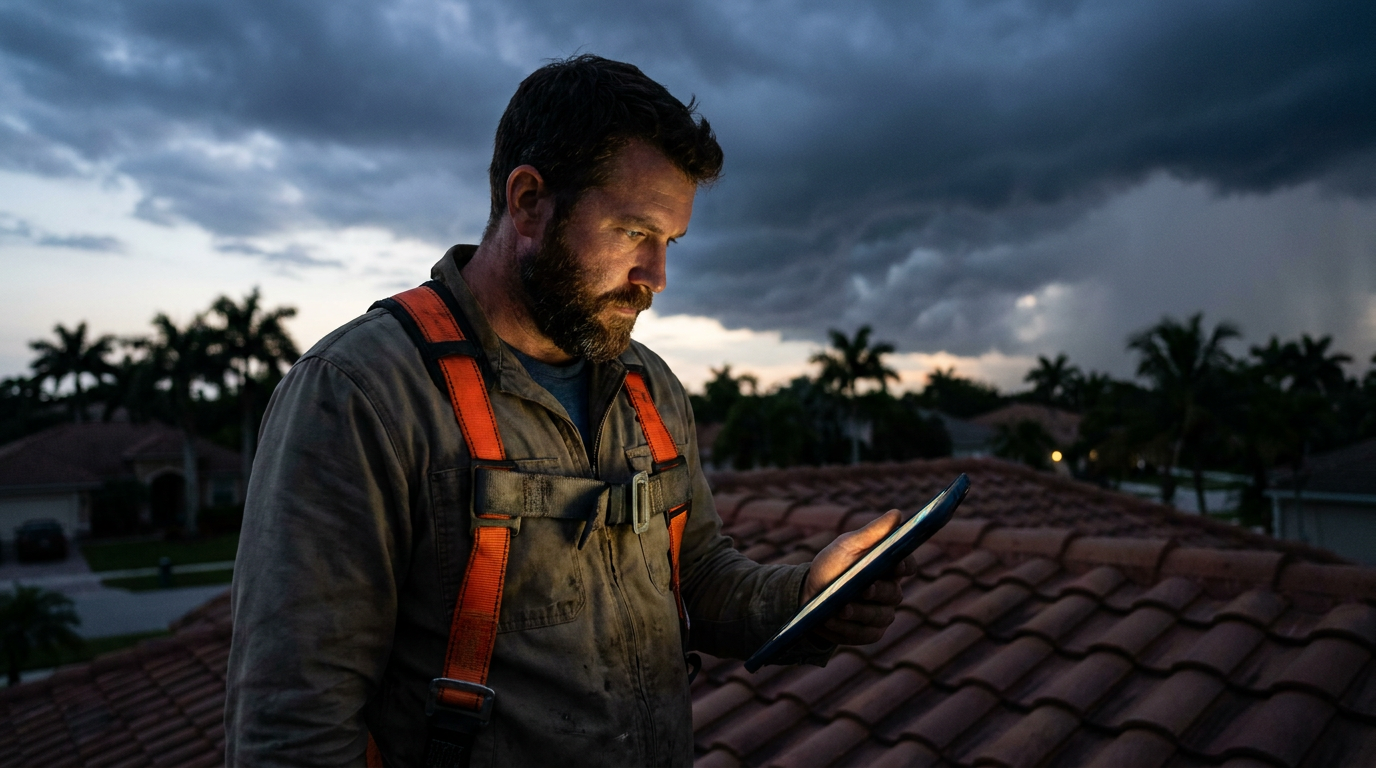
The best AI tools for Florida wind mitigation inspections help automate photo analysis, report generation, and filling out the OIR-B1-1802 form. Apps like CompanyCam use AI to tag photos, while inspection software like Spectora has AI-powered templates. Custom AI assistants can also analyze photos and draft report sections.
Tired of Wind Mitigation Paperwork?
If you're a roofer in Florida, you know the drill. Wind mitigation inspections are a constant part of the job. They're necessary, but the paperwork is a grind. Taking photos, labeling them, filling out the Uniform Mitigation Verification Inspection Form (OIR-B1-1802)—it all takes time away from the real work on the roof.
It's repetitive. It's tedious. And a single mistake can cause delays with insurance companies, which means delays in getting paid. But what if you could cut that paperwork time in half? What if you could make your reports more accurate and professional with less effort?
That's where Artificial Intelligence (AI) comes in. It's not about robots taking your job. It's about having a smart assistant in your pocket that handles the boring stuff, so you can focus on what you do best: building solid roofs.
How AI Helps with Florida Wind Mits
Think of AI as a tool, just like your nail gun or utility knife. It's designed to make a specific task faster and better. For wind mitigation inspections, AI is a game-changer for a few key reasons:
- Speed: AI can analyze and sort photos instantly. It can pre-fill report fields based on your pictures, saving you from typing the same descriptions over and over.
- Accuracy: Human error happens, especially at the end of a long day. AI cross-checks your work and ensures every required photo and field on the 1802 form is accounted for. This means fewer kickbacks from insurance carriers.
- Consistency: AI helps your whole team produce reports that look and read the same way every time. This professionalism builds trust with homeowners and insurance agents.
- Documentation: AI tools create a perfect, time-stamped, and often geo-tagged record of every photo. This is your proof of the roof's condition and features, protecting you from future disputes.
Top AI Tools for Roofers
You don't need a computer science degree to use these tools. Most are built right into apps you might already be using. Here are the types of tools that will make a real difference in your workflow.
Photo Management Apps with AI
Photos are the backbone of a wind mitigation report. You need clear shots of roof geometry, deck attachments, roof-to-wall connections, and more. AI-powered photo apps help you manage this chaos.
- CompanyCam: This is a popular choice for contractors. Its AI features can automatically scan your photos and add smart tags. For example, it can identify a "roof-to-wall connection" or "shingle damage." This makes it incredibly fast to find the exact photo you need when filling out the report later. No more scrolling through hundreds of pictures on your phone.
Inspection Software with AI
Dedicated home inspection software is quickly adding AI features to its platforms. These are designed to help you build the entire report from start to finish.
- Spectora & Others: Many inspection platforms have templates specifically for the Florida wind mitigation form. Their new AI tools can take it a step further. Some can take your labeled photos and draft the descriptive text for you, turning an hour of typing into a few minutes of reviewing.
Custom AI Assistants (ChatGPT and Others)
This is where it gets really powerful. You can use large language models like ChatGPT to create your own simple, custom assistants. You don't need to know how to code. You just need to tell the AI what you want it to do in plain English. You can create an AI that:
- Generates a pre-inspection checklist.
- Drafts descriptions of roof components based on your notes.
- Explains complex roofing terms to a homeowner in simple language.
Act as a roofing inspection assistant for a Florida roofer. I'm going to describe a roof-to-wall connection. Your job is to write a clear, concise description for section 4 of the OIR-B1-1802 form. Focus on identifying the type of connection (clips, single wraps, double wraps, or toe nails) and its condition. Here is the description: "I see metal connectors that are secured to the truss with at least three nails. The strap goes over the top of the truss and is nailed on both sides."
Drones with AI Analysis
Using drones for inspections is already common. The next step is using AI to analyze the images and video the drone captures. Software from companies like DroneDeploy or Kespry can use AI to automatically measure roof geometry (a key part of the wind mit form), identify potential damage, and create detailed 3D models. This gives you a bird's-eye view and data you can't get from the ground or even from walking the roof.
A New Workflow for Wind Mitigation
So how does this all fit together on a real job? Here’s a step-by-step look at an AI-powered wind mitigation inspection.
- Prep Work: Before you even get to the site, you use a custom AI assistant to generate a checklist. It reminds you of all seven sections of the 1802 form and the specific photos you need for each one.
- On-Site Photos: You're in the attic. It's hot and cramped. You snap a picture of the roof decking and its nailing pattern. Your photo app's AI automatically tags it "roof deck attachment." You take a picture of a hurricane clip, and it gets tagged "roof-to-wall connection." You do this for every required item.
- Filling the Form: Back in the truck, you open your inspection software. You import the AI-tagged photos, and they automatically populate into the right sections of your wind mitigation report template. Using a second AI prompt, you describe a few key photos and the AI writes the technical descriptions for you.
- Final Review: The report is 90% done in minutes. You review the AI-generated text, make any small tweaks, and check to make sure nothing was missed. The software flags any empty fields. It's clean, professional, and ready to send. This process can improve how you handle everything from simple jobs to complex quoting for major repairs.
This isn't science fiction. Roofers in Florida are doing this right now. They're finishing more inspections per day, reducing errors, and spending less time on paperwork and more time growing their business.
Create a simple, easy-to-understand explanation for a homeowner about why their hip roof qualifies them for a big discount on their insurance. Explain that a hip roof has slopes on all four sides, making it more stable in high winds compared to a gable roof, which has only two sloped sides. Mention that this design helps deflect wind rather than catching it like a sail. Keep it under 80 words.
The small investment in these tools pays for itself quickly. You save hours of labor on every inspection. You get fewer reports rejected by insurance companies. You look more professional to your customers. It’s time to put AI in your toolbelt.
Frequently asked questions
37 copy-paste prompts that save tradespeople 5+ hours a week. Plus one short email every Friday — no fluff.
More for roofing

AI for Roofing Contractors: The Complete Guide
AI for Roofing Contractors comes down to using AI to do the slow stuff — quoting, paperwork, marketing, and customer follow-up — so you can stay on the too
AI Roof Measurement From a Photo: Apps That Work
AI Roof Measurement From a Photo comes down to using AI to do the slow stuff — quoting, paperwork, marketing, and customer follow-up — so you can stay on t